Writing a Board Update That Drives Action, Not Just Awareness
Most CROs dread writing board updates. The process usually involves pulling dozens of charts, summarizing the quarter's activities, and hoping the board doesn't ask too many probing questions. The result is often a 20-page deck that provides "awareness" of what happened but fails to drive any meaningful "action." Board members skim the numbers, nod politely, and the meeting ends without the CRO securing the support or resources they actually need.
This is a missed opportunity. A board update shouldn't be a defensive reporting exercise; it should be an offensive strategic weapon. When crafted correctly, your board deck is the most powerful tool you have to align your investors with your GTM strategy, secure budget for new initiatives, and clear roadblocks. This article will teach you how to flip the script and write a board update that commands attention and drives immediate action.
What We'll Cover
In this article, we will cover:
- Why traditional "status report" board decks fail
- The "Insight, Implication, Action" framework
- How to structure your narrative around the 3 metrics that actually matter
- Using "Ask the Board" slides to secure resources
- How RevOps can automate the data pull, freeing the CRO to focus on the narrative
Understanding the Approach
The "Insight, Implication, Action" framework forces revenue leaders to move beyond merely reporting data. An Insight is what the data says. The Implication is why it matters to the business. The Action is what the CRO is doing about it (or what they need the board to do). In GTM leadership, this shifts the conversation from "Are we hitting the number?" to "How do we remove the friction preventing us from growing faster?"
Example:
Insight: "Our win rate against Competitor X dropped from 40% to 25% this quarter."
Implication: "They just released a new AI feature, and our reps are struggling to handle the objection, putting $2M of Q3 pipeline at risk."
Action: "We are requesting $50k to fast-track our own AI feature development, and we need Board Member Y to introduce us to the CTO of [Target Account] to secure that specific deal."
Why This Matters
Mastering board communication elevates the CRO from a functional leader to a strategic partner, ensuring the GTM team gets the support it needs to execute.
- Before: Board meetings are stressful interrogations focused on past performance. After: Board meetings are collaborative strategy sessions focused on future growth.
- Before: CROs struggle to get budget approved for new tools or headcount. After: CROs secure resources easily because they clearly tie the investment to a specific, board-aligned action plan.
- Before: RevOps spends weeks manually compiling data for the deck. After: RevOps automates the reporting, allowing the CRO to spend their time crafting the strategic narrative.
The Complete Guide
H3 Strategy 1: The "One-Page Executive Summary"
Objective: Control the narrative before the board even opens the full deck.
Actionable Advice: Write a single-page memo (not a slide) that summarizes the quarter's performance, the biggest win, the biggest challenge, and the 1-2 specific "asks" you have for the board. Send this memo 48 hours before the meeting.
Best Practices: Be brutally honest about the challenges. Boards respect bad news delivered quickly more than good news delivered vaguely.
H3 Strategy 2: Focus on the "Leading" Indicators, Not Just "Lagging"
Objective: Shift the conversation from what happened last quarter to what will happen next quarter.
Actionable Advice: While you must report on ARR (a lagging indicator), dedicate more time to leading indicators like "Pipeline Generated by Cohort," "Sales Cycle Velocity," or "Early-Stage Conversion Rates." Explain how these metrics predict future success.
Best Practices: If a leading indicator is trending down, present your mitigation plan immediately on the same slide.
H3 Strategy 3: The "Ask the Board" Slide
Objective: Give the board specific, actionable tasks to help the GTM team.
Actionable Advice: Include a dedicated slide at the end of your presentation titled "Where We Need Your Help." List 3 specific requests. E.g., "Introduction to the VP of IT at [Target Account]," "Feedback on our revised pricing model," or "Approval for Q3 RevOps headcount."
Best Practices: Never ask a generic question like "How can we improve?" Give them specific assignments.
H3 Strategy 4: The "Deal Autopsy" Deep Dive
Objective: Provide ground-level context to high-level numbers.
Actionable Advice: Pick one significant deal you won and one you lost during the quarter. Walk the board through the anatomy of those deals. Explain why you won (e.g., "Our new ROI calculator accelerated the CFO approval") and why you lost (e.g., "We lacked a multi-threading strategy").
Best Practices: Use the lost deal to highlight a systemic issue you're actively fixing, showing the board you're learning from failure.
How to Implement This
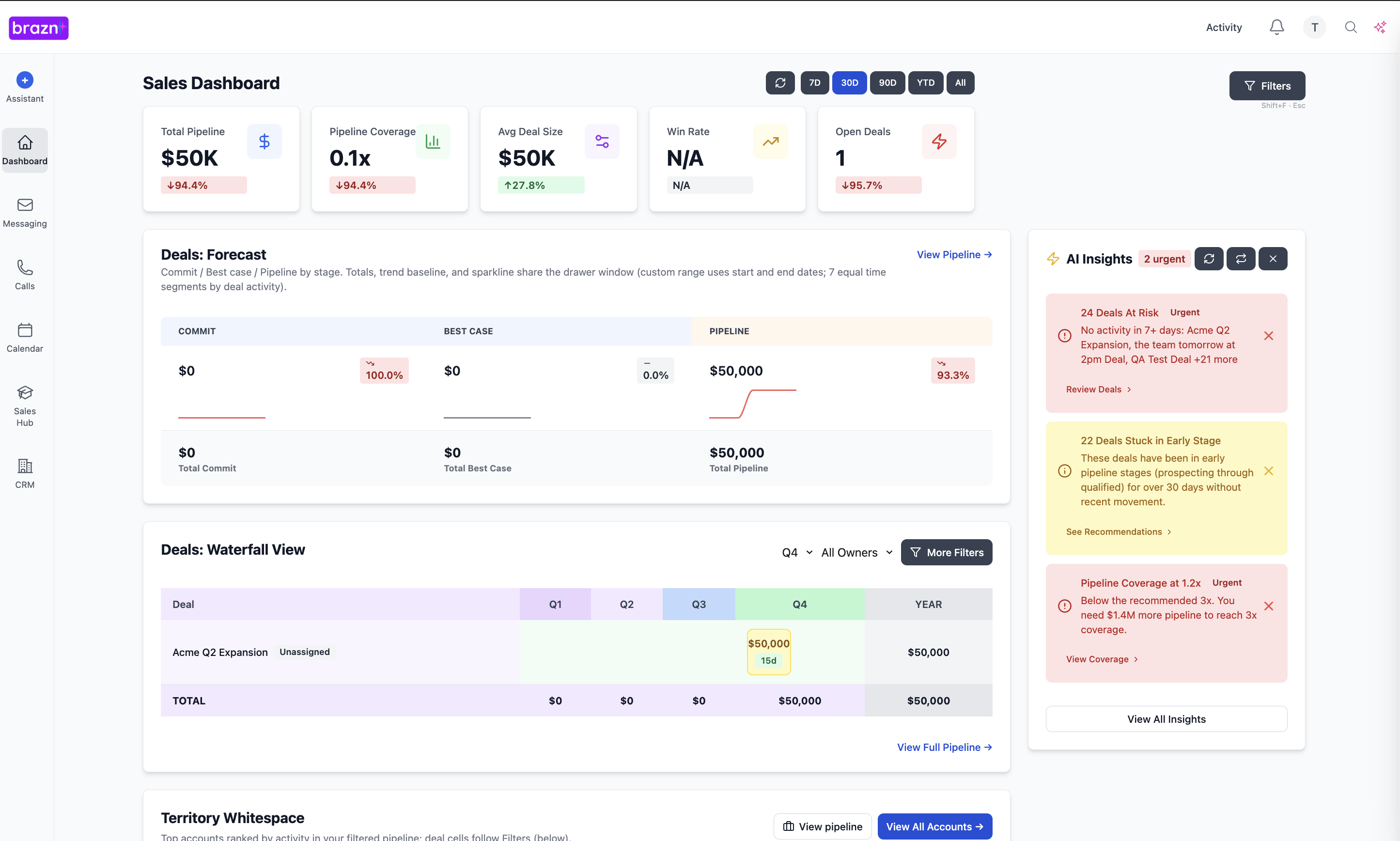
RevOps must own the data integrity of the board deck. Create a "Board Reporting Dashboard" in your CRM that automatically tracks the specific KPIs the CRO needs, eliminating the frantic end-of-quarter spreadsheet scramble. The CRO should spend 80% of their prep time on the narrative and the "Implication/Action" steps, relying on RevOps to ensure the "Insight" data is flawless.
Next Steps
Your board wants to help you succeed, but they can't do that if you only provide them with a rear-view mirror of your performance. By structuring your updates around insights, implications, and clear actions, you transform your board from a group of critics into a team of powerful allies.
Next time you prepare for a board meeting, start with the "Ask the Board" slide. Figure out exactly what you need from them first, and then build the rest of your narrative to logically support those requests.
Book a demo to see how Brazn AI fits into your sales stack.

About the Author
Alex Margarit, Sales AI Expert, SaaS Sales Leader, BMC, ServiceNow, Docusign — 25+ years in SaaS sales.