

Why Forecast Confidence Beats Forecast Accuracy
Revenue leaders are obsessed with 'Forecast Accuracy'—the percentage difference between the number predicted on day one of the quarter and the final revenue number on day ninety. While accuracy is important, the relentless pursuit of a perfect prediction often creates a toxic culture. Reps sandbag deals to ensure they don't miss, and managers spend hours manipulating spreadsheets rather than coaching their teams.
The truth is, a perfectly accurate forecast is often a sign of a team playing it too safe, leaving potential revenue on the table.
This article argues that modern CROs should prioritize 'Forecast Confidence' over raw accuracy. We will explore how shifting the focus to confidence bands and risk assessment creates a more agile, honest, and ultimately more profitable revenue organization.
What We'll Cover
In this article, we will cover:
- The negative behavioral impacts of prioritizing raw accuracy
- Defining 'Forecast Confidence'
- Why a missed forecast isn't always a failure
- Using confidence intervals to drive strategic agility
- Shifting the board conversation from numbers to risk
Understanding the Approach
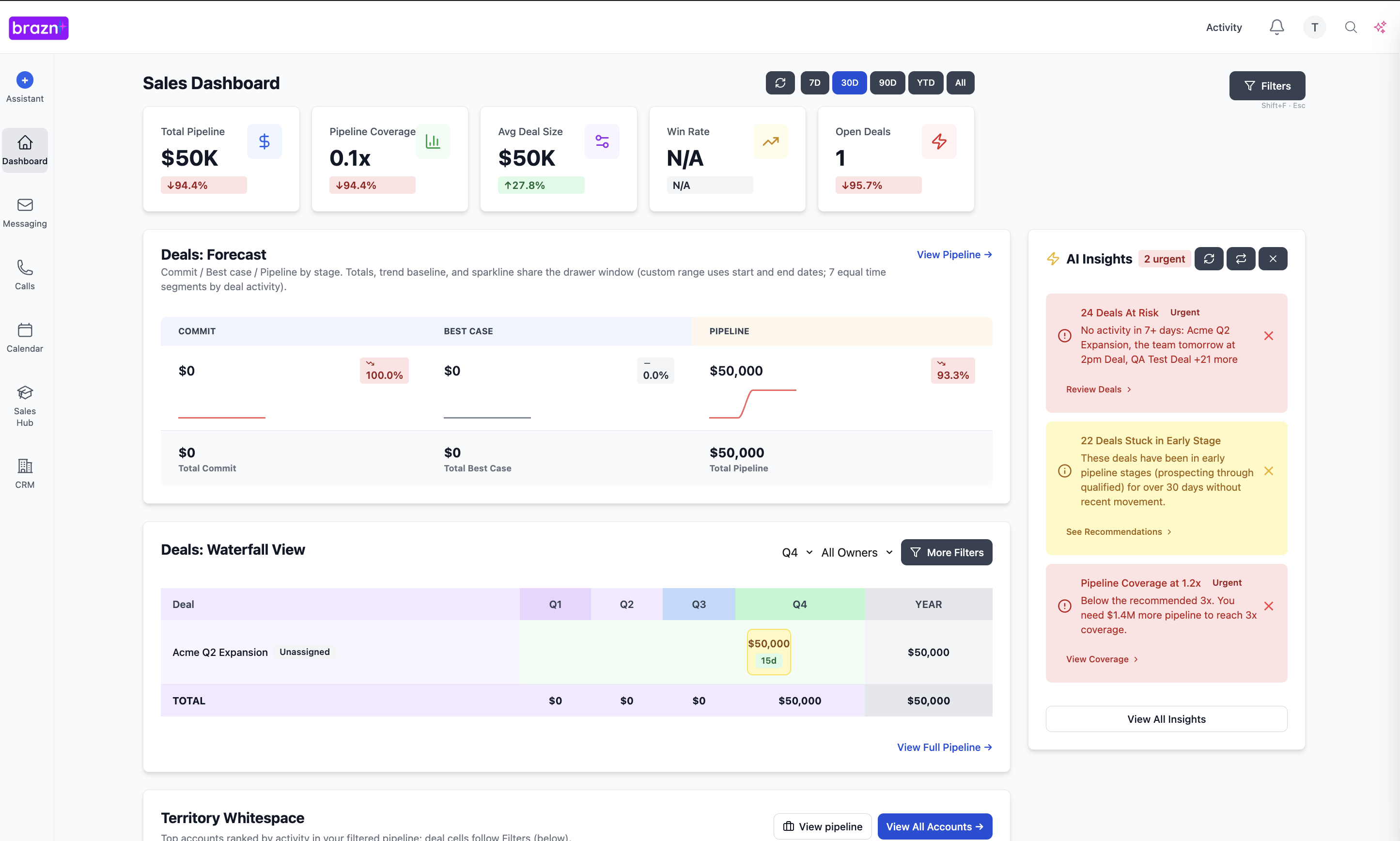
Forecast Accuracy is a binary measurement of the final outcome. Forecast Confidence is a continuous measurement of the probability of various outcomes based on objective data and risk assessment.
Example: A CRO forecasts exactly $10M and hits exactly $10M (100% Accuracy). However, to achieve this, they hid $2M of upside pipeline from the board because they weren't 'sure' it would close, preventing the company from investing in necessary growth. A different CRO forecasts a confidence band: $9M (Commit) to $12M (Best Case). They land at $11M. While less 'accurate' to a single point, the high confidence in the range allowed the business to plan aggressively and capture more total revenue.
Why This Matters
Prioritizing confidence over point-accuracy encourages transparency, aggressive growth, and better resource allocation.
- Before: Reps hide early-stage deals from the pipeline to avoid being held accountable for them prematurely. After: Reps enter all deals immediately, knowing they will be judged on their assessment of the risk, not just the final outcome.
- Before: The executive team is paralyzed by the fear of missing a single, fragile number. After: The executive team makes dynamic decisions based on the probability of different scenarios playing out.
- Before: Forecast meetings are interrogations designed to find the 'right' number. After: Forecast meetings are collaborative strategy sessions designed to increase the probability of closing the 'Best Case' pipeline.
The Complete Guide
H3 Tactic 1: Implement the 'P-Value' System
Objective: Standardize how the team communicates risk.
Actionable Advice: Move away from subjective terms like 'Upside' and 'Commit.' Use statistical probability values. A P90 deal has a 90% chance of closing; a P50 has a 50% chance. The goal isn't to force every deal into P90, but to accurately assess where each deal currently sits.
Best Practices: Use AI deal scoring to validate the rep's P-value assessment objectively.
H3 Tactic 2: Measure 'Confidence Drift'
Objective: Track how the probability of the pipeline changes over time.
Actionable Advice: Don't just measure the final accuracy. Measure how the confidence band shifts throughout the quarter. If your P90 forecast drops significantly in week 6, that's a massive leading indicator of a problem, even if you eventually hit the number through heroic effort.
Best Practices: RevOps should provide weekly reports on Confidence Drift to highlight early warning signs.
H3 Tactic 3: Reward Risk Transparency
Objective: Eliminate the culture of sandbagging.
Actionable Advice: Sales Leadership must publicly praise reps who accurately identify and communicate the risks in their deals early in the quarter, even if those deals eventually slip. If a rep says a deal is P50 and it loses, that's a successful forecast.
Best Practices: Never punish a rep for losing a deal that they accurately forecasted as high-risk.
How to Implement This
RevOps is the architect of the confidence model. They must build the systems that allow for range-based forecasting and track the historical accuracy of the P-value buckets. The CRO must educate the executive team and the board on this new approach, shifting the narrative from 'Did we hit the exact number?' to 'Did we accurately assess the risk and maximize the opportunity?'
Next Steps
Stop demanding a crystal ball from your sales team. Start demanding a rigorous, honest assessment of probability.
In your next pipeline review, ban the question 'Is this going to close?' Replace it with 'What is the probability of this closing, and what are the three biggest risks?' You will immediately elevate the quality of the conversation. Ready to build a forecast you can trust? Discover how Brazn's platform uses AI to quantify pipeline confidence.
Book a demo to see how Brazn AI fits into your sales stack.

About the Author

Alex Margarit, Sales AI Expert, SaaS Sales Leader, BMC, ServiceNow, Docusign — 25+ years in SaaS sales.