
How to Build a Sales Battle Card
A sales battle card is a one-page competitive reference document that gives reps everything they need to navigate a deal where a specific competitor is in play. It covers who the competitor is, what they do well, where they're weak, how they sell, and specifically what to say and do when they appear in your deal.
Most battle cards fail because they're built from marketing perspective rather than sales perspective. They describe the competitor's positioning but not the rep's playbook. They list product features but not objection responses. They are comprehensive and useless.
A great battle card is short, specific, and immediately actionable — built for a rep who has 60 seconds to prepare before a conversation where the competitor just came up.
The Six Sections of an Effective Battle Card
Section 1: Who they are (3 sentences)Company, primary product, and target market. Not their full company history — just enough to know whether they're a direct competitor, an adjacent one, or a legacy one.
Example:
Gong is an enterprise revenue intelligence platform founded in 2015. Their core product is AI-powered call recording and analysis, with deal management and forecast modules built on top. Primary market: US enterprise SaaS companies with 50+ AEs and $10M+ ARR. Section 2: Why customers choose themThe honest reasons a prospect might prefer the competitor — not the reasons marketing says they're inferior. Reps need to understand what they're actually competing against.
List 3–5 genuine reasons:
Stronger brand recognition in enterprise Procurement
Larger training data set for general conversation AI
More mature forecast management module
Larger integration marketplace
Existing relationship from a previous company
If reps don't know why a competitor wins deals, they can't position against it credibly.
Section 3: Where they're genuinely weakThe specific, verifiable weaknesses — not generic "we're better because we're us" claims. Weaknesses the prospect will care about, stated in the prospect's language.
List 3–5 specific weaknesses with evidence:
MEDDPICC is a manual configuration exercise, not a native capabilityEU data residency requires negotiation and specific contracting
Pricing is enterprise-only — $1,200–$1,600 per user per year minimum
Implementation is 8–12 weeks and requires dedicated Revops resource
Deal scoring is engagement-based, not qualification-based — can mask risk
Each weakness should be accompanied by a specific proof point or customer reference where available.
Section 4: How they sellThe competitor's sales motion — how their reps approach the deal, what they emphasise in demos, how they structure their evaluation, and what their typical close tactics are.
Knowing how a competitor sells allows your rep to anticipate their moves and position proactively rather than reactively.
"They will lead with the call recording demo and position it as the 'intelligence' you're missing."
"They will request a 'discovery call' early and use it to benchmark your team's activity against their 'best in class' data."
"They will reference their customer list heavily — expect the names of recognisable logos from your industry."
"They will push for a formal evaluation process and will want to run a 90-day pilot with 5 reps."
Section 5: How to win against themThe specific plays that have worked against this competitor — based on deals you've won, not theoretical positioning. Written as specific actions and talking points, not principles.
Lead with qualification depth: "Ask the prospect: 'Has [Competitor] shown you how their platform tracks MEDDPICC qualification, specifically economic buyer engagement and decision process?' Watch for the pause." Surface the EU compliance question early: "If they're EU-based or have EU customers, ask about data residency before the competitor can get ahead of it." Reference the qualification vs engagement distinction: "Gong tells you how often calls are happening. Brazn tells you whether those calls are building toward a qualified deal. Those are different things." Bring a customer reference at their stage: "Our strongest competitive play is connecting the prospect with a customer who switched from Gong — let that conversation do the positioning work." Section 6: What to say when they bring it upThe specific objection responses to use when a prospect says "we're already talking to [Competitor]" or "[Competitor] does that too."
Write these as actual scripts — not frameworks, but words:
"That makes sense — Gong is a solid platform for engagement intelligence. The question we'd want you to answer for yourself is whether engagement intelligence and qualification intelligence are the same thing for your team. We'd suggest running a two-week parallel test: use Gong's deal health scores on five deals and Brazn's MEDDPICC scores on the same five deals and see which one better predicted what actually happened."How to Keep Battle Cards Current
Battle cards decay fast. A competitor that raised Series B, changed pricing, or released a new feature six months ago looks different from the card built at the beginning of the year. Build a maintenance process:
Review trigger: Every win or loss against this competitor should trigger a battle card review. Did anything new come up that should be added? Quarterly refresh: Schedule a 60-minute quarterly review with the top-performing reps who have competed against each competitor recently. Their current experience is more valuable than any analyst report. Competitive intelligence monitoring: Set Google Alerts, follow the competitor on LinkedIn, and monitor G2 reviews for recent customer feedback. The most current weaknesses are often in recent G2 reviews from dissatisfied customers.How Brazn Supports Battle Card Development
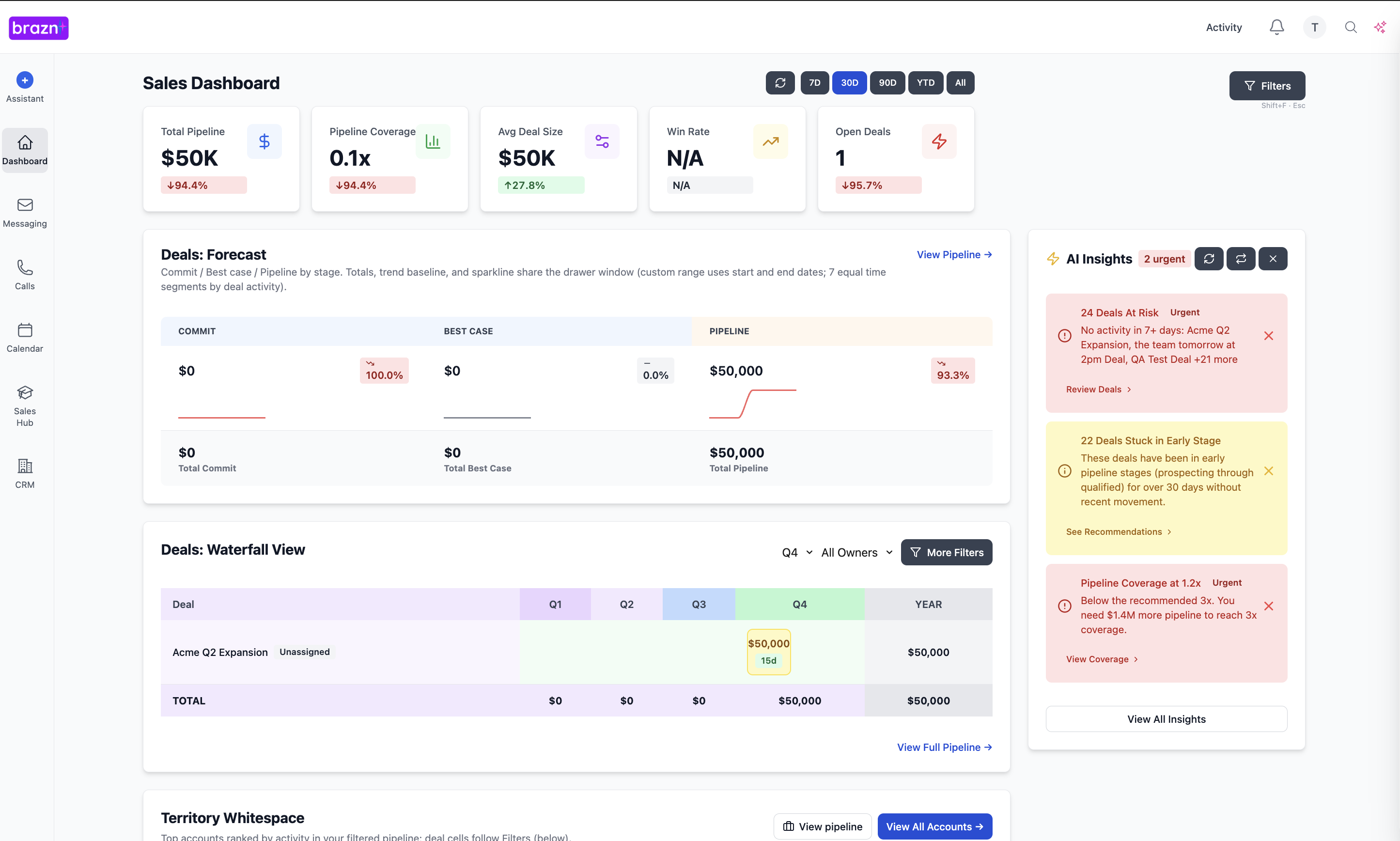
Brazn's competitive mention detection across call transcripts identifies which competitors are appearing in deals most frequently, what language prospects are using when they reference competitors, and what the outcome was in deals where specific competitors were mentioned. This real-time competitive intelligence is the most accurate input for keeping battle cards current — more reliable than analyst reports or marketing assumptions.
---
####
Book a demo to see how Brazn AI fits into your sales stack.

About the Author

Alex Margarit, Sales AI Expert, SaaS Sales Leader, BMC, ServiceNow, Docusign — 25+ years in SaaS sales.