
What Is a Sales Kill Sheet?
A sales kill sheet is a condensed, one-page competitive reference document that gives a sales rep everything they need to win a deal against a specific competitor — distilled into the most critical information a rep can absorb in under five minutes. Where a battle card is a fuller reference document covering multiple dimensions of competitive positioning, a kill sheet is the tactical extract: the sharpest differentiators, the most dangerous objections, and the two or three things the rep must do to win. If a battle card is the playbook, the kill sheet is the play call.
---
Kill Sheet vs Battle Card
The terms are often used interchangeably, but in organisations that distinguish them, the difference is one of depth and use case:
| Dimension | Battle Card | Kill Sheet |
| --- | --- | --- |
| Length | 1–3 pages | Single page or less |
| Depth | Comprehensive competitive overview | Extracted tactical essentials |
| Use timing | Pre-call preparation | In-meeting quick reference |
| Content | Full competitor profile, objections, traps, proof points | Top 3 differentiators, top 3 objections, the pitch |
| Audience | All reps in a competitive situation | Rep mid-deal or mid-call |
A kill sheet is built for the moment when a rep has five minutes before a call where the competitor has just been mentioned, or when they need to pull out a quick reference during a live competitive conversation. It must be brief enough to read instantly and opinionated enough to be immediately actionable.
---
What a Kill Sheet Contains
A well-constructed kill sheet has six components — all on a single page:
Competitor summary. Two sentences maximum. Who they are, who they sell to, and what they claim to do best. The rep needs to know what they're dealing with — not a full analysis, but a clear positioning anchor. Where we win. The three situations, use cases, or buyer profiles where the seller has a clear, defensible advantage. These should be specific — not "we're better at AI" but "we surface MEDDPICC gaps at the deal level; they only analyse calls in aggregate." Where they win. One or two honest admissions. A rep who claims the competitor has no strengths is not credible. Acknowledging the competitor's real strengths — briefly — and pivoting to reframe the evaluation is far more effective than blanket dismissal. The three objections you will hear. The most common competitive objections and a one-line response to each. "They said [Competitor] already does this" needs a ready answer. So does "they're cheaper" and "we're already using [Competitor] for calls — do we need another tool?" The two landmines to plant. The questions or framings the rep should proactively introduce to shift the buyer's evaluation criteria before the competitor can set the frame. "Have you asked them how they handle MEDDPICC gap detection at the deal level, not just call scoring?" is a landmine. It plants a criterion the competitor struggles to meet without the rep ever mentioning it negatively. The one-line pitch against this competitor. A single, confident statement the rep can use in any conversation where this competitor is present. It should be specific, differentiated, and memorable. Not "we're the best AI sales platform" — but "we're the only platform that combines deal intelligence, MEDDPICC coaching, and personalised outreach in a single workflow — so your reps don't have to toggle between four tools to run an enterprise deal."---
Why Kill Sheets Get Used When Battle Cards Don't
The dirty secret of sales enablement is that most battle cards are never read. They are created in a quarterly competitive review, uploaded to a portal, and ignored by reps who have no time to read a multi-page document mid-deal.
Kill sheets get used because they solve a real problem at the moment it exists: a rep just learned a competitor is in the deal and has three minutes before the next call. The kill sheet fits in that window. The battle card doesn't.
This is why kill sheets should be surfaced contextually — inside the CRM when a competitor is logged on an opportunity, in the calendar event before a competitive call, in the rep's deal preparation summary. The information is only valuable if it reaches the rep at the moment they need it. A kill sheet embedded in a deal intelligence summary the rep is already reading before every call is used. A kill sheet in a folder no one opens is not.
---
Building Kill Sheets That Win
Kill sheets should be built by the people closest to competitive deals — product marketing in collaboration with the reps who win and lose against specific competitors most frequently. The reps who have won five deals against a given competitor know exactly what landed and what didn't. That institutional knowledge, extracted and structured into a kill sheet format, is more valuable than any competitive intelligence report produced in isolation.
Kill sheets should also be version-controlled and updated quarterly at minimum. A competitor that raised a $50M Series B six months ago and launched three new integrations last quarter is not the same competitive threat as the one described in the kill sheet from eighteen months ago. Stale competitive intelligence is worse than none — it gives reps false confidence in a frame that no longer reflects reality.
---
How AI Keeps Kill Sheets Current
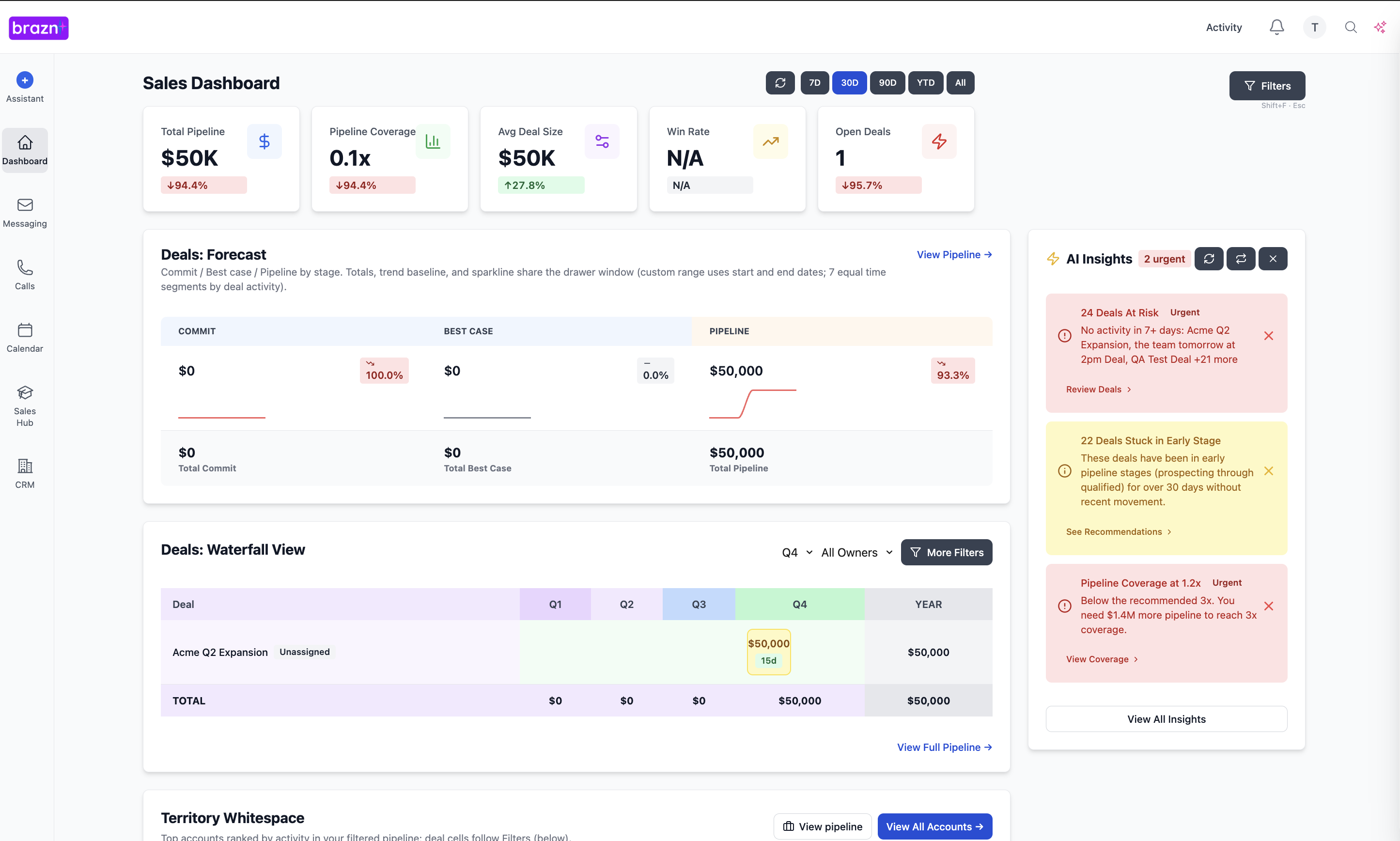
Brazn monitors competitor signals continuously — product announcements, G2 reviews, LinkedIn updates, press releases, pricing changes — and surfaces competitive intelligence updates in real time alongside static kill sheet content. When a competitor ships a feature that closes a gap the rep has been using as a differentiator, the system flags it before the rep walks into a deal with outdated positioning.
This shifts competitive intelligence from a quarterly update exercise into a continuous, living layer of deal preparation — ensuring that the kill sheet a rep consults before a call reflects the competitive landscape as it exists today, not as it existed when the document was last published.
---
The Bottom Line
A kill sheet is the simplest, most practical competitive sales tool in the enablement toolkit. It doesn't replace deeper competitive analysis, but it ensures that the most critical competitive intelligence is accessible at the exact moment a rep needs it — in a format they will actually use. Brevity is the discipline. Every word that can be cut should be. The kill sheet that a rep reads every time is worth infinitely more than the battle card they read once and never open again.
---
See How Brazn Surfaces Competitive Intelligence in Live Deals
Brazn delivers real-time competitive context alongside your kill sheets — so reps walk into every competitive conversation prepared, current, and confident.
---
Book a demo to see how Brazn AI fits into your sales stack.

About the Author

Alex Margarit, Sales AI Expert, SaaS Sales Leader, BMC, ServiceNow, Docusign — 25+ years in SaaS sales.