
The Complete Guide to AI Account Research for SaaS Sellers
Account research is the part of selling that separates average AEs from elite ones. Gong's revenue intelligence research found that top-performing reps spend 6 hours per week on account research vs. 2.5 hours for average performers — and their win rates are 47% higher. The rep who walks into a discovery call knowing the prospect's business model, their likely pain points, the relevant news from the last 30 days, and the buying signals in the account is going to outperform the one who read the website for five minutes before joining the Zoom.
The problem is that great account research has always been time-consuming. Until now.
This is the complete guide to AI account research for SaaS sellers — what it is, why it matters, how AI changes the process, and how the best SaaS AEs are using it to prepare faster, discover deeper, and win more.
What Is Account Research in SaaS Sales?
Account research is the process of gathering and synthesising information about a target company and its key stakeholders before and during a sales engagement. It covers:
- Company intelligence: Business model, revenue, headcount, growth trajectory, recent news, funding, strategic initiatives
- Stakeholder intelligence: The economic buyer, champion, end users, and influencers — their roles, backgrounds, priorities, and LinkedIn activity
- Pain and trigger intelligence: The specific problems this company is likely experiencing that Brazn solves — and the recent events (funding round, new hire, product launch, market change) that make them more likely to be in buying mode
- Competitive intelligence: What tools they currently use, what vendors they're likely evaluating, and where Brazn fits in their existing stack
- MEDDPICC intelligence: Early signals about Metrics (what outcomes matter to them), Economic Buyer (who controls budget), Decision Process (how they buy), and Champion (who inside the account will advocate for your solution)
Done well, account research transforms discovery from a conversation where you're learning the basics into one where you're validating hypotheses and building credibility. Done poorly — or not at all — it wastes everyone's time and signals to the buyer that they're not important enough for you to have prepared.
The Traditional Account Research Problem
In a world without AI, comprehensive account research takes 45–90 minutes per account. A rep needs to:
1. Read the company website and understand their product and business model
2. Search Google News for recent company announcements
3. Check LinkedIn for the relevant contacts and their backgrounds
4. Review the CRM for any prior interaction history
5. Check their tech stack (G2, BuiltWith, or similar tools)
6. Pull the account's recent activity in your sequencing tool
7. Synthesise all of this into a coherent picture before the call
For an AE carrying 50 active accounts, this is not a sustainable process. Salesforce's State of Sales report found that the average rep spends only 28% of their week actually selling — the rest goes to research, admin, and CRM data entry. Most reps compromise — they do surface-level research on most accounts and deep research on a handful. The accounts that get surface-level prep are the ones where deals stall because the rep couldn't connect the solution to the specific business context.
How AI Changes Account Research
AI compresses the 45–90 minute research process into something that happens automatically — before the rep even thinks about it.
Here's what changes:
Automated Research Briefs
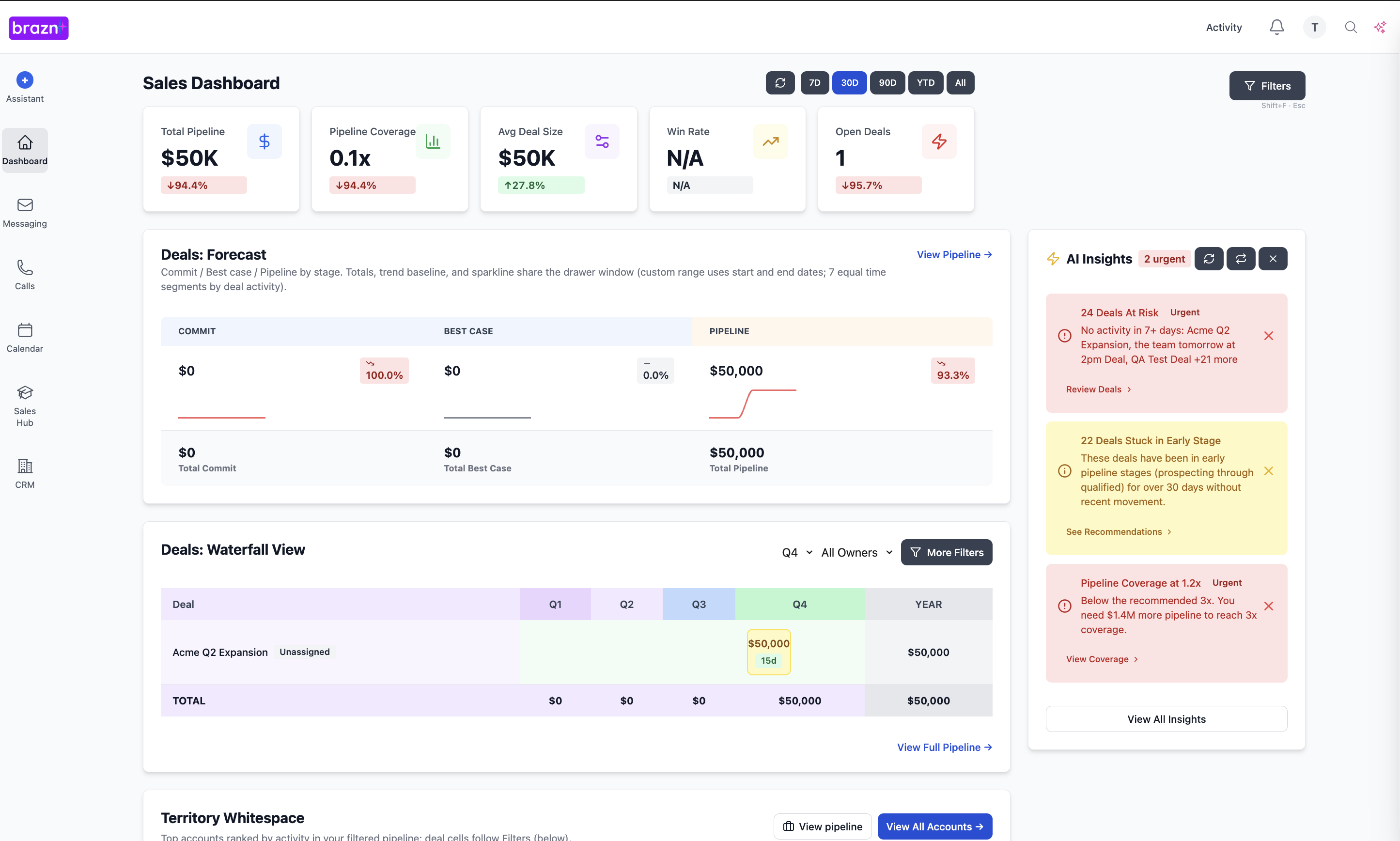
Instead of manually pulling information from six different sources, an AI system aggregates it for you. Before every scheduled meeting, you receive a structured research brief covering company background, recent news, stakeholder profiles, tech stack signals, and relevant talking points — automatically generated and waiting in your inbox before you log on.
Real-Time Signal Monitoring
AI doesn't just research accounts once — it monitors them continuously. When a key account raises a funding round, hires a new VP of Sales, launches a new product, or mentions a relevant pain in a press release, Brazn surfaces that signal immediately. Buying triggers don't get missed because nobody was watching.
Stakeholder Intelligence at Scale
Manual LinkedIn research on five stakeholders per account, across 50 active accounts, is 250 LinkedIn profiles. AI handles this automatically — pulling role context, recent activity, shared connections, and relevant background for every key contact in every active deal, on demand.
CRM Context Integration
AI research doesn't start from scratch. It reads your existing CRM data — prior interactions, notes, email history, deal stage — and builds on it. The research brief for an account you've been working for three months looks very different from the one for a cold account, and the AI knows the difference.
MEDDPICC Signal Extraction
As AI monitors account activity and reads interaction history, it extracts early MEDDPICC signals automatically. It identifies who is likely to be the economic buyer based on their title and role in the organisation. It flags metrics that the company has publicly stated they care about. It notes when a champion's role or employment status changes. All of this populates your deal record without manual research.
The Anatomy of a Great AI Research Brief
When Brazn generates a pre-call research brief, it includes:
Company snapshot
- What the company does, who their customers are, their business model, and their approximate size and stage
- Recent funding, headcount changes, or strategic announcements
- Current tech stack signals relevant to the Brazn conversation
Stakeholder profiles
- The key contacts for this call — their role, background, tenure at the company, and recent LinkedIn activity
- Any shared connections or mutual context worth referencing
- Inferred priorities based on their role and the company's current situation
Buying triggers
- Recent events that create urgency or relevance — funding, new hires, product launches, competitive moves, market changes
- Pain signals derived from public content — job postings, press releases, company blog posts, G2 reviews
MEDDPICC status
- What criteria have been established from prior interactions
- What gaps remain to be filled in this call
- Suggested discovery questions to address the open criteria
Suggested talking points
- Two or three specific angles that connect Brazn's capabilities to this account's specific context
- Relevant customer stories or use cases that match the company's profile
Prior interaction summary
- Key points from the last conversation, any open items, and what was agreed as a next step
- References the prospect's specific business model and why that makes them a relevant fit
- Cites a recent company event (funding, new hire, product launch) as the hook
- Connects a specific Brazn capability to an inferred pain based on the account's situation
- Names the right stakeholder as the natural champion based on their role
This is not template personalisation with and . It's genuine context — and buyers can tell the difference.
The Skills AI Augments — and the Ones It Doesn't Replace
It's worth being clear about what AI account research does and doesn't do.
AI augments:
- Information gathering speed — from 60 minutes to 3 minutes
- Coverage breadth — AI monitors more signals across more accounts than any human can
- Consistency — every account gets researched, not just the ones the rep has time for
- MEDDPICC signal extraction — AI catches context that reps miss or forget to log
AI doesn't replace:
- The judgment to know which signals matter for this specific deal
- The relationship skills to build trust with a champion
- The discovery ability to ask the questions that surface real pain
- The commercial acumen to build a business case that moves an economic buyer
The best AEs in 2026 use AI to handle the information-gathering work so they can invest their time in the skills that genuinely require human judgment. They arrive at every call better prepared than they've ever been — and they use that preparation to ask better questions, not to recite facts.
How to Get Started with AI Account Research
Implementing AI account research in your team requires three things:
1. Connect your data sources
Brazn needs access to your CRM, email, calendar, and sales engagement tool to build full account context. The integration process takes under an hour for most teams.
2. Define your ICP and research parameters
Tell Brazn what a great account looks like — firmographic criteria, tech stack signals, buying triggers relevant to your solution. This informs how it prioritises signals and frames research briefs.
3. Build the research review habit
AI research briefs only create value if reps actually read them. Build a habit: review the Brazn brief as part of call prep, the same way you'd check your calendar. Within two weeks, reps who use the briefs consistently will outperform those who don't — and the habit becomes self-reinforcing.
See AI Account Research in Action
Brazn generates comprehensive research briefs, monitors accounts continuously for buying signals, and extracts MEDDPICC criteria automatically — all before your rep picks up the phone. See how it works for your team.
See Brazn in your sales stack
Map your current tools and see how Brazn can connect the work between them.