


Content: # Inside a SaaS CEO’s Week: How to Stay Close to Pipeline Without Living in the CRM
For a SaaS CEO, the pipeline is the lifeblood of the company. It dictates hiring plans, product investments, and runway. Yet, as a company scales, CEOs often find themselves increasingly disconnected from the day-to-day realities of the sales floor. They rely on sanitized, high-level dashboards that tell them what is happening (e.g., pipeline is down 10%), but not why it's happening. The instinct is to dive deep into the CRM, micromanaging deals and interrogating reps, which only creates friction and wastes valuable executive time.
This article outlines how SaaS CEOs can maintain a pulse on the pipeline and diagnose GTM issues without getting bogged down in the minutiae of the CRM. By designing a strategic weekly cadence and leveraging the right signals, you can stay close to the revenue engine while remaining focused on high-level strategy.
What We'll Cover
In this article, we will cover:
- The danger of the "Executive Dashboard Illusion"
- Why living in the CRM is a poor use of CEO time
- A structured weekly cadence for pipeline visibility
- 4 specific "Signal Checks" CEOs should perform to diagnose GTM health
- How RevOps can build the infrastructure to support this executive motion
Understanding the Approach
The goal is to shift from "Data Interrogation" to "Signal Interpretation." In the context of GTM motions, this means a CEO shouldn't be looking at individual opportunity stages to guess if a deal will close. Instead, they must be looking at aggregated behavioral signals—like the velocity of deals moving through the middle of the funnel or the frequency of multi-threaded conversations—to assess the overall health of the sales process.
For example, rather than asking a rep, "Why is the Acme Corp deal stuck?" a CEO looking at the right signals might ask the CRO, "I notice our average time in the 'Technical Evaluation' stage has increased by 14 days across the enterprise segment. Do we have a bottleneck in Sales Engineering?" This elevates the conversation from tactical deal-chasing to strategic process improvement.
Why This Matters
Implementing a structured approach to pipeline visibility allows the CEO to provide meaningful guidance without micromanaging, improving both executive efficiency and sales team morale.
- Before: The CEO relies on anecdotal updates from the CRO, leading to surprises at the end of the quarter. After: The CEO tracks leading indicators and behavioral signals, allowing for proactive course correction weeks before a miss.
- Before: The CEO spends hours clicking through Salesforce reports trying to understand why win rates are dropping. After: RevOps delivers a curated "Signal Brief" that highlights specific process bottlenecks, saving hours of executive time.
- Before: Reps feel anxious and scrutinized when the CEO asks about specific deals. After: The CEO focuses on systemic issues, fostering a culture of continuous improvement rather than individual blame.
The Complete Guide
Strategy 1: The Monday Morning "Signal Brief"
Objective: Start the week with a clear, objective view of GTM health based on leading indicators.
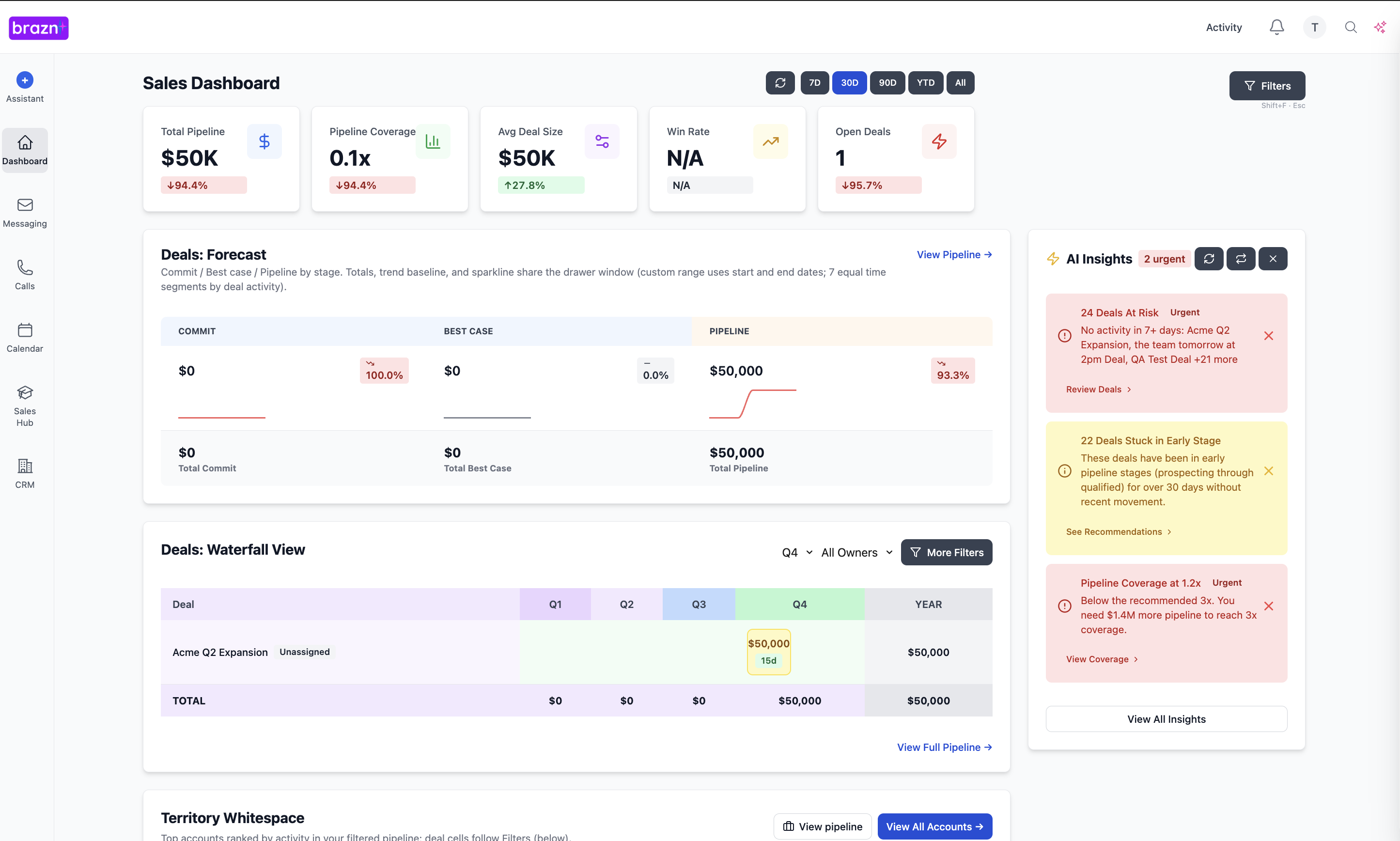
Advice: Work with RevOps to create a 1-page automated brief delivered every Monday. It should highlight 3-5 key metrics: Pipeline Generated vs. Target, Average Deal Velocity, and Win Rate by Segment.
Best Practices: Focus strictly on week-over-week changes and variances from the baseline, not just absolute numbers.
Strategy 2: The "Skip-Level" Deal Review
Objective: Get unfiltered qualitative insights from the front lines without undermining sales leadership.
Advice: Once a week, randomly select one closed-won and one closed-lost deal. Spend 15 minutes listening to the crucial call recordings (e.g., the discovery call or the final negotiation) using a tool like Gong or Chorus.
Best Practices: Don't use this to critique the rep. Use it to understand what the market is saying about your product and pricing.
Strategy 3: Track the "Multi-Threading Index"
Objective: Assess the true risk in the enterprise pipeline by measuring the depth of relationships.
Advice: Have RevOps build a report that shows the average number of unique contacts engaged per active opportunity in the late stages. A low index indicates high risk, regardless of what the rep forecasts.
Best Practices: Set a benchmark (e.g., minimum of 3 engaged stakeholders for deals over $50k) and only review deals that fall below it.
Strategy 4: The Friday "Friction Audit"
Objective: Identify and remove operational roadblocks that are slowing down the sales team.
Advice: Dedicate 30 minutes on Friday to review the "Loss Reasons" in the CRM specifically categorized under "Process" or "Product Gap" (e.g., missing integration, slow legal review).
Best Practices: Use this data to inform product roadmap discussions or to authorize RevOps to streamline internal approval processes.
Strategy 5: The Monthly Pipeline Quality Sync
Objective: Align with the CRO on the composition of the pipeline, not just the size.
Advice: Hold a monthly meeting focused entirely on pipeline hygiene. Look at the percentage of pipeline that has been pushed more than twice, or deals that have been in the same stage for over 30 days.
Best Practices: Agree on a strict "flush" policy for dead deals to ensure the forecast is based on reality, not hope.
How to Implement This
RevOps is the critical enabler of this motion. They must design and automate the "Signal Brief" and the "Multi-Threading Index" so the CEO doesn't have to hunt for the data. RevOps must also enforce strict CRM hygiene rules (like mandatory loss reasons) to ensure the data the CEO reviews is accurate.
Sales Leadership (the CRO or VP of Sales) should embrace this cadence. Instead of feeling micromanaged, they should use the CEO's focus on systemic issues to secure resources for Enablement or push for necessary product changes. The CEO's role is to consume the signals and ask the hard, strategic questions, leaving the tactical execution and rep coaching to the sales leaders.
Next Steps
Staying close to the pipeline is a non-negotiable responsibility for a SaaS CEO, but living in the CRM is a trap. By shifting your focus from individual deals to systemic signals, you can maintain deep visibility into the health of your GTM engine while preserving your time for high-leverage strategic work.
Start this week by defining your "Signal Brief." Sit down with your RevOps leader and identify the three leading indicators that give you the most accurate read on pipeline health. Automate that report for next Monday, and step out of the CRM weeds.
Inside a SaaS CEO’s Week: How to Stay Close to Pipeline Without Living in the CRM
For a SaaS CEO, the pipeline is the lifeblood of the company. It dictates hiring plans, product investments, and runway. Yet, as a company scales, CEOs often find themselves increasingly disconnected from the day-to-day realities of the sales floor. They rely on sanitized, high-level dashboards that tell them what is happening (e.g., pipeline is down 10%), but not why it's happening. The instinct is to dive deep into the CRM, micromanaging deals and interrogating reps, which only creates friction and wastes valuable executive time.
This article outlines how SaaS CEOs can maintain a pulse on the pipeline and diagnose GTM issues without getting bogged down in the minutiae of the CRM. By designing a strategic weekly cadence and leveraging the right signals, you can stay close to the revenue engine while remaining focused on high-level strategy.
What We'll Cover
In this article, we will cover:
- The danger of the "Executive Dashboard Illusion"
- Why living in the CRM is a poor use of CEO time
- A structured weekly cadence for pipeline visibility
- 4 specific "Signal Checks" CEOs should perform to diagnose GTM health
- How RevOps can build the infrastructure to support this executive motion
Understanding the Approach
The goal is to shift from "Data Interrogation" to "Signal Interpretation." In the context of GTM motions, this means a CEO shouldn't be looking at individual opportunity stages to guess if a deal will close. Instead, they must be looking at aggregated behavioral signals—like the velocity of deals moving through the middle of the funnel or the frequency of multi-threaded conversations—to assess the overall health of the sales process.
For example, rather than asking a rep, "Why is the Acme Corp deal stuck?" a CEO looking at the right signals might ask the CRO, "I notice our average time in the 'Technical Evaluation' stage has increased by 14 days across the enterprise segment. Do we have a bottleneck in Sales Engineering?" This elevates the conversation from tactical deal-chasing to strategic process improvement.
Why This Matters
Implementing a structured approach to pipeline visibility allows the CEO to provide meaningful guidance without micromanaging, improving both executive efficiency and sales team morale.
- Before: The CEO relies on anecdotal updates from the CRO, leading to surprises at the end of the quarter. After: The CEO tracks leading indicators and behavioral signals, allowing for proactive course correction weeks before a miss.
- Before: The CEO spends hours clicking through Salesforce reports trying to understand why win rates are dropping. After: RevOps delivers a curated "Signal Brief" that highlights specific process bottlenecks, saving hours of executive time.
- Before: Reps feel anxious and scrutinized when the CEO asks about specific deals. After: The CEO focuses on systemic issues, fostering a culture of continuous improvement rather than individual blame.
The Complete Guide
Strategy 1: The Monday Morning "Signal Brief"
Objective: Start the week with a clear, objective view of GTM health based on leading indicators.
Advice: Work with RevOps to create a 1-page automated brief delivered every Monday. It should highlight 3-5 key metrics: Pipeline Generated vs. Target, Average Deal Velocity, and Win Rate by Segment.
Best Practices: Focus strictly on week-over-week changes and variances from the baseline, not just absolute numbers.
Strategy 2: The "Skip-Level" Deal Review
Objective: Get unfiltered qualitative insights from the front lines without undermining sales leadership.
Advice: Once a week, randomly select one closed-won and one closed-lost deal. Spend 15 minutes listening to the crucial call recordings (e.g., the discovery call or the final negotiation) using a tool like Gong or Chorus.
Best Practices: Don't use this to critique the rep. Use it to understand what the market is saying about your product and pricing.
Strategy 3: Track the "Multi-Threading Index"
Objective: Assess the true risk in the enterprise pipeline by measuring the depth of relationships.
Advice: Have RevOps build a report that shows the average number of unique contacts engaged per active opportunity in the late stages. A low index indicates high risk, regardless of what the rep forecasts.
Best Practices: Set a benchmark (e.g., minimum of 3 engaged stakeholders for deals over $50k) and only review deals that fall below it.
Strategy 4: The Friday "Friction Audit"
Objective: Identify and remove operational roadblocks that are slowing down the sales team.
Advice: Dedicate 30 minutes on Friday to review the "Loss Reasons" in the CRM specifically categorized under "Process" or "Product Gap" (e.g., missing integration, slow legal review).
Best Practices: Use this data to inform product roadmap discussions or to authorize RevOps to streamline internal approval processes.
Strategy 5: The Monthly Pipeline Quality Sync
Objective: Align with the CRO on the composition of the pipeline, not just the size.
Advice: Hold a monthly meeting focused entirely on pipeline hygiene. Look at the percentage of pipeline that has been pushed more than twice, or deals that have been in the same stage for over 30 days.
Best Practices: Agree on a strict "flush" policy for dead deals to ensure the forecast is based on reality, not hope.
How to Implement This
RevOps is the critical enabler of this motion. They must design and automate the "Signal Brief" and the "Multi-Threading Index" so the CEO doesn't have to hunt for the data. RevOps must also enforce strict CRM hygiene rules (like mandatory loss reasons) to ensure the data the CEO reviews is accurate.
Sales Leadership (the CRO or VP of Sales) should embrace this cadence. Instead of feeling micromanaged, they should use the CEO's focus on systemic issues to secure resources for Enablement or push for necessary product changes. The CEO's role is to consume the signals and ask the hard, strategic questions, leaving the tactical execution and rep coaching to the sales leaders.
Next Steps
Staying close to the pipeline is a non-negotiable responsibility for a SaaS CEO, but living in the CRM is a trap. By shifting your focus from individual deals to systemic signals, you can maintain deep visibility into the health of your GTM engine while preserving your time for high-leverage strategic work.
Start this week by defining your "Signal Brief." Sit down with your RevOps leader and identify the three leading indicators that give you the most accurate read on pipeline health. Automate that report for next Monday, and step out of the CRM weeds.
---
####
Book a demo to see how Brazn AI fits into your sales stack.

About the Author

Alex Margarit, Sales AI Expert, SaaS Sales Leader, BMC, ServiceNow, Docusign — 25+ years in SaaS sales.