
What Is a Sales Champion? The MEDDPICC Guide
In MEDDPICC, the Champion is the single most important person in any complex SaaS deal. They are the internal advocate inside the buying organisation who believes in your solution, has the political credibility to influence the decision, and will actively sell on your behalf when you are not in the room. Deals with a strong Champion close. Deals without one stall, drift, and quietly die — often without the rep ever understanding why.
---
The MEDDPICC Definition of a Champion
A Champion is defined by three specific criteria — all of which must be true simultaneously. A contact who meets one or two is a Coach, a Supporter, or a well-meaning contact. Treating them as a Champion is one of the most expensive mistakes in enterprise sales.
1. They have power and influence. The Champion needs to be respected internally and carry enough political weight to move a decision. A junior evangelist who loves the product but has no credibility with leadership is not a Champion. A senior stakeholder whose voice carries genuine weight in the room where the decision is made is. 2. They have genuine belief in your solution. Not polite interest — actual conviction. The Champion sees a direct connection between your product and a problem they personally care about solving, often one tied to their own team's performance or their own career trajectory. Belief creates motivation to advocate. Politeness does not. 3. They will sell on your behalf when you are not in the room. This is the decisive test. When the Economic Buyer asks "why this vendor?" in a meeting the rep is not invited to, the Champion argues forcefully and specifically for your solution. If the contact would not — or could not — do that effectively, they are not a Champion.---
Champion vs Coach vs Supporter vs Sponsor
Reps consistently conflate these roles. The distinctions are commercially significant:
| Role | Power | Belief | Active Advocacy | Deal Impact |
| --- | --- | --- | --- | --- |
| Champion | ✅ High | ✅ Strong | ✅ Yes | Drives the deal |
| Sponsor | ✅ High | ⚠️ Moderate | ❌ Passive | Endorses but doesn't sell |
| Coach | ❌ Low/Medium | ⚠️ Moderate | ❌ No | Shares information |
| Supporter | ❌ Low | ✅ Strong | ❌ No | Friendly but ineffective |
A well-qualified enterprise deal typically has a Champion plus a Coach and one or two Supporters. The Champion is the one doing the internal selling. The Coach is the one helping the rep navigate the organisation. Confusing a Coach for a Champion is one of the most reliable predictors of late-stage deal loss.
---
How to Identify a Champion
Identifying a Champion is not about asking "are you our Champion?" — most contacts will say yes because they want to be helpful and because the social cost of saying no is high. Champion identification is about watching for specific, observable behaviours:
- They proactively share internal context — political dynamics, leadership priorities, budget cycles, competitive threats from other vendors — without being asked
- They introduce the rep to other stakeholders, including more senior ones, without being prompted
- They prepare the rep for executive meetings by briefing them on what the decision-maker cares about and what will land
- They push back on internal resistance and objections on the rep's behalf
- They treat the project as a personal priority — not just a vendor evaluation they have been assigned to manage
- They are willing to be explicit: "I want this to happen. Here is what I need from you to make the case internally."
A contact who is doing these things consistently is a Champion. A contact who is pleasant, responsive, and easy to talk to but is not doing these things is a Supporter at best.
---
How to Develop a Champion
Finding a Champion and stopping is the second most common Champion mistake. A Champion who has not been equipped to sell internally is a well-intentioned obstacle.
Give them the business case. Help the Champion build the economic argument for the purchase in the language that will resonate with the Economic Buyer — ROI calculations, risk narratives, implementation plans. Package this so the Champion can present it effectively without the rep in the room. Prepare them for objections. Role-play the most likely pushback from the Economic Buyer, procurement, and other sceptical stakeholders. Give the Champion specific, confident responses to each one. A Champion who stumbles when challenged loses credibility at exactly the moment they need it most. Make them look good. The Champion is putting their internal credibility on the line. Every interaction the rep has with the broader buying organisation should reinforce the Champion's judgment — not expose them to embarrassment or doubt. Maintain a high-value engagement cadence. A Champion who hasn't heard from the rep in two weeks is a Champion whose internal advocacy is cooling. Regular, specific, valuable touchpoints — not check-in calls, but genuine value — keep the relationship and the advocacy warm.---
Champion Risk: The Signals That Matter
Champion health is not static. Champions lose influence, change roles, go on leave, and — in the current SaaS market — leave their companies at rates that would have seemed extraordinary a decade ago. A rep who locked in a strong Champion in month one and hasn't actively maintained that relationship in month three may be sitting on a deal whose internal sponsorship has silently eroded.
The warning signals:
- Reduced response frequency or speed from the Champion
- The Champion becoming vaguer or less forthcoming about internal dynamics
- The Champion missing meetings they would previously have prioritised
- A LinkedIn update showing a role change, promotion, or company departure
- Third-party information suggesting the Champion's initiative has lost priority internally
Any one of these signals requires immediate, proactive attention — not waiting for the next scheduled check-in.
---
How AI Changes Champion Tracking
In manual environments, Champion health is assessed subjectively and sporadically — in pipeline reviews, in one-on-ones, in whatever the rep chooses to share. By the time a Champion risk surfaces in a pipeline review, it has often already cost the quarter.
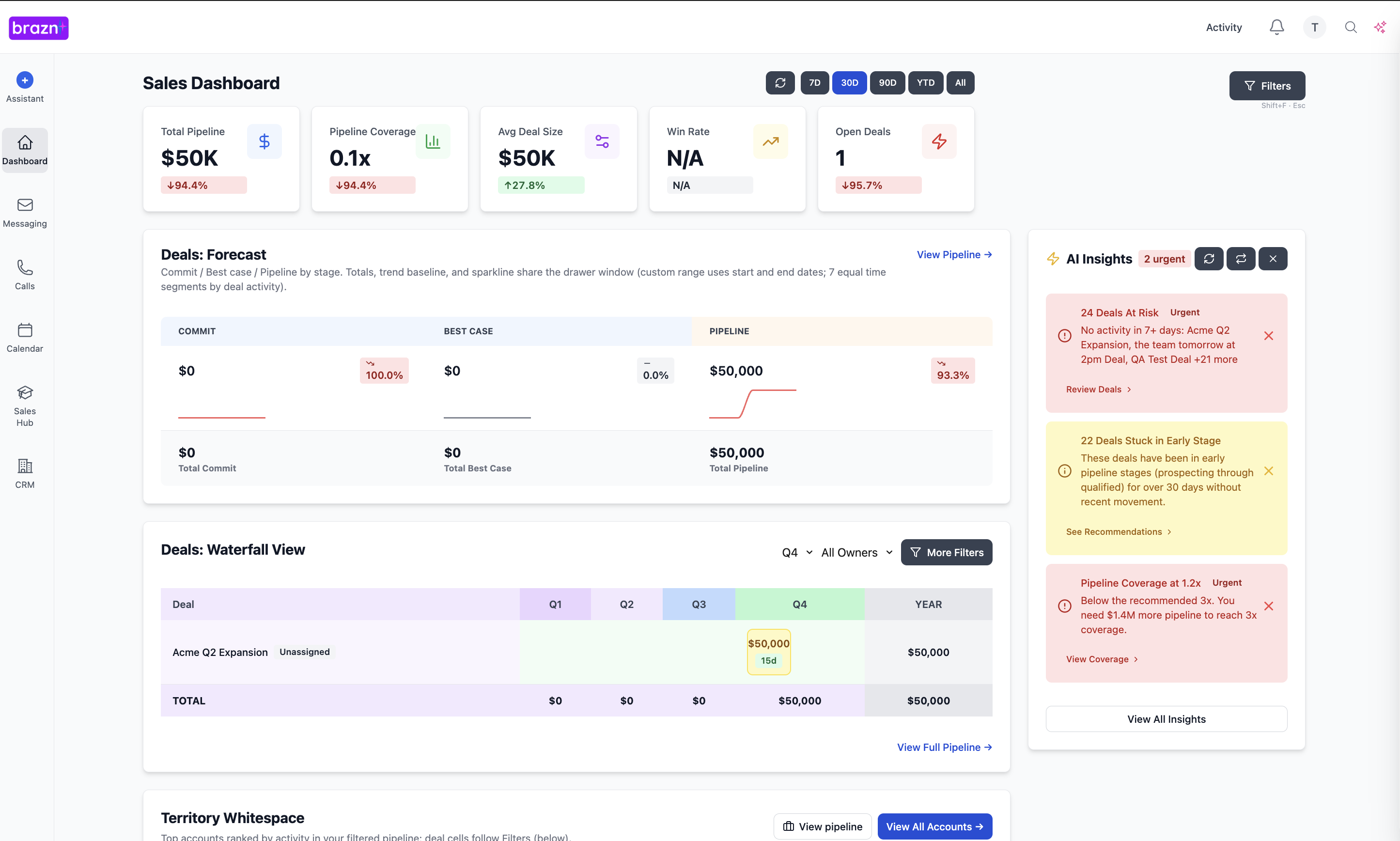
Brazn tracks Champion engagement as a specific, continuously monitored dimension of deal health. Email frequency, meeting attendance, response speed, LinkedIn signals, and CRM activity are all synthesised into a Champion health indicator that updates in real time. When a Champion's engagement drops or a role change is detected, the system flags it immediately with a specific recommended action — before the deal is affected, not after.
This turns Champion management from an art that depends on rep instinct into a measurable, manageable discipline — one that managers can coach to specifically and that reps can execute consistently across your entire pipeline.
---
The Bottom Line
The Champion is the single most important qualification variable in any complex SaaS deal. Getting the Champion identification right — distinguishing a genuine Champion from a friendly Supporter — and then investing consistently in Champion development is the difference between deals that close and deals that die without explanation.
Most reps underestimate how much of the deal is happening in conversations they are not part of. The Champion is the rep's presence in those conversations. Everything the rep does to make the Champion more effective, more confident, and more engaged makes the deal more likely to close.
---
See AI-Assisted Champion Tracking in Action
Brazn monitors Champion engagement continuously, flags disengagement before it costs a deal, and surfaces specific actions to develop Champions across your entire pipeline.
---
Book a demo to see how Brazn AI fits into your sales stack.

About the Author

Alex Margarit, Sales AI Expert, SaaS Sales Leader, BMC, ServiceNow, Docusign — 25+ years in SaaS sales.