

How to Build a SaaS Sales Forecast That Holds Up to Scrutiny
A forecast that holds up to scrutiny is one built on objective signals, not rep confidence. The moment a board member or CEO can ask "what's this based on?" and the answer is anything other than specific, verifiable deal evidence, the forecast is vulnerable.
Most SaaS forecasts don't hold up to scrutiny because they're built from the top down — rep self-reporting, aggregated through management layers, adjusted by intuition at each level. The result is a number that reflects collective optimism more than commercial reality.
The fix is not more optimism or more pessimism. It's a different methodology — one that works from objective, deal-level signals upward.
The Components of a Scrutiny-Ready Forecast
A forecast that holds up to board-level scrutiny has five components:
1. A defined, consistent forecast category systemEvery deal in the pipeline should be assigned to exactly one of four categories — and the criteria for each should be documented and applied consistently:
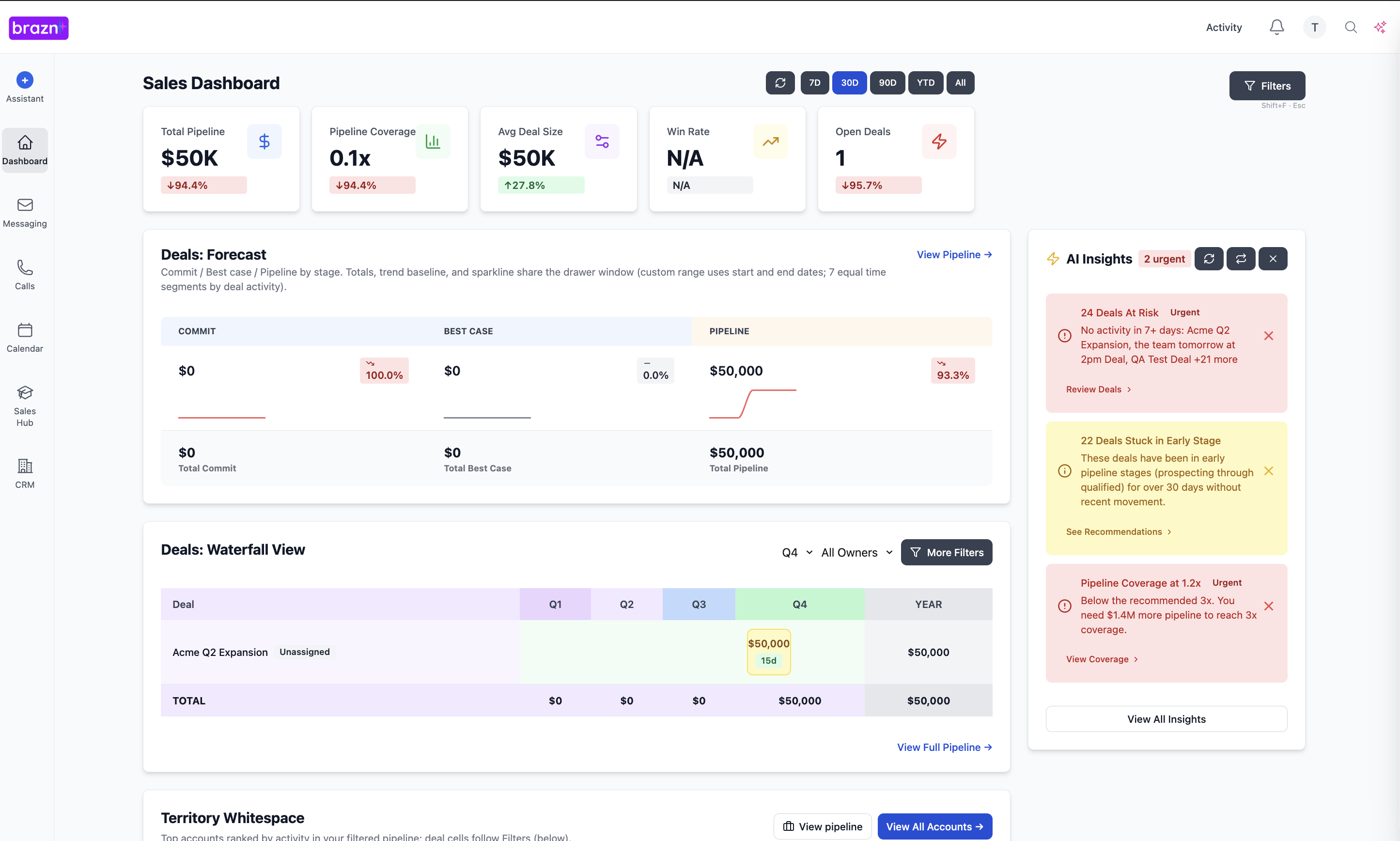
Commit: The rep believes this deal will close in the period with high confidence. Qualification is complete or nearly complete. A specific close commitment has been made by the prospect. The rep would be surprised if this didn't close. Best Case: The deal could close in the period if everything goes right. A positive outcome requires specific events to happen. The rep would not be surprised if it slipped. Pipeline: In the period's date range but not at a stage where close is expected within the period. Tracked for visibility. Omitted: In the period's date range but with known blockers that make in-period close highly unlikely.The category definitions must be applied consistently across all reps and enforced with manager review. "Commit" should mean the same thing on every rep's pipeline.
2. Qualification-based deal scoringEvery Commit and Best Case deal should be scored on qualification completeness — not just on the rep's confidence level. The questions to answer for each deal:
Is the pain quantified in business terms (Metrics established)?
Has the Economic Buyer been engaged personally?
Has the Decision Criteria been explicitly agreed?
Is the Decision Process mapped — who, what, when, approval steps?
Has the Implicate Pain been established at the EB level?
Is the Champion demonstrating active internal sponsorship?
Is there a confirmed paper process (legal, Procurement, approval)?
Deals that are committed without most of these elements evidenced are forecast risks, regardless of how positive the champion sounds.
3. Historical calibrationEvery forecast should include a historical accuracy benchmark. If the team's commit category has historically closed at 73% in-period, the board-ready forecast calculation is: Commit × 0.73, not Commit at face value.
Building this calibration table requires tracking forecast vs actuals over time — ideally rolling 8 quarters of data showing what percentage of each category actually closed in-period. AI tools like Brazn build this calibration automatically from historical data.
4. Risk-adjusted scenariosEvery forecast should include at least three scenarios:
Conservative: Commit × historical close rate, Best Case excluded. Base: Commit at face value + a probability-weighted portion of Best Case. Upside: Commit + Best Case at best historical conversion rate + any pipeline that has recently received strong qualification signals.The range between conservative and upside — and the specific deals that drive the upside — is the most useful conversation to have with a board. It's more honest than a point estimate and it identifies the deals that the CRO needs to personally help close.
5. Deal-level narrative for top dealsThe top 5–10 deals that determine whether the period hits should each have a one-paragraph narrative: what the deal is, where it stands in qualification, what the close plan is, what the specific risk is, and what the mitigation is. This is the section of the forecast review where board members will probe hardest — and where the CRO's deal-level knowledge is most visible.
Building the Forecast: The Weekly Process
Monday: Refresh deal scoresPull AI deal scores (MEDDPICC completeness, deal velocity, engagement signals) from Brazn into the forecast model. Any deal whose AI score has materially declined since last week is flagged for manager inspection before the forecast is finalised.
Tuesday: Rep forecast call-downsReps assign forecast categories and provide deal-level updates. Manager asks one question per Commit deal: "What is the specific next step that converts this to paper?" Any Commit deal without a clear answer to that question gets moved to Best Case.
Wednesday: Manager review and adjustmentsManagers review each rep's call-down against AI deal scores. Deals where rep confidence and AI score diverge significantly are individually inspected — call transcripts reviewed, MEDDPICC completeness assessed, close plan tested.
Thursday: CRO forecast assemblyCRO assembles the team-level forecast with scenario analysis. Reviews top 10 deals individually. Identifies the two or three deals where executive sponsorship or intervention could move them from Best Case to Commit.
Friday: Board-ready packageFinal forecast with Commit/Best Case/Pipeline breakdown, scenario analysis, historical calibration comparison, and top-deal narratives. Sent to CEO and relevant board members before the weekly or monthly review.
The Specific Mistakes That Produce Unreliable Forecasts
Commit inflation: Reps assign Commit to deals they'd prefer to close rather than deals they're genuinely confident will close. Fix: require specific, prospect-confirmed close commitments for Commit classification. Stage ≠ forecast category: A deal in Stage 4 is not automatically Commit. Stage reflects the process; forecast category reflects close probability. These must be assessed independently. Single-threaded deals in Commit: A deal where only the champion has been engaged is never a reliable Commit. If the EB hasn't been part of a conversation, it's Best Case at best. Close date optimism: Reps tend to set close dates to align with quarter-end rather than actual close signals. A close date without a mutual action plan and paper process is a wish, not a forecast. Ignoring late-stage velocity: A deal that should have closed last quarter and is now carrying into this quarter has a different risk profile than a deal that's progressing on its original timeline. AI tools that track velocity deviation flag these deals automatically.How Brazn Improves Forecast Accuracy
Brazn's MEDDPICC-based deal scoring provides an objective qualification signal for every deal in the forecast — separate from rep self-reporting. Deals committed without sufficient qualification evidence are flagged before the forecast is published, not after the period closes. Over time, Brazn's historical calibration data tells CROs exactly what percentage of deals at each qualification score level close in-period — converting gut-adjusted forecasts into statistically grounded predictions.
---
####
Book a demo to see how Brazn AI fits into your sales stack.

About the Author

Alex Margarit, Sales AI Expert, SaaS Sales Leader, BMC, ServiceNow, Docusign — 25+ years in SaaS sales.