
AI Sales Assistant for Salesforce Users
Salesforce is the most powerful CRM in enterprise sales. It's also the most complained-about tool in the rep's stack — too many fields, too much manual logging, too little insight returned for the time invested.The right AI sales assistant turns that trade-off around: less time spent updating Salesforce, more insight coming out of it.
The Core Salesforce Problem AI Solves
The fundamental issue is that Salesforce is a data input tool, not a data analysis tool. It stores what happened; it doesn't tell you what to do next.
Reps enter data inconsistently because the process is slow and the payoff feels invisible. Managers get reports that reflect how diligently reps log, not how healthy the pipeline really is.
AI solves this at both ends:
Input side: reduce the burden of getting accurate data into Salesforce. Output side: generate intelligence from the data that's there, even when it's imperfect.1. Automated Activity Capture
Email, calendar, and call data flows into Salesforce automatically — not as a giant activity log, but as structured, summarised intelligence.
Calls are transcribed and summarised. Key fields are auto-suggested.
Emails are tracked and relevant content is extracted (e.g. "prospect mentioned Procurement approval in the email thread from Tuesday").
Meeting outcomes are logged as deal notes, not just calendar entries.
2. Opportunity Hygiene Without Rep Burden
The classic Salesforce problem: opportunity fields are stale because updating them takes 10 minutes after every call, and reps don't do it consistently.
AI reads the activity and suggests updates:
Stage changes based on conversation signals.
Close date adjustments when the timeline shifts.
MEDDPICC field population from call content.Next step population from agreed actions in the call.
The rep reviews a suggested update rather than building it from scratch.
3. Deal Score as a Salesforce Object
An AI deal score — updated dynamically based on engagement, qualification, and velocity — can live as a custom field in Salesforce and feed directly into pipeline views and forecast categories.
Managers can sort pipeline by deal score, not just stage. Forecast calls become more objective. Sandbagging and overconfidence become visible.
4. Einstein vs Third-Party AI Layers
Salesforce Einstein offers some native AI capabilities, but it's most powerful for companies with large volumes of historical Salesforce data and significant configuration resource.
Third-party AI assistants (like Brazn) add:
Sales methodology awareness (MEDDPICC) that Einstein doesn't natively understand.
Integration with call intelligence tools outside Salesforce.
Pre-call briefs that pull context from outside the CRM.
Coaching insights that go beyond Salesforce activity data.
Both can coexist — the question is which gaps you're trying to close.
How Brazn Integrates with Salesforce
Brazn reads and writes to Salesforce natively:
Auto-populates MEDDPICC fields from call transcripts.
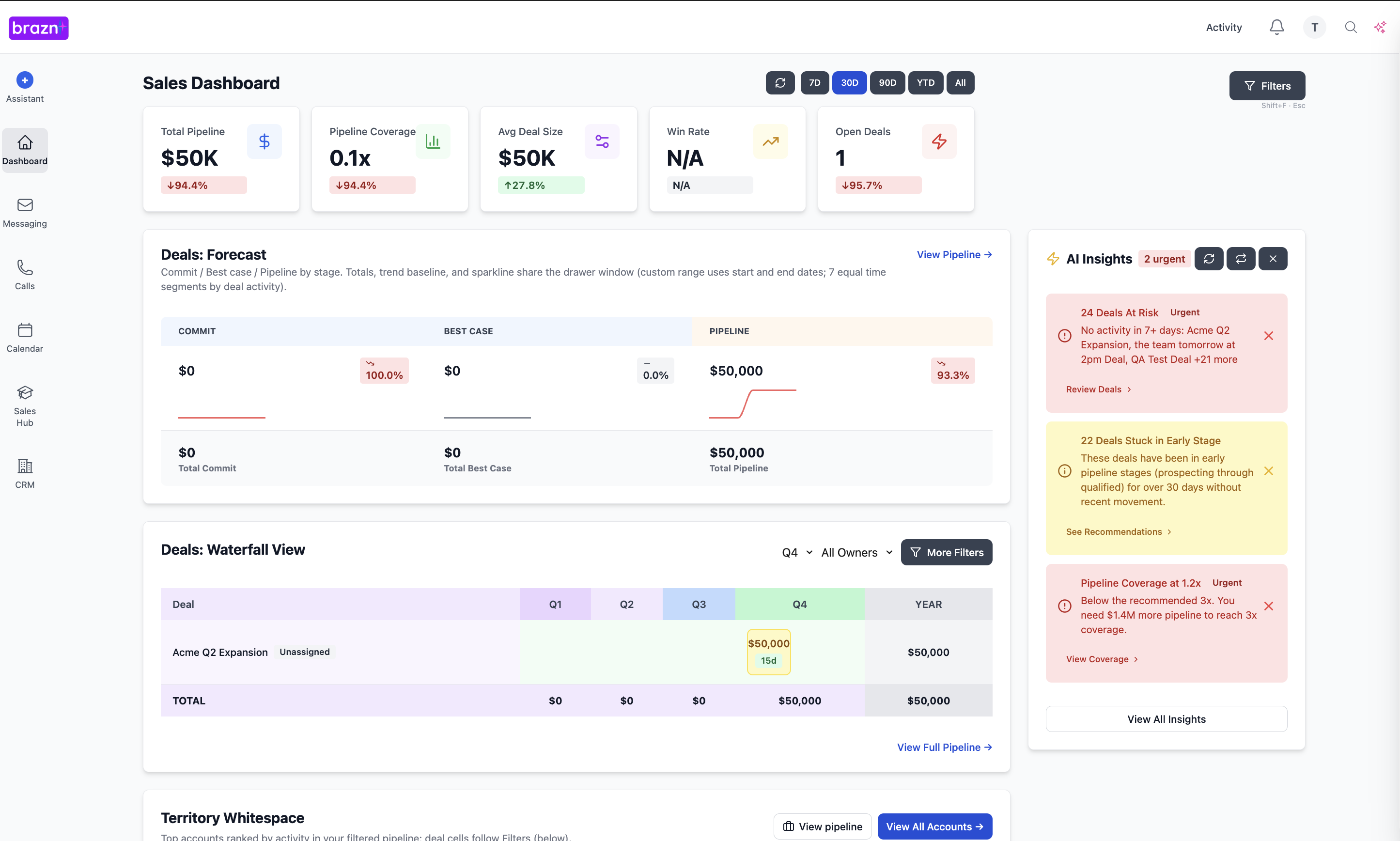
Surfaces deal risk in a Salesforce-embedded view.
Writes AI-generated call summaries directly to opportunity records.
Generates pre-call briefs from Opportunity, Account, and Contact data.
Your Salesforce becomes the source of truth it was always supposed to be.
---
####
Book a demo to see how Brazn AI fits into your sales stack.

About the Author

Alex Margarit, Sales AI Expert, SaaS Sales Leader, BMC, ServiceNow, Docusign — 25+ years in SaaS sales.