
AI Deal Scoring: How to Rank Your Pipeline Objectively
If your forecast still relies on “how confident are you?” you don’t have a forecast — you have a poll.
AI deal scoring promises a fix: a data‑driven score for every opportunity that predicts how likely it is to close. Done right, it becomes the backbone of more honest pipeline reviews and cleaner commits. Done badly, it’s just another number reps learn to ignore.
---
What AI Deal Scoring Actually Is
At its core, AI deal scoring assigns a numeric score (e.g. 0–100) to each open opportunity based on patterns in your historical win/loss data.
It looks at thousands of past deals and asks: “What did the deals we won have in common that the deals we lost did not?” Then it applies that pattern to what’s in your pipeline today.
The inputs usually fall into four or five buckets:
- Engagement: meetings, email replies, call frequency.
- Stakeholders: multi‑threading depth, executive involvement.
- Qualification: MEDDIC/MEDDPICC completeness, clear pain and metrics.
- Velocity: time in stage, progress vs similar won deals.
- Risk: competitor activity, silence, slippage signals.
---
Types of Deal Scores
Not all scores are created equal:
- Activity-based scores look mostly at raw activity (emails, calls). They’re easy to build but often noisy.
- Fit + activity scores combine ICP fit with engagement (better).
- Full pipeline intelligence models add conversation intelligence, qualification, and historical patterns (best, when implemented well).
Understanding which you have matters — otherwise you’ll trust a score that’s just rewarding spammy outreach.
---
Why Gut Feel Isn’t Enough
Even experienced managers carry bias — toward big logos, charismatic reps, or deals they’ve personally touched.
Benchmarks show that “well‑qualified” deals (strong metrics, pain, and stakeholder coverage) win several times more often than superficially similar deals with weak signal. One report cites 6x+ higher win rates for properly qualified opportunities.
AI deal scoring scales that judgement across thousands of deals, all the time.
---
Signals an AI Model Should Use
Drawing on public methodologies and what leading tools publish, a robust model will weigh:
- Buyer intent signals: email replies, meeting attendance, inbound actions.
- ICP fit: company size, industry, motion, tech stack alignment.
- Deal size and economics: ACV relative to segment norms.
- Stage progression and velocity: where it is vs how long it’s been there.
- Executive and champion engagement: how often senior stakeholders show up.
- Conversation patterns: topics discussed, objections raised, next steps agreed (from call intelligence).
- Historical patterns: how similar deals behaved before winning or losing.
Platforms like Gong and others feed in billions of interaction signals on top of CRM data to refine those patterns.
---
How to Use Deal Scores in the Real World
Deal scores are useful when they change behaviour:
- In pipeline reviews: sort by score drift (which deals just dropped 15 points and why?).
- In coaching: focus manager time on deals where score and rep confidence don’t match.
- In forecasting: build commit/best‑case categories that factor in both stage and score.
A score is a decision‑support tool, not an oracle. The manager’s job shifts from “interrogator” to “analyst + coach.”
---
Where Brazn Fits
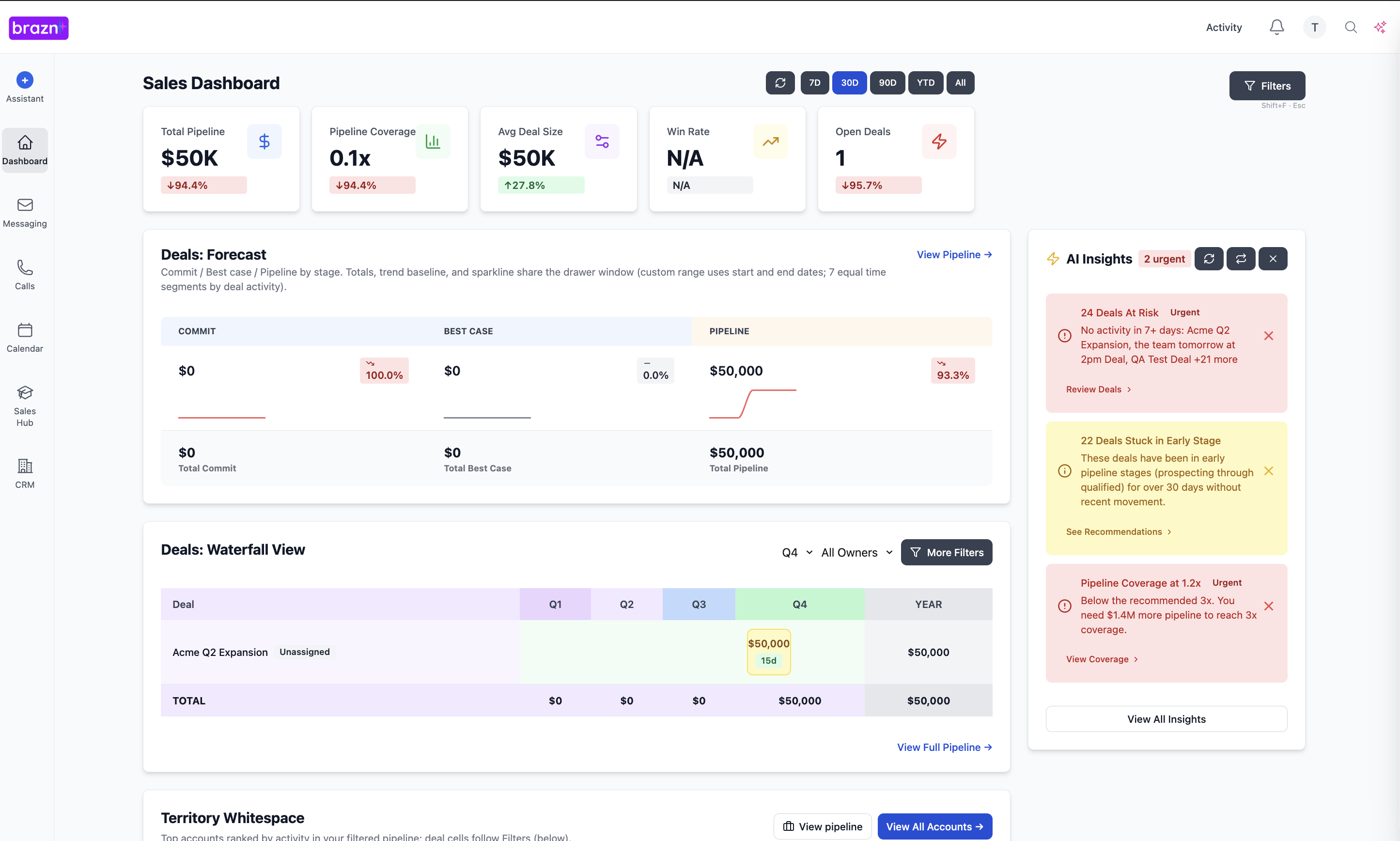
Brazn reads your CRM, engagement data, and call transcripts to build a MEDDPICC‑aware deal score:
- Treats missing MEDDPICC criteria as risk, not neutral.
- Weighs champion and EB engagement, not just meeting counts.
- Flags deals where rep sentiment (“this is a lock”) doesn’t match objective signal.
The output is a pipeline sorted by reality, not optimism.
---
####
Book a demo to see how Brazn AI fits into your sales stack.

About the Author

Alex Margarit, Sales AI Expert, SaaS Sales Leader, BMC, ServiceNow, Docusign — 25+ years in SaaS sales.