
How to Handle "We're Happy with Our Current Tool"
"We're happy with our current tool" is one of the most common objections in SaaS sales — and one of the most mishandled. Most reps treat it as a door closing. The best reps treat it as the most important piece of information they've received so far.
Satisfaction with a current tool is not a buying signal. It's a data point about how well the prospect has articulated their own pain. When a prospect says they're happy, what they're usually saying is: I haven't been given a reason to think about this differently yet. Your job isn't to overcome the objection. Your job is to earn the right to a real conversation.
---
Why This Objection Is Actually Good News
When a prospect says "we're happy with what we have," they are telling you three things at once: they have an incumbent, they have a relationship with that incumbent, and they haven't felt enough pain to question it. None of those things means you've lost the deal. They mean you haven't done discovery yet.
The status quo is always a competitor. In MEDDPICC, the "do nothing" option sits alongside every named vendor — and it is often the hardest competition to displace, because it requires no decision, no budget, and no internal selling. Understanding why the prospect is satisfied is more valuable than any feature comparison.
---
The Four Reasons Prospects Say This
Before you can handle the objection, you need to understand which version you're dealing with:
1. They genuinely haven't felt the pain yet. Their current tool is working well enough that the gap isn't visible. The problem is latent, not active. Discovery hasn't surfaced it.
2. They feel the pain but haven't connected it to tooling. They accept slow rep productivity, incomplete CRM data, or inconsistent pipeline reviews as facts of life — not as problems their stack is creating.
3. They've evaluated alternatives before and been disappointed. A previous vendor overpromised. They're protecting themselves from going through that again.
4. The person you're talking to isn't the Economic Buyer or the Champion. Their satisfaction is real — but it's not the satisfaction that matters for the buying decision.
Each version requires a different response.
---
The Framework: Four Moves
Move 1: Validate Before You Challenge
Reps who immediately push back on "we're happy with our tool" create defensiveness. Reps who validate first earn the right to probe.
"That's genuinely good to hear — a lot of the teams I talk to have had a rougher experience. Can I ask what's working well for you?"This does two things: it signals that you're not going to fight them, and it forces them to articulate what "happy" actually means. Vague satisfaction collapses under specificity.
Move 2: Probe on Outcomes, Not Features
Most reps probe on features: "Does your current tool do X?" This is the wrong question. It positions you as selling a feature checklist and invites a defensive comparison.
Probe on outcomes instead:
- "When your managers go into a pipeline review, how much of the meeting is spent on status updates versus actual coaching?"
- "When a deal goes quiet, how quickly does the team surface it?"
- "How confident are you in the forecast number heading into next quarter?"
These questions don't ask about the tool at all. They ask about the results the tool is supposed to be producing. Most prospects can't answer them with confidence — which is the opening.
Move 3: Introduce the Cost of the Status Quo
Once you've probed on outcomes and found a gap — even a small one — quantify it. Don't exaggerate. Just make the cost of "good enough" visible.
"A lot of the teams we work with said the same thing before we started working together. What they found when they dug into it was that good enough was costing them around 4–6 hours per rep per week in CRM admin, and forecasts were missing by 20–30% on average. If those numbers are even half true for your team, it's worth a 30-minute conversation."You're not selling. You're helping them evaluate whether their current level of satisfaction is based on accurate information.
Move 4: Reframe the Conversation
If the prospect remains resistant, reframe from vendor evaluation to benchmarking:
"I'm not asking you to switch anything. I'm asking whether it's worth 30 minutes to see if how your team is running today is at the level you should expect from your stack. If everything looks good, I'll have wasted 30 minutes. That seems like a reasonable risk."This removes the threat of commitment and repositions the conversation as risk-free intelligence gathering.
---
Applying MEDDPICC to This Objection
In MEDDPICC terms, "we're happy with our current tool" is a signal that you're missing Identify Pain. The Economic Buyer hasn't felt the pain. Or the person you're talking to isn't the Champion — they don't have internal credibility to drive change even if they wanted to.
Before you handle the objection at the surface level, diagnose where you are in the qualification map:
| MEDDPICC Element | What to check |
| --- | --- |
| Metrics | Has the prospect quantified what their current tool produces? |
| Economic Buyer | Are you talking to the person with P&L ownership? |
| Identify Pain | Has the prospect articulated a problem, or just expressed satisfaction? |
| Champion | Is there anyone inside the account who has reason to want change? |
| Competition | Is the status quo your real competitor here? |
If Pain is absent and there's no Champion, you have a prospecting problem, not an objection problem. The right move may be to qualify out and focus on accounts where the pain is already active.
---
What Not to Do
- Don't feature-dump. Listing everything your product does versus their incumbent invites a feature war you won't win on the prospect's terms.
- Don't bad-mouth the competitor. "Your current tool doesn't do X" creates defensiveness and makes you look insecure.
- Don't fold immediately. One "we're happy" doesn't mean no. It means the discovery conversation hasn't happened yet.
- Don't keep pushing if Pain genuinely isn't there. If after two or three probing questions there is no gap and no tension, qualify out gracefully. Chasing deals without Pain wastes your quota capacity.
---
The Script: A Full Handling Sequence
> Prospect: We're pretty happy with our current tool, to be honest.
You: That's good to hear — a lot of the teams I speak to are in a different position. Can I ask what's working well for you?
Prospect: It does what we need it to.
You: Totally. I'm not here to fix what isn't broken. One thing I'm curious about — when your managers run the weekly pipeline review, how much of that meeting is actually coaching versus status gathering?
Prospect: Probably mostly status, to be honest. It takes a while.
You: That's the thing we hear most. The tool works, but the meetings stay slow because the data isn't quite reliable enough to skip the verification step. That's typically where teams end up spending an extra 3–4 hours a week per manager. It might not be relevant for your team, but it might be worth 30 minutes to see if that matches your experience.
>
---
How Brazn Helps
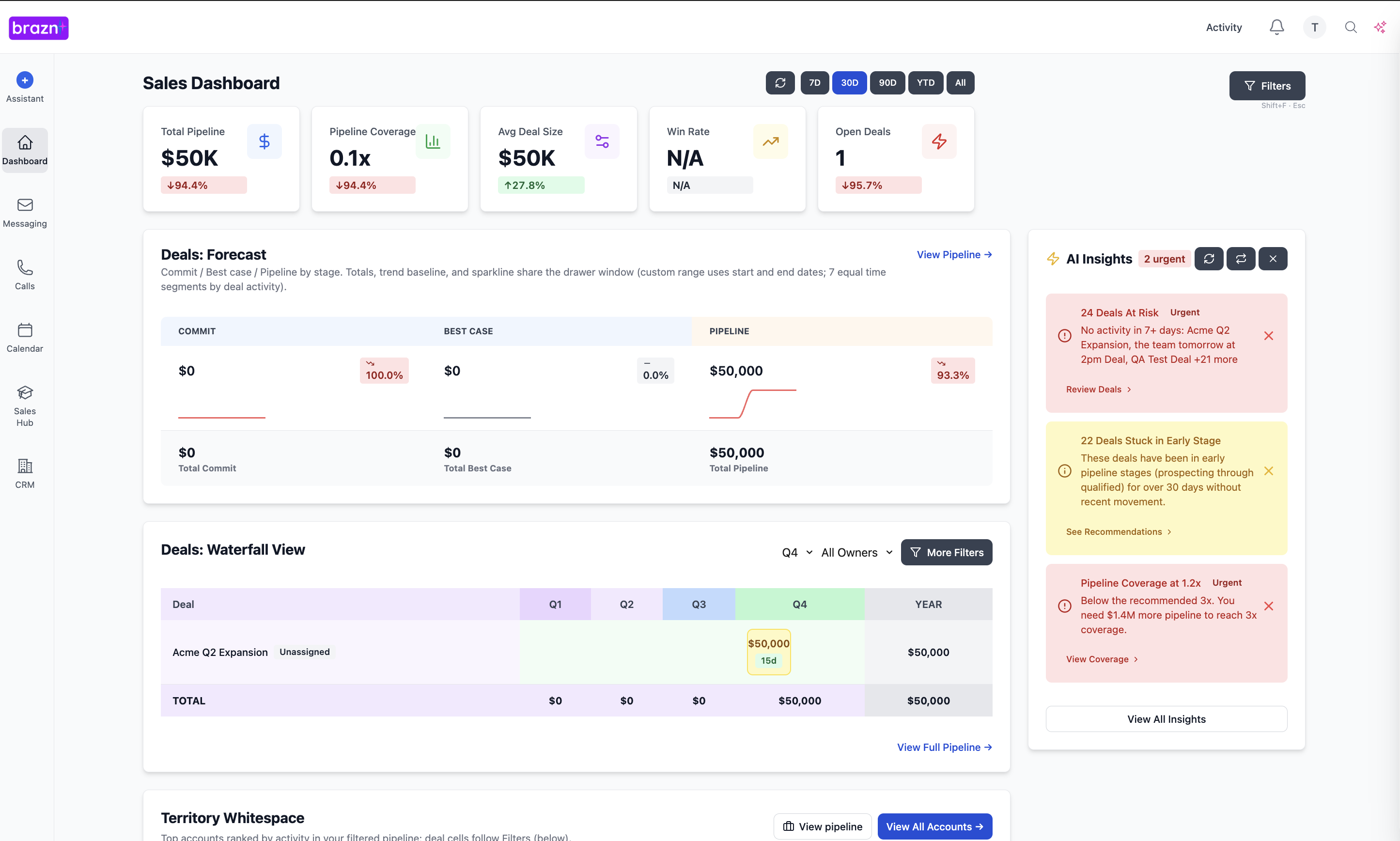
Brazn surfaces MEDDPICC gaps automatically — so reps know before the call whether Pain has been identified, whether the Champion is active, and whether the prospect's deal history suggests genuine satisfaction or unexplored tension. When reps walk into objection-handling conversations with that context, the questions they ask are sharper and the conversations move faster.
---
####
Book a demo to see how Brazn AI fits into your sales stack.

About the Author

Alex Margarit, Sales AI Expert, SaaS Sales Leader, BMC, ServiceNow, Docusign — 25+ years in SaaS sales.