
How to Handle "We Don't Have Budget"
"We don't have budget" is the Objection that ends more SaaS deals prematurely than any other. Most reps hear it and fold — either discounting immediately to make the problem go away or accepting it as a genuine blocker and moving on.
Both responses are almost always wrong. "We don't have budget" is rarely a statement of fact. It is most often a prioritisation signal, a deflection, or an early-stage proxy for a deeper objection. Understanding which one it is determines the right response.
---
The Three Things "No Budget" Usually Means
"This isn't a priority."Budget exists for the things a company has decided to prioritise. The real message is: "We haven't decided this is worth spending on." This is a pain and ROI problem, not a budget problem.
"I don't have authority to approve this."The contact you're speaking with doesn't control the budget for this purchase and doesn't want to admit it. "No budget" is more comfortable than "I don't have the authority to say yes."
"The price feels too high relative to the perceived value."The prospect has budget but has calculated (consciously or not) that the price is higher than what they believe the solution is worth. This is a value problem, not a budget problem.
The response needs to address the actual underlying issue — which means diagnosing it first.
---
Diagnostic Questions
- "Is it that there's genuinely no budget allocated for this category, or more that it hasn't been prioritised yet?"
- "Who would typically approve a purchase like this at [Company]? Is that you, or would this need to go up to [CFO/CRO]?"
- "If the ROI case was clear — say, a 3× return in the first quarter — would that change the budget conversation?"
- "When does your next budget cycle open? Is this something that could be planned for?"
The answers clarify which of the three scenarios you're in.
---
The Response by Scenario
If it's a prioritisation problem:Return to the business impact. "Let's test whether this is really a budget question or a priority question. You mentioned [specific quantified pain] — if we can demonstrate that this solves a £X problem, what would that do to the budget conversation?"
Build the ROI case collaboratively with the champion. Help them make the internal business case for prioritisation. The formula:
- Cost of the problem: Quantify what the current situation is costing in measurable terms — missed quota, forecast error rate, rep ramp time, deals lost to qualification failures.
- Cost of your solution: Annual contract value.
- Net business impact: Cost of the problem minus cost of solution.
- Payback period: Time to first positive return.
When the ROI case is specific and credible, "we don't have budget" becomes "we need to find budget" — which is a completely different conversation. Champions who see a clear business case become internal advocates who create budget, not gatekeepers who block it.
If it's an authority problem:Don't try to work around the person — work through them. "It sounds like this might need to involve [CFO/CRO] — would you be comfortable setting up a conversation with them? I can make it as easy as possible — I'll prepare a one-page executive summary focused on business impact rather than product features."
The goal is EB engagement, which should be happening regardless of the budget objection. The budget objection has done you a favour by identifying that the person you're talking to isn't the Economic Buyer.
If it's a perceived value problem:Don't discount. Discounting before the value is established confirms that the price was arbitrary to begin with and trains the customer to always start negotiations by declaring no budget.
Instead: "Help me understand — when you say the budget isn't there, is it that the price feels higher than the value you're expecting to get from it? Because if that's the case, I'd rather work on making sure the value is clear than adjust the price."
Then rebuild the value case — specifically, with numbers tied to their stated business problems.
---
The Budget Objection in Early Discovery
If "no budget" appears in the first or second conversation, treat it differently than if it appears at Stage 4. In early conversations, budget pressure is almost always real — you're speaking with someone who genuinely doesn't know yet whether this is a priority.
The right response is not to fight it: "That's completely fine — we're not here to talk about budget today. I just want to understand whether the problem is real enough to be worth exploring. Can I ask you a few questions about [specific pain area]?"
Separate the budget conversation from the pain conversation. If the pain is real and significant, budget will emerge.
---
What Never to Do
Don't discount immediately. Early discounting destroys deal economics, signals desperation, and establishes a precedent every future renewal will reference. Don't accept it as final without diagnosis. "No budget" accepted at face value is a deal that didn't need to die. Don't use it as a reason to qualify out a good-fit prospect. Budget constraints are temporal. A well-qualified prospect at a well-fit company who has no budget today is a pipeline asset — park them in a nurture sequence, maintain the relationship, and return when their budget cycle resets.---
How Brazn Helps With Budget Objections
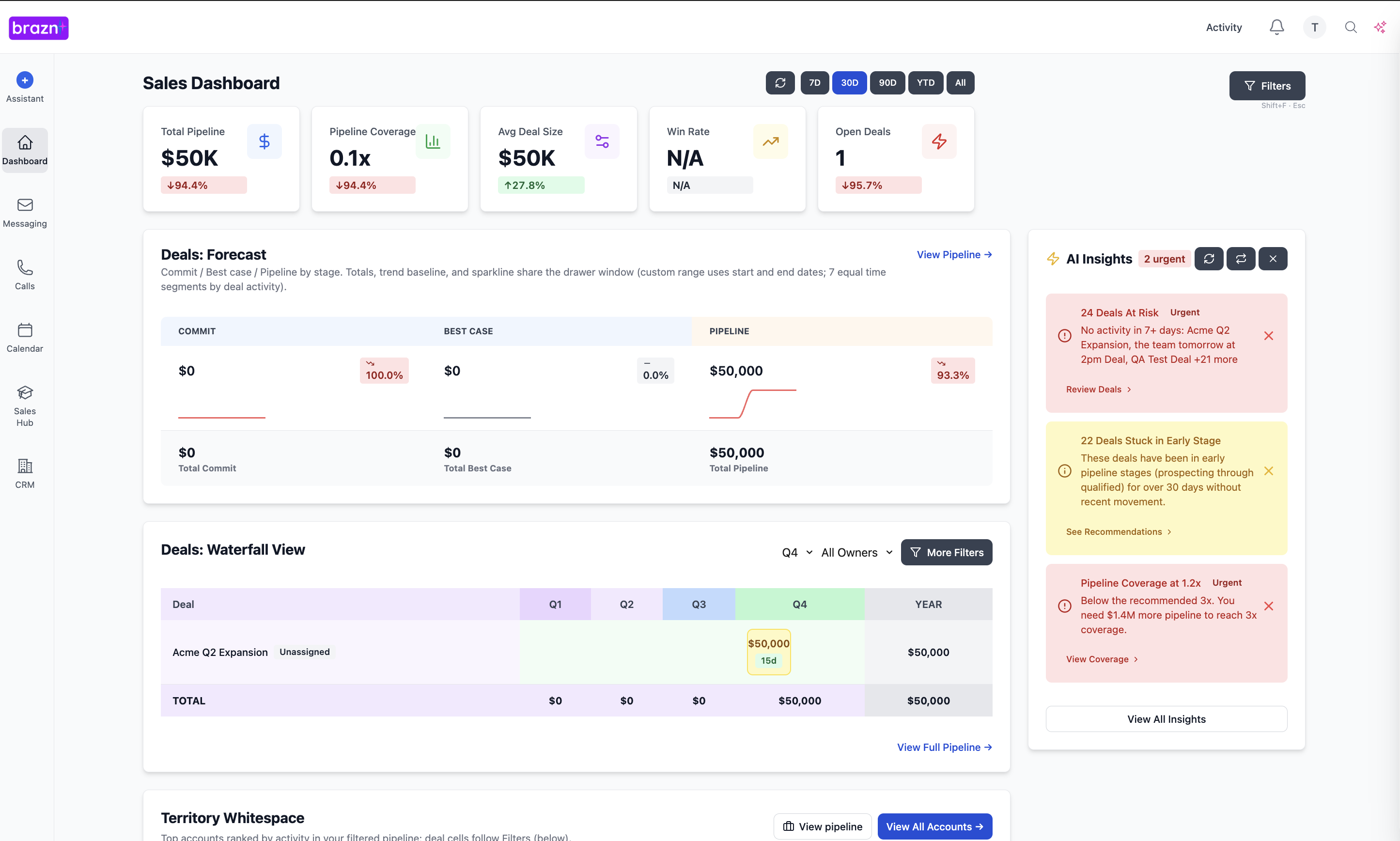
Brazn's deal intelligence flags deals where the Metrics element of MEDDPICC is incomplete — the most common underlying cause of budget objections. If the prospect hasn't articulated the quantified business impact of their problem, they have no internal basis for creating or prioritising budget. Brazn surfaces this gap early, giving the rep the chance to build the ROI case before the budget conversation happens rather than after it's become an objection.
---
####
Book a demo to see how Brazn AI fits into your sales stack.

About the Author

Alex Margarit, Sales AI Expert, SaaS Sales Leader, BMC, ServiceNow, Docusign — 25+ years in SaaS sales.