

Why Most AI Sales Pilots Don’t Survive Their Second Quarter
The pattern is familiar: a revenue leader attends a conference, sees a dazzling demo of a new AI sales tool, and immediately launches a pilot program with their top reps. For the first few weeks, excitement is high. But by month four, usage drops to near zero, the reps complain the tool is 'clunky,' and the CFO quietly cancels the contract.
This 'pilot purgatory' is the most common outcome for AI initiatives in B2B sales. The failure is rarely due to the technology itself; it's almost always a failure of change management and operational integration.
This article dissects why most AI sales pilots fail to reach maturity. We will outline the common traps teams fall into and provide a framework for designing pilot programs that actually stick, scale, and deliver long-term ROI.
What We'll Cover
In this article, we will cover:
- The 'Shiny Object Syndrome' in RevOps
- Why reps abandon new tools after the novelty wears off
- The critical mistake of isolating the pilot group
- Designing a pilot for operational integration
- Metrics that prove long-term value, not just initial excitement
Understanding the Approach
A successful AI pilot isn't just a test of the software's capabilities; it's a test of the organization's ability to absorb and operationalize a new workflow. It requires treating the pilot as a change management exercise, not just an IT deployment.
Example: A failed pilot gives 10 reps a new AI email writer and says, 'Try this out and let us know what you think.' A successful pilot identifies a specific bottleneck (e.g., low conversion on post-webinar follow-ups), integrates the AI tool specifically into that workflow, trains the reps on the new process, and measures the conversion rate against a control group.
Why This Matters
Designing pilots for long-term adoption ensures that your technology investments actually translate into sustained revenue growth.
- Before: The company wastes thousands of dollars on software subscriptions that no one uses. After: The company achieves high adoption rates and clear ROI on every technology investment.
- Before: Reps suffer from 'tool fatigue,' resisting any new initiative from leadership. After: Reps eagerly embrace new tools because they're integrated seamlessly into their daily routines and solve real problems.
- Before: AI is viewed as a gimmick. After: AI is viewed as a core, indispensable part of the revenue engine.
The Complete Guide
H3 Trap 1: The 'Vague Objective' Pilot
The Mistake: Launching a pilot to 'see if AI can help us sell more.'
The Fix: Define a hyper-specific, measurable objective before the pilot begins. For example, 'The goal of this pilot is to use AI to reduce the time spent researching target accounts from 15 minutes to 3 minutes, without decreasing the reply rate.'
Best Practices: If you can't measure the baseline metric before the pilot starts, you aren't ready to launch the pilot.
H3 Trap 2: The 'Superstar Only' Pilot Group
The Mistake: Only giving the new tool to your top-performing reps, assuming they will figure it out best.
The Fix: Top performers often have established habits they're reluctant to change, and their results may not be replicable by the rest of the team. Include a mix of top, middle, and lower-tier performers in the pilot to see if the tool can actually raise the baseline of the entire organization.
Best Practices: The true test of an AI tool is whether it makes your average reps better, not just your best reps faster.
H3 Trap 3: The 'Standalone Workflow' Error
The Mistake: Forcing reps to log into a separate platform or break their existing workflow to use the new AI tool.
The Fix: Integration is non-negotiable. If the AI tool doesn't integrate directly into the systems the reps already use all day (CRM, email client, Slack), it will fail. The AI must meet the rep where they already work.
Best Practices: RevOps must prioritize API capabilities and native integrations when evaluating any new AI vendor.
How to Implement This
RevOps must act as the strict gatekeeper for new technology, refusing to launch a pilot until the integration path and success metrics are clearly defined. Sales Enablement must focus training on the workflow, not just the features of the software. Sales Leadership must actively participate in the pilot, reviewing the data weekly and holding reps accountable for using the tool as designed during the test period.
Next Steps
A pilot isn't a trial run for the software; it's a trial run for your team's ability to adapt.
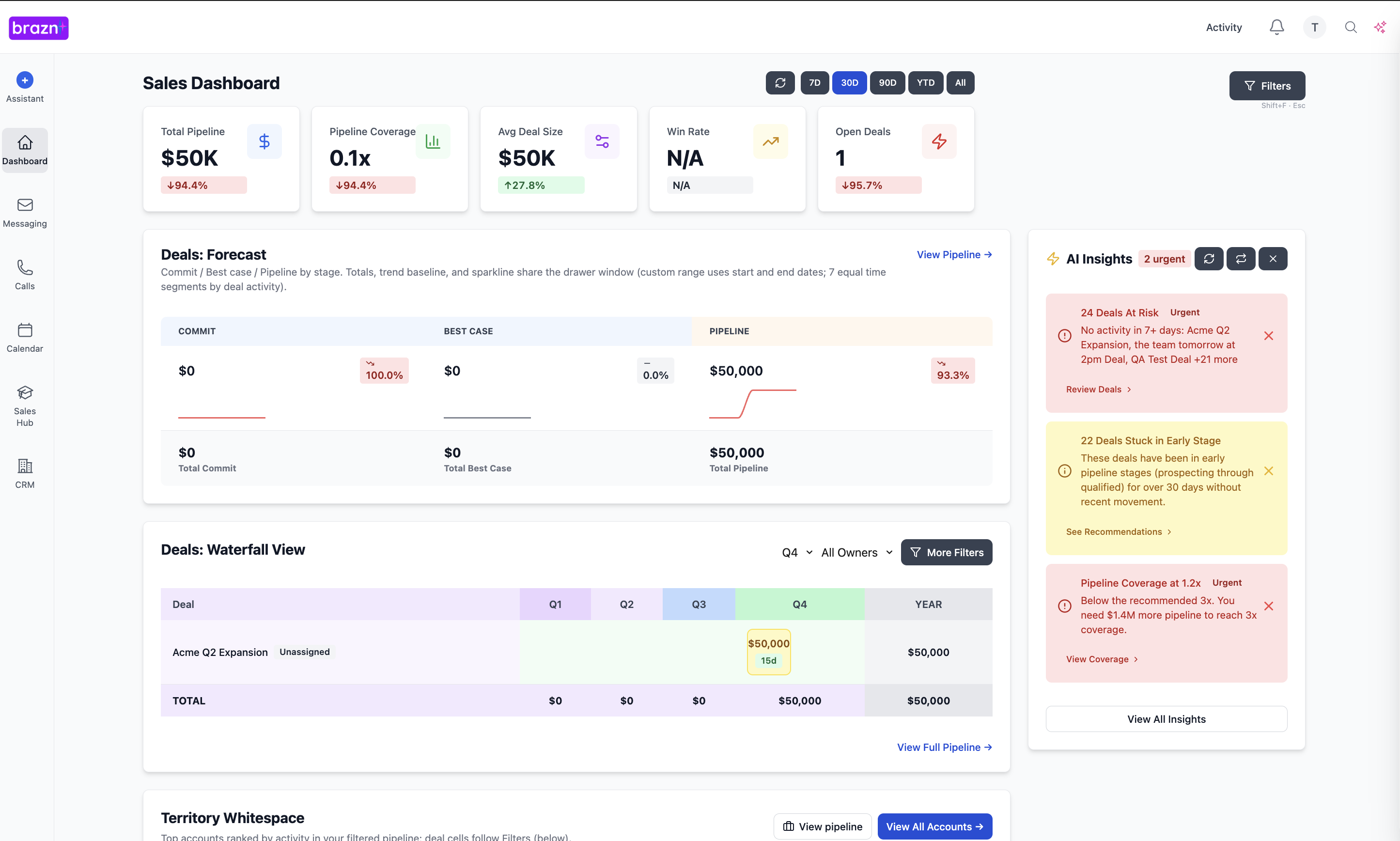
Before you sign another software contract, ask yourself: 'Have we defined exactly how this will change our reps' daily routine, and are we prepared to enforce that change?' If the answer is no, save your money. Ready to deploy AI that actually sticks? See how Brazn's platform integrates seamlessly into your existing GTM workflows.
Book a demo to see how Brazn AI fits into your sales stack.

About the Author

Alex Margarit, Sales AI Expert, SaaS Sales Leader, BMC, ServiceNow, Docusign — 25+ years in SaaS sales.