

The Brazn Operating Model: One Surface for Plan, Execute, Coach
The fundamental problem in most Go-To-Market organizations is fragmentation. The Chief Revenue Officer builds the strategic Plan in a spreadsheet. The AEs Execute that plan in a CRM and a separate sales engagement tool. The Managers attempt to Coach the team using yet another conversation intelligence platform. This disjointed architecture creates massive data silos, forcing reps to constantly switch context and leaving leadership with a fragmented view of reality. When the tools don't talk to each other, the strategy fails to translate into execution.
To achieve predictable, efficient growth, revenue teams must collapse these silos. The solution is the 'Brazn Operating Model'—a unified approach that brings Planning, Execution, and Coaching into a single, AI-native surface. This article explains how unifying these three pillars transforms a revenue organization from a collection of disjointed tactics into a cohesive, high-performing engine.
What We'll Cover
In this article, we will cover:
- The hidden cost of fragmented GTM tech stacks
- Defining the Brazn Operating Model
- Pillar 1: AI-Assisted Planning and Forecasting
- Pillar 2: Seamless Execution in the Flow of Work
- Pillar 3: Contextual Coaching at the Point of Action
- How to transition your team to a unified surface
Understanding the Approach
The 'Brazn Operating Model' is a strategic framework that centralizes the three core functions of revenue generation—Planning, Execution, and Coaching—into one integrated platform. In a GTM context, it eliminates the friction of context switching and ensures that the strategic goals set by leadership are directly embedded into the daily workflows and coaching routines of the sales team.
Example: Instead of a manager planning a 'Competitor X Takedown' strategy in a doc, AEs executing it in their email tool, and the manager checking if it worked in a call recording tool weeks later, the Brazn model allows the manager to deploy the strategy, the AI to guide the AE during the live call, and the manager to review the execution data—all in one place.
Why This Matters
Unifying the revenue workflow is critical for increasing rep capacity, improving data accuracy, and accelerating the feedback loop between strategy and execution.
- Before: Reps waste 20% of their day switching between 6 different tools, leading to 'tool fatigue' and poor data hygiene. After: Reps work within a single surface, dramatically increasing their active selling time and ensuring complete data capture.
- Before: Coaching is disconnected from the actual workflow, relying on managers remembering to review calls after the fact. After: Coaching is embedded directly into the execution phase, with AI providing real-time guidance and managers offering contextual feedback on specific deals.
- Before: The CRO's forecast is based on subjective rep updates in the CRM. After: The forecast is generated by AI analyzing the actual execution data (calls, emails, engagement) happening within the same platform.
The Complete Guide
H3 Pillar 1: Plan (The Strategy Engine)
Objective: Set data-driven targets and identify pipeline risks early.
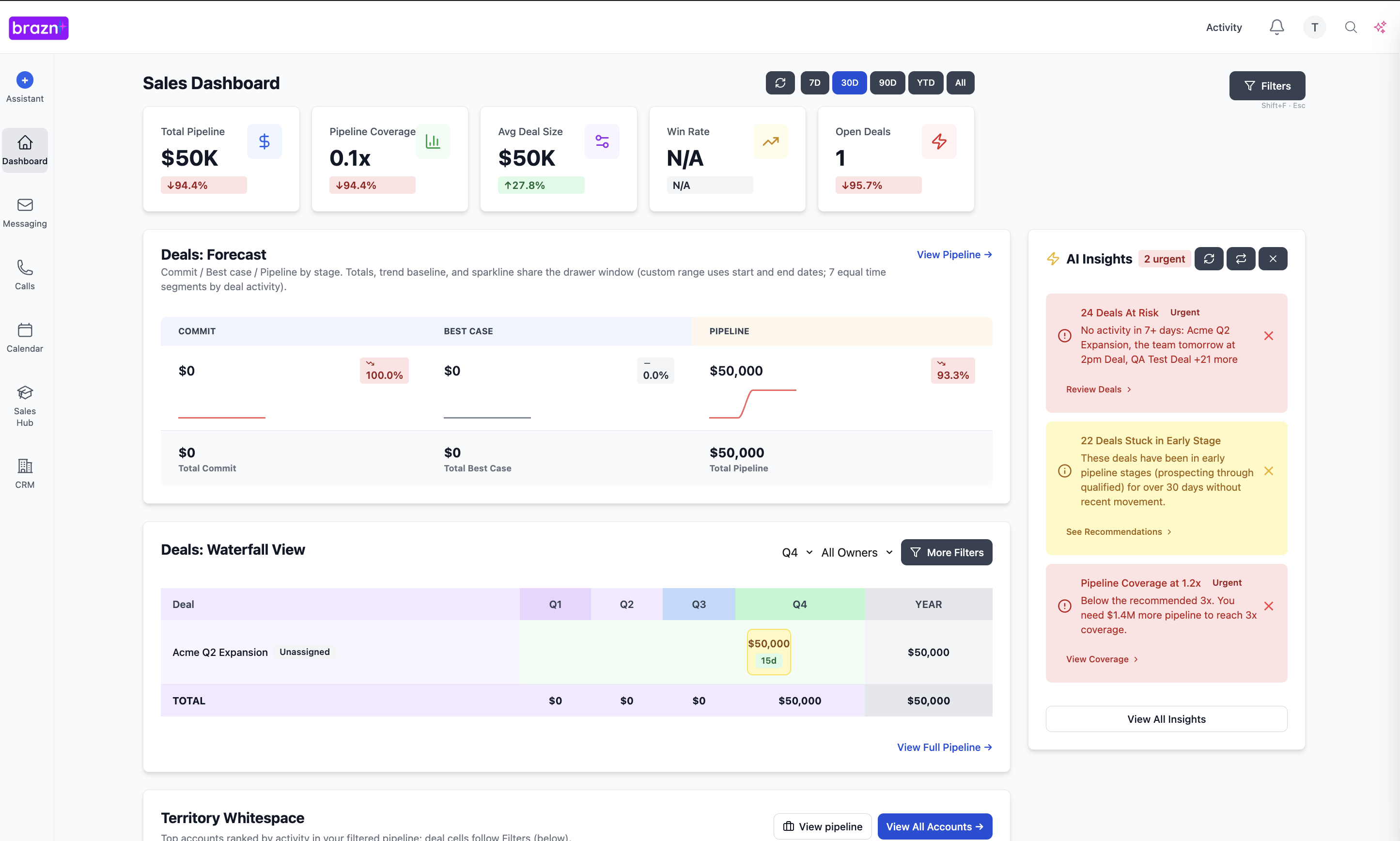
Actionable Advice: Move forecasting and pipeline management out of spreadsheets. Use a unified platform where the 'Plan' is dynamically updated based on real-time execution data. Leverage AI to analyze historical win rates and current deal velocity to generate objective forecast confidence scores.
Best Practices: Ensure the planning phase includes setting specific, measurable goals for leading indicators (e.g., 'Generate 50 new SALs this week'), not just lagging revenue targets.
H3 Pillar 2: Execute (The Action Surface)
Objective: Empower reps to act on the plan without friction.
Actionable Advice: Bring email, dialing, LinkedIn outreach, and CRM updates into the same interface where the plan lives. Use AI agents to automate the administrative execution—drafting emails, logging call notes, and updating deal stages—so reps can focus on the human elements of selling.
Best Practices: Embed 'Living Account Briefs' directly into the execution surface so reps have perfect context the moment they reach out to a prospect.
H3 Pillar 3: Coach (The Improvement Loop)
Objective: Continuously refine execution based on real-world feedback.
Actionable Advice: Integrate conversation intelligence directly into the deal management view. Managers should be able to look at a stalled deal in the pipeline, click directly into the AI summary of the last call, and leave specific coaching notes for the AE without ever leaving the platform.
Best Practices: Use AI to identify 'coachable moments' (e.g., an AE struggling with a specific objection) and automatically surface those moments to the manager.
How to Implement This
Implementing the Brazn Operating Model requires a strategic commitment from the CRO to sunset redundant point solutions. RevOps is the architect, responsible for configuring the unified platform to match the company's specific GTM motion. Enablement must guide the change management process, shifting the team's mindset from 'using multiple tools' to 'operating within a single system.'
Next Steps
Complexity is the enemy of execution. By unifying Planning, Execution, and Coaching into a single surface, you remove the friction that slows down your sales cycles and obscures your visibility.
Start small: Identify the two tools your AEs switch between most frequently (e.g., CRM and Email Sequencing). Calculate the time lost to context switching. Ready to collapse your silos? Discover how the Brazn Operating Model can unify your revenue engine.
Book a demo to see how Brazn AI fits into your sales stack.

About the Author

Alex Margarit, Sales AI Expert, SaaS Sales Leader, BMC, ServiceNow, Docusign — 25+ years in SaaS sales.