Where AE Hours Actually Disappear (and How to Reclaim Them)
Ask any Account Executive how they spend their week, and they'll tell you they're constantly busy. Yet, when sales leadership looks at the CRM, the volume of actual selling activity—discovery calls, demos, negotiations—often tells a different story. The uncomfortable truth is that most AEs are drowning in 'shadow work': the administrative, repetitive tasks that are necessary to keep the CRM updated but do nothing to advance a deal.
This isn't a failure of the reps; it's a failure of the system. We hire expensive, highly skilled sellers and then force them to act as data entry clerks. If you want to increase revenue without increasing headcount, you must find and eliminate these hidden time sinks.
In this article, we will expose the black holes where AE hours disappear and provide actionable AI-driven strategies to reclaim that time for actual selling.
What We'll Cover
In this article, we will cover:
- The concept of 'Shadow Work' in modern sales
- The top 4 administrative tasks draining AE productivity
- How to use AI to automate pre-call research and prep
- How to eliminate post-call data entry and follow-ups
- A framework for calculating the ROI of reclaimed selling time
Understanding the Approach
In RevOps, 'Shadow Work' refers to the necessary but non-revenue-generating tasks that reps perform to maintain the operational cadence of the sales organization. This includes updating CRM fields, drafting follow-up emails, searching for collateral, and compiling account research.
For example, an AE might spend 45 minutes preparing for a Discovery Call by reading the prospect's 10-K, checking their recent LinkedIn posts, and reviewing past support tickets. While this context is vital, the act of gathering it's shadow work. AI can automate the aggregation and summarization of this data, turning 45 minutes of prep into a 3-minute review of an AI-generated brief.
Why This Matters
Reclaiming AE time is the highest-leverage activity a RevOps team can undertake. It directly increases capacity, improves morale, and accelerates deal velocity.
- Before: AEs spend 50% of their week on CRM updates and internal communications. After: AI automates data entry, allowing AEs to spend 80% of their time engaging with buyers.
- Before: Reps skip pre-call research because they don't have time, leading to generic, ineffective discovery calls. After: AI delivers instant account briefs, ensuring every call is highly tailored and strategic.
- Before: Follow-up emails take 24-48 hours to send as reps catch up on admin work. After: AI drafts the follow-up immediately after the call, maintaining deal momentum.
The Complete Guide
H3 1. The Pre-Call Research Black Hole
Objective: Reduce meeting prep time from 30 minutes to 3 minutes.
Actionable Advice: Implement an AI tool that automatically scrapes the prospect's website, recent news, and LinkedIn activity, delivering a concise 'Executive Brief' to the rep's inbox 15 minutes before the call.
Best Practices: Ensure the brief highlights potential pain points and suggests specific discovery questions based on the research.
H3 2. The Post-Call Data Entry Drain
Objective: Eliminate manual CRM updates after meetings.
Actionable Advice: Use conversational AI (like Gong or Chorus integrated with your CRM) to automatically transcribe calls, extract key MEDDPICC criteria, and populate the corresponding fields in Salesforce or Hubspot.
Best Practices: Set up a workflow where the rep only needs to click 'Approve' to finalize the AI's suggested CRM updates.
H3 3. The 'Follow-Up Email' Bottleneck
Objective: Send personalized follow-ups within 10 minutes of a call ending.
Actionable Advice: Leverage AI to draft a follow-up email based on the call transcript. The draft should summarize the key challenges discussed, outline the agreed-upon next steps, and link to relevant collateral.
Best Practices: The rep must quickly review and personalize the tone before sending, but the heavy lifting of drafting is done.
H3 4. The Internal Deal Review Prep
Objective: Stop reps from spending hours building slides for pipeline reviews.
Actionable Advice: Create an AI prompt that analyzes the CRM history of an opportunity and generates a concise summary of deal health, identified risks, and next steps, which the rep can present directly to their manager.
Best Practices: Standardize the output format so managers can quickly digest the information across the entire team.
How to Implement This
RevOps must lead the charge in identifying and eliminating shadow work. Start by shadowing your top reps for a day to see exactly where they click, copy, and paste. Quantify the time spent on these manual tasks. Then, deploy AI agents to automate the most time-consuming workflows, starting with post-call CRM logging. Enablement must train reps to trust the AI outputs and shift their mindset from 'data entry' to 'data review and approval.'
Next Steps
Your AEs are your most expensive and valuable resource. Every hour they spend doing data entry is an hour they aren't closing deals. By deploying AI to handle the shadow work, you aren't just saving time; you're unlocking the true revenue potential of your existing team.
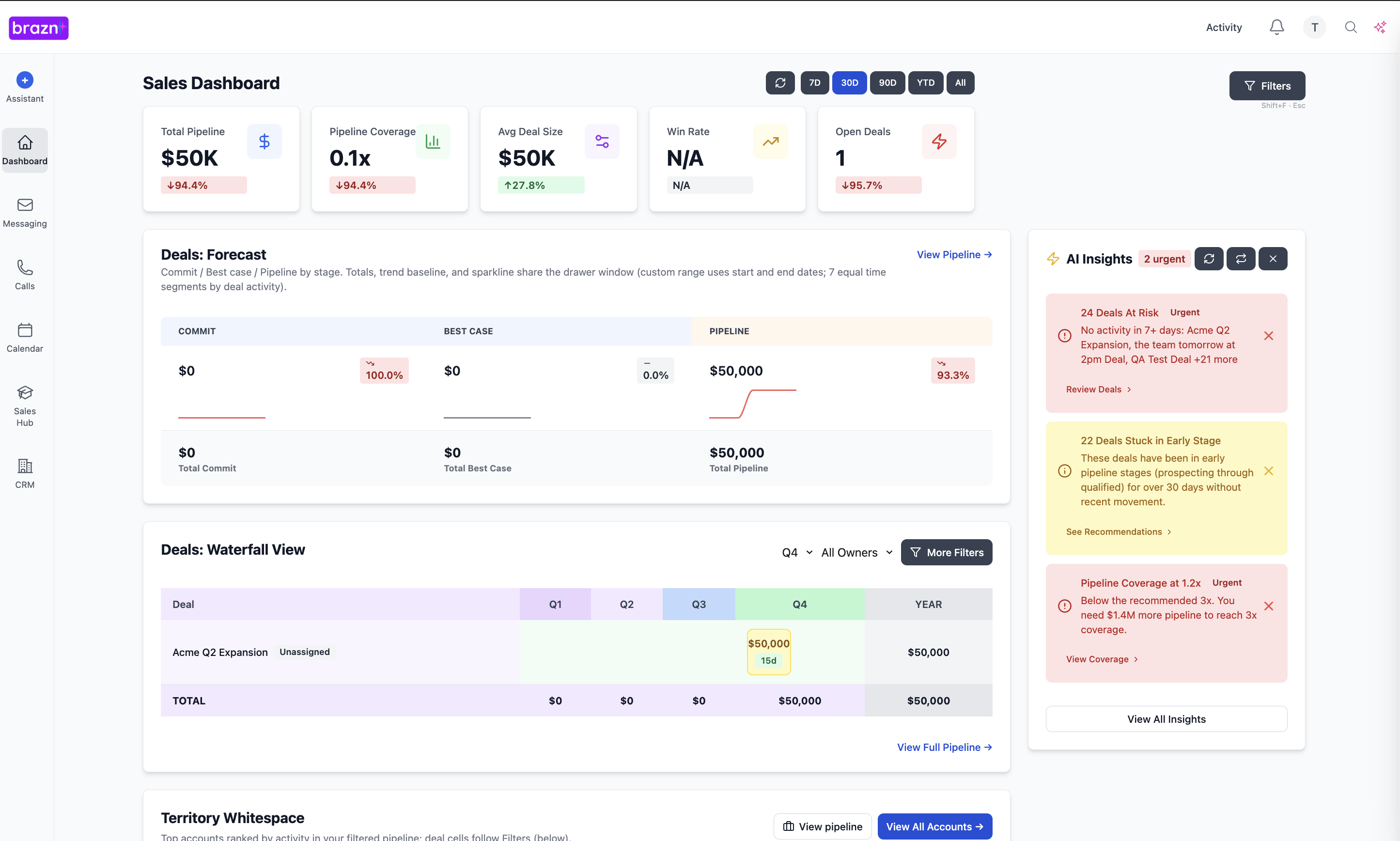
Ask your team today: 'What is the most annoying administrative task you do every week?' Find a way to automate that single task by Friday. Ready to give your AEs their time back? See how Brazn automates the busywork.
Book a demo to see how Brazn AI fits into your sales stack.
About the Author
Alex Margarit, Sales AI Expert, SaaS Sales Leader, BMC, ServiceNow, Docusign — 25+ years in SaaS sales.