

What Security and Legal Need to Ship an AI Sales Assistant Your CRO Can Actually Use
The mandate from the CRO is clear: "Deploy an AI sales assistant to increase rep productivity and pipeline coverage." But the moment RevOps tries to execute, they hit a brick wall built by the Security and Legal teams. Concerns over data privacy, compliance, and rogue AI behavior bring the project to a grinding halt. The CRO is frustrated by the delay, while Security and Legal are terrified of the risk.
This standoff is a common occurrence in modern Go-to-Market organizations. The problem isn't that Security and Legal are being difficult; it's that revenue teams often fail to proactively address the legitimate risks associated with AI. When AI tools are treated as just another software purchase, rather than a fundamental shift in data processing, friction is inevitable.
This article provides a blueprint for bridging the gap between Revenue, Security, and Legal. We will outline exactly what your compliance teams need to see before greenlighting an AI sales assistant, enabling you to deploy powerful tools without compromising corporate security.
What We'll Cover
In this article, we will cover:
- The core concerns Security and Legal have regarding AI sales tools
- Why traditional software procurement processes fail for AI
- 4 critical requirements to satisfy compliance and security teams
- How RevOps can proactively partner with Legal to accelerate deployment
Understanding the Approach
In the context of AI procurement, "AI Governance" refers to the framework of policies, processes, and technical controls designed to ensure that AI systems are used safely, ethically, and in compliance with relevant regulations (like GDPR or CCPA). For a GTM team, this means proving that an AI sales assistant won't leak sensitive customer data, generate biased or inappropriate content, or violate contractual confidentiality agreements.
For example, if an AI assistant is used to summarize sales calls, Legal needs assurance that the tool isn't using those transcripts to train a public model, potentially exposing proprietary discussions to competitors. An effective AI governance strategy addresses these concerns upfront, providing clear documentation on data flow, model training policies, and access controls.
Why This Matters
Proactively addressing Security and Legal requirements is critical because it's the only way to move AI initiatives from pilot to production at scale.
- Before: AI projects are stalled in procurement for months, frustrating the CRO and delaying ROI. After: A proactive governance framework accelerates approval, allowing the GTM team to deploy tools quickly and safely.
- Before: Reps use unapproved "shadow AI" tools, exposing the company to massive compliance risks. After: The organization provides secure, approved AI tools that meet both rep needs and legal standards.
- Before: Security incidents related to AI cause reputational damage and loss of customer trust. After: Robust technical controls and clear policies prevent data leaks and ensure responsible AI usage.
The Complete Guide
H3 Requirement 1: Transparent Data Flow and Retention Policies
Objective: Prove exactly where customer data goes, how it's processed, and when it's deleted.
Advice: Provide Security with a detailed data architecture diagram mapping the flow of information between your CRM, the AI vendor, and any third-party models (e.g., OpenAI). Ensure the vendor's data retention policies align with your company's compliance requirements.
Best Practices: Look for vendors that offer "zero data retention" policies, meaning they don't store your data after processing the request.
H3 Requirement 2: Explicit "No Training" Clauses
Objective: Ensure your proprietary data isn't used to train the vendor's foundational AI models.
Advice: Work with Legal to review the vendor's Terms of Service and demand explicit contractual language stating that your company's data (including prompts, CRM data, and call transcripts) won't be used to train or improve their models.
Best Practices: If a vendor refuses to provide this guarantee, walk away. The risk of data leakage is too high.
H3 Requirement 3: Robust Role-Based Access Controls (RBAC)
Objective: Ensure that reps can only use AI to access data they're authorized to see.
Advice: Demonstrate to Security that the AI assistant respects the existing permissions and visibility rules within your CRM. If a rep can't view a specific account in Salesforce, the AI should not be able to summarize that account for them.
Best Practices: Implement strict authentication protocols (e.g., SSO, MFA) for accessing the AI tool.
H3 Requirement 4: A Documented "Human-in-the-Loop" Workflow
Objective: Assure Legal that AI won't autonomously send communications without human oversight.
Advice: Outline the specific workflows where the AI will be used. For high-risk actions (like sending external emails or generating contracts), document the mandatory review process that requires a human rep to approve the AI's output before it's executed.
Best Practices: Configure the AI tool to clearly flag generated content as "AI-drafted" internally, reminding reps to review it carefully.
How to Implement This
Operationalizing this alignment requires RevOps to step into a cross-functional leadership role. Do not wait for Security and Legal to block your project; invite them to the table during the initial vendor evaluation phase. Create an "AI Steering Committee" that includes representatives from Revenue, IT, Security, and Legal to review and approve all new AI tools and use cases. RevOps must also take ownership of the ongoing auditing process, ensuring that the deployed AI tools continue to comply with the agreed-upon security standards and access controls.
Next Steps
Deploying an AI sales assistant is a team sport. By anticipating the needs of your Security and Legal teams and proactively providing the necessary documentation and controls, you can turn potential blockers into partners.
Don't let your next AI initiative get stuck in Procurement purgatory. Before evaluating another vendor, schedule a brief meeting with your Information Security officer to understand their top three concerns regarding AI. Building this relationship now will save you months of frustration later.
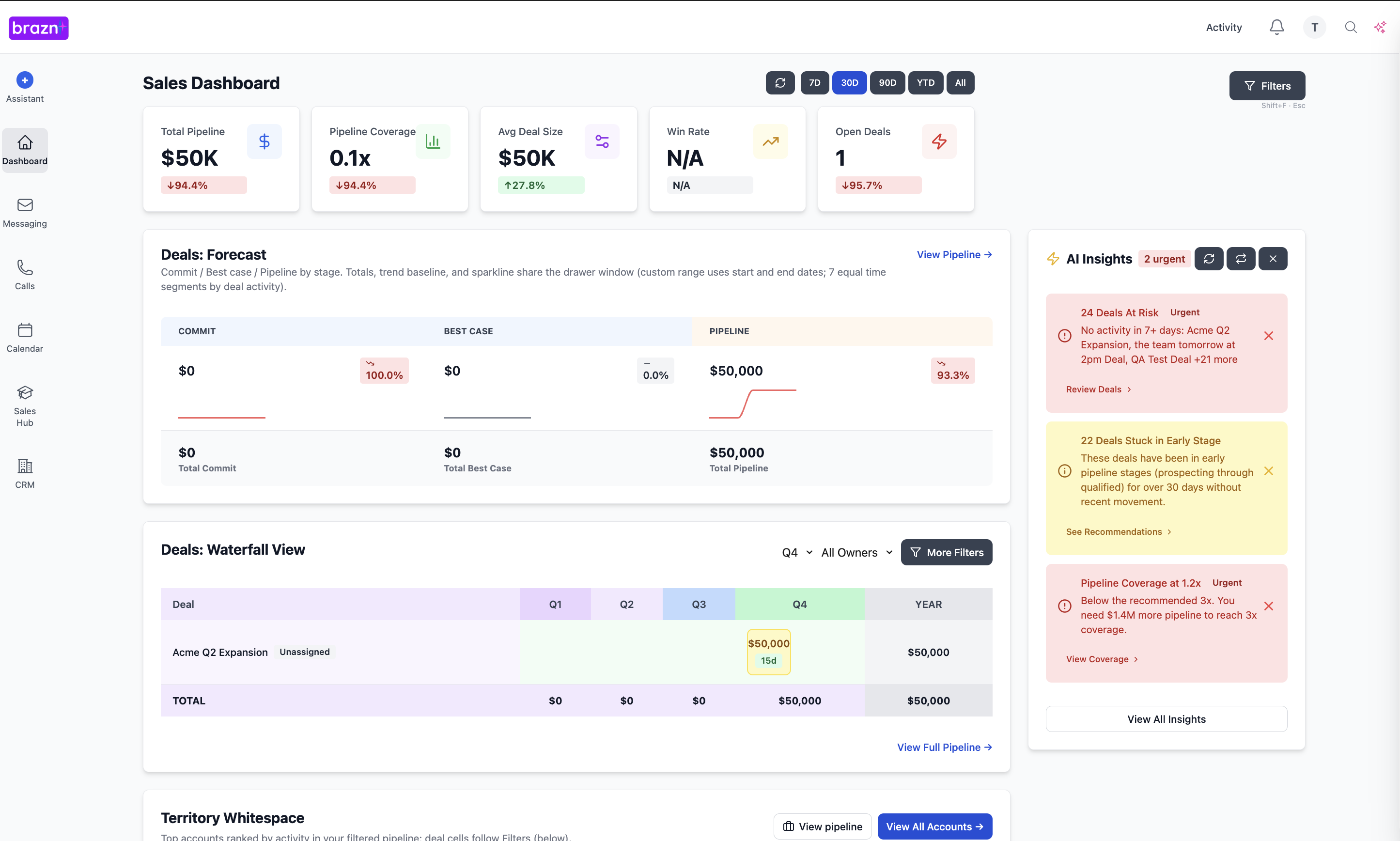
Book a demo to see how Brazn AI fits into your sales stack.

About the Author

Alex Margarit, Sales AI Expert, SaaS Sales Leader, BMC, ServiceNow, Docusign — 25+ years in SaaS sales.