

Smart Threats, Smarter Sellers: Balancing AI Power and Data Security in GTM
The integration of Artificial Intelligence into Go-To-Market strategies is a massive competitive advantage, but it introduces a new, terrifying variable for the C-Suite: Data Security. Revenue teams are feeding sensitive customer information, proprietary pricing models, and strategic deal notes into external LLMs (Large Language Models) to generate emails, summarize calls, and forecast revenue. The problem? many organizations have deployed these AI tools without establishing clear data governance. This 'Wild West' approach exposes the company to severe risks, including data breaches, intellectual property leakage, and violations of privacy regulations like GDPR or CCPA.
To safely harness the power of AI, revenue organizations must balance aggressive innovation with rigorous security protocols. They must deploy 'Smart Threats'—AI systems that are powerful enough to drive revenue, but secure enough to protect the business. This article explores how modern GTM teams can implement AI safely without throttling the speed of their sales floor.
What We'll Cover
In this article, we will cover:
- The hidden security risks of using generic AI in sales
- The difference between 'Public LLMs' and 'Private AI Environments'
- 3 critical data security protocols for GTM teams
- How to train 'Smarter Sellers' on AI data hygiene
- The role of RevOps and IT in securing the revenue engine
Understanding the Approach
A 'Secure AI GTM Environment' is a technological architecture and set of policies that ensures all customer data, proprietary playbooks, and strategic communications processed by AI remain strictly confidential and compliant with regulatory standards. In a GTM context, it means moving away from reps copy-pasting sensitive CRM data into public, consumer-grade AI tools.
Example: Instead of an AE copying a highly confidential prospect email thread into a public version of ChatGPT to draft a response (which potentially trains the public model on that data), the AE uses an enterprise-grade AI assistant embedded directly within their CRM. This internal AI processes the data securely, doesn't use it to train external models, and adheres to the company's data retention policies.
Why This Matters
Balancing AI power with data security is critical for protecting the company's reputation, avoiding catastrophic fines, and maintaining the trust of enterprise buyers.
- Before: Reps use unauthorized, public AI tools ('Shadow AI'), creating massive, untraceable security vulnerabilities. After: Reps are provided with powerful, company-approved AI tools that operate within a secure, monitored environment.
- Before: The company risks leaking proprietary pricing strategies or upcoming product roadmaps to competitors via public LLM training data. After: 'Zero Data Retention' agreements with AI vendors ensure proprietary data remains strictly confidential.
- Before: Enterprise deals stall in the Procurement phase because the buyer's infosec team flags the vendor's unsafe AI practices. After: The sales team confidently passes security reviews by demonstrating rigorous AI data governance.
The Complete Guide
H3 Protocol 1: Ban 'Shadow AI' and Provide Secure Alternatives
Objective: Stop the use of unauthorized, consumer-grade AI tools.
Actionable Advice: You can't simply tell reps 'don't use AI.' They will use it anyway because it makes them faster. You must provide a secure, enterprise-grade alternative. Audit your team to understand what public tools they're currently using, and replace them with secure platforms (like enterprise versions of Copilot, or specialized GTM platforms) that have strict data privacy agreements.
Best Practices: Implement IT policies that block access to known consumer-grade AI tools on company networks to enforce the transition.
H3 Protocol 2: Implement 'Zero Data Retention' Agreements
Objective: Ensure your data isn't used to train external models.
Actionable Advice: When evaluating any AI vendor for your GTM stack, the non-negotiable requirement must be a 'Zero Data Retention' policy. This means the vendor guarantees that any data passed through their API or platform isn't stored permanently and is absolutely not used to train their foundational models.
Best Practices: Have your legal and infosec teams review the AI vendor's Terms of Service specifically for clauses related to 'model training' and 'data usage.'
H3 Protocol 3: Establish Role-Based Access Control (RBAC) for AI
Objective: Prevent internal data overexposure.
Actionable Advice: Just as you restrict access to certain CRM fields based on a rep's role, you must restrict what data the AI can access and surface. An SDR's AI assistant should not have access to the financial details of a closed-won enterprise deal. Configure your AI tools to respect the existing permission sets within your CRM.
Best Practices: Regularly audit the AI's access logs to ensure it isn't inadvertently surfacing sensitive internal documents (like HR policies or executive board decks) to the sales floor.
How to Implement This
Securing the AI engine requires a tight partnership between RevOps, IT, and Legal. RevOps evaluates the GTM utility of the tool, while IT and Legal vet the security architecture. Sales Enablement must run mandatory 'AI Data Hygiene' training, teaching reps exactly what types of data (e.g., PII, unannounced product features) should never be fed into an AI prompt, even in a secure environment.
Next Steps
Innovation without security is just a breach waiting to happen. By establishing strict data governance and providing secure AI tools, you empower your team to sell faster without putting the company at risk.
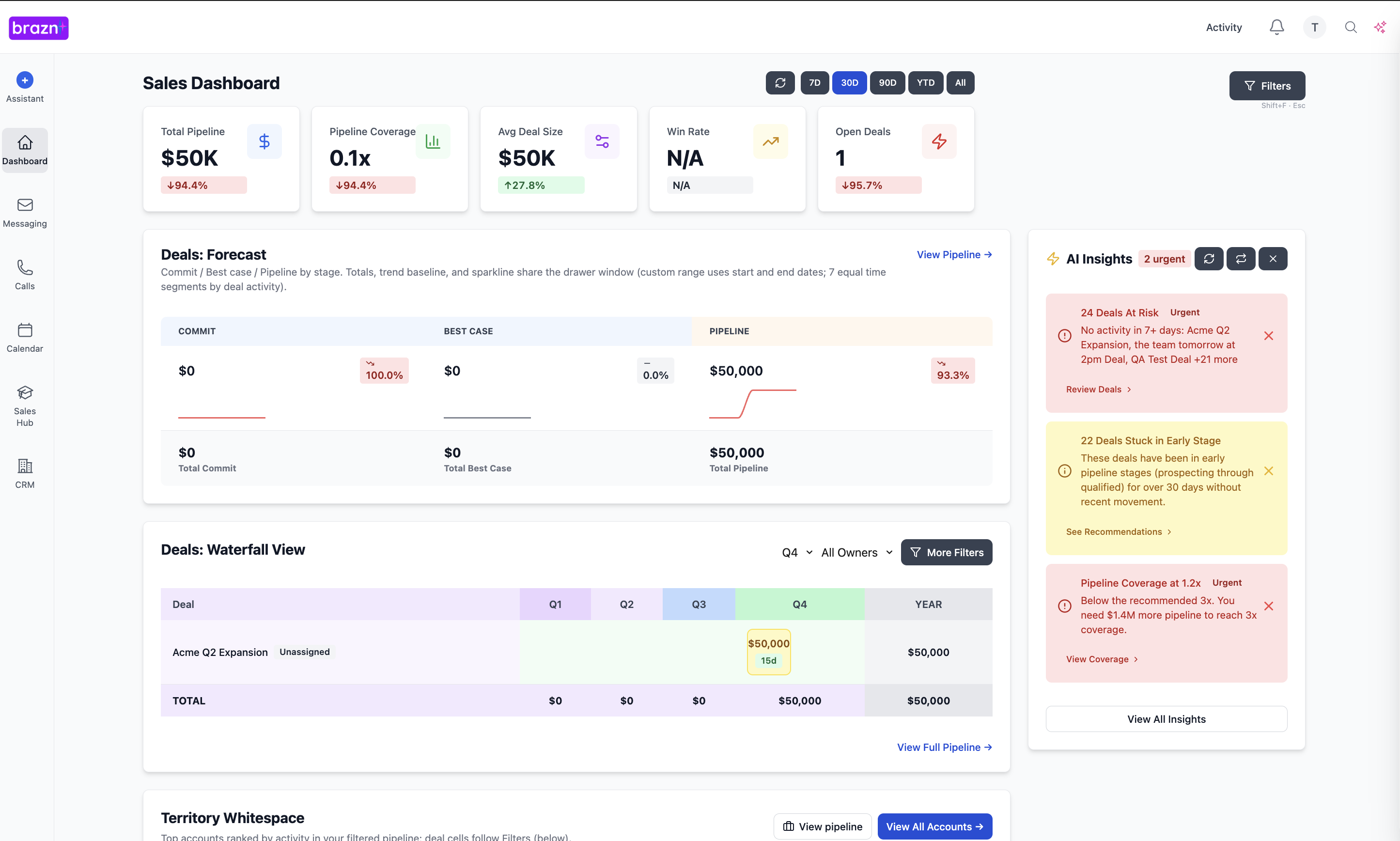
Start small: Send a quick survey to your sales team today asking what AI tools they use to help with their daily tasks. The answers will reveal your 'Shadow AI' footprint. Ready to deploy a secure, enterprise-grade AI platform? Discover how Brazn protects your data while driving revenue.
Book a demo to see how Brazn AI fits into your sales stack.

About the Author

Alex Margarit, Sales AI Expert, SaaS Sales Leader, BMC, ServiceNow, Docusign — 25+ years in SaaS sales.