

What Industrial Transformation Stories Teach SaaS About Revenue Reinvention
The SaaS industry often views itself as the pinnacle of innovation. We assume we have nothing to learn from 'legacy' industries like manufacturing or logistics. This arrogance is a mistake.Industrial companies have spent decades mastering complex supply chains, lean operations, and massive technological transformations. As SaaS revenue engines become more complex and margins compress, these industrial principles are exactly what we need.
This article explores what SaaS revenue leaders can learn from industrial transformation stories, focusing on process engineering, waste reduction, and the rigorous application of technology.
What We'll Cover
In this article, we will cover:
- Why SaaS revenue engines are starting to look like supply chains
- The concept of 'Lean Six Sigma' applied to pipeline
- How to identify and eliminate 'waste' in the sales process
- The industrial approach to technology deployment
Understanding the Approach
Applying industrial transformation principles to SaaS means treating the revenue engine (Marketing, Sales, CS) as an integrated manufacturing process. In this model, 'leads' are raw materials, the 'sales process' is the assembly line, and 'closed-won deals' are the finished products. RevOps acts as the process engineer, using methodologies like Lean or Six Sigma to identify bottlenecks, reduce variance in execution, and eliminate waste (activities that don't add value to the customer).
Why This Matters
Adopting an industrial mindset is critical for driving efficiency and predictability in a mature SaaS organization.
- Before: Sales processes are loosely defined, and every rep executes differently, leading to unpredictable forecasts. After: The sales process is rigorously standardized, reducing variance and dramatically improving forecast accuracy.
- Before: Reps spend hours on administrative tasks that don't advance the deal. After: RevOps identifies these tasks as 'waste' and automates or eliminates them, maximizing 'wrench time' (time spent selling).
- Before: Technology is bought to solve isolated problems, creating a fragmented stack. After: Technology is deployed systemically to optimize the entire 'supply chain' from lead to renewal.
The Complete Guide
H3 1. Pipeline 'Value Stream Mapping'
Objective: Identify bottlenecks and waste in the GTM motion.
Actionable Advice: Conduct a Value Stream Mapping exercise for your entire sales process. Map every single step a lead takes from initial capture to closed-won. Identify the 'wait times' (e.g., the time between a demo request and the actual meeting) and the 'rework' (e.g., an AE having to re-qualify a lead that an SDR already spoke to).
Best Practices: Involve representatives from Marketing, Sales, and CS in this exercise to get a complete picture of the flow.
H3 2. Eliminating 'Non-Value-Added' (NVA) Time
Objective: Maximize the time reps spend engaging with buyers.
Actionable Advice: In lean manufacturing, NVA time is waste. Audit your AEs' calendars. Any time spent updating the CRM, searching for collateral, or building internal reports is NVA time. Aggressively deploy AI and automation to eliminate these tasks.
Best Practices: Set a goal to increase your team's 'customer-facing time' by 15% over the next quarter.
H3 3. Implementing 'Standard Work' for Sales
Objective: Reduce variance in execution across the team.
Actionable Advice: While sales is an art, the process should be a science. Define 'Standard Work' for critical activities, such as the structure of a discovery call or the format of a proposal. Ensure every rep is trained on and adheres to this standard.
Best Practices: Use conversation intelligence tools to monitor adherence to the 'Standard Work' and provide targeted coaching where variance occurs.
How to Implement This
RevOps is the natural owner of this industrial approach, acting as the 'plant managers' of the revenue engine. They must lead the Value Stream Mapping and drive the automation initiatives. Sales Leadership must enforce the 'Standard Work' and shift their coaching from ad-hoc advice to process adherence. The CRO must champion this mindset shift, emphasizing that predictable, efficient execution is more valuable than heroic, individual efforts.
Next Steps
To build a scalable, profitable revenue engine, SaaS leaders must stop relying on 'sales magic' and start relying on process engineering. The lessons of industrial transformation provide the blueprint.
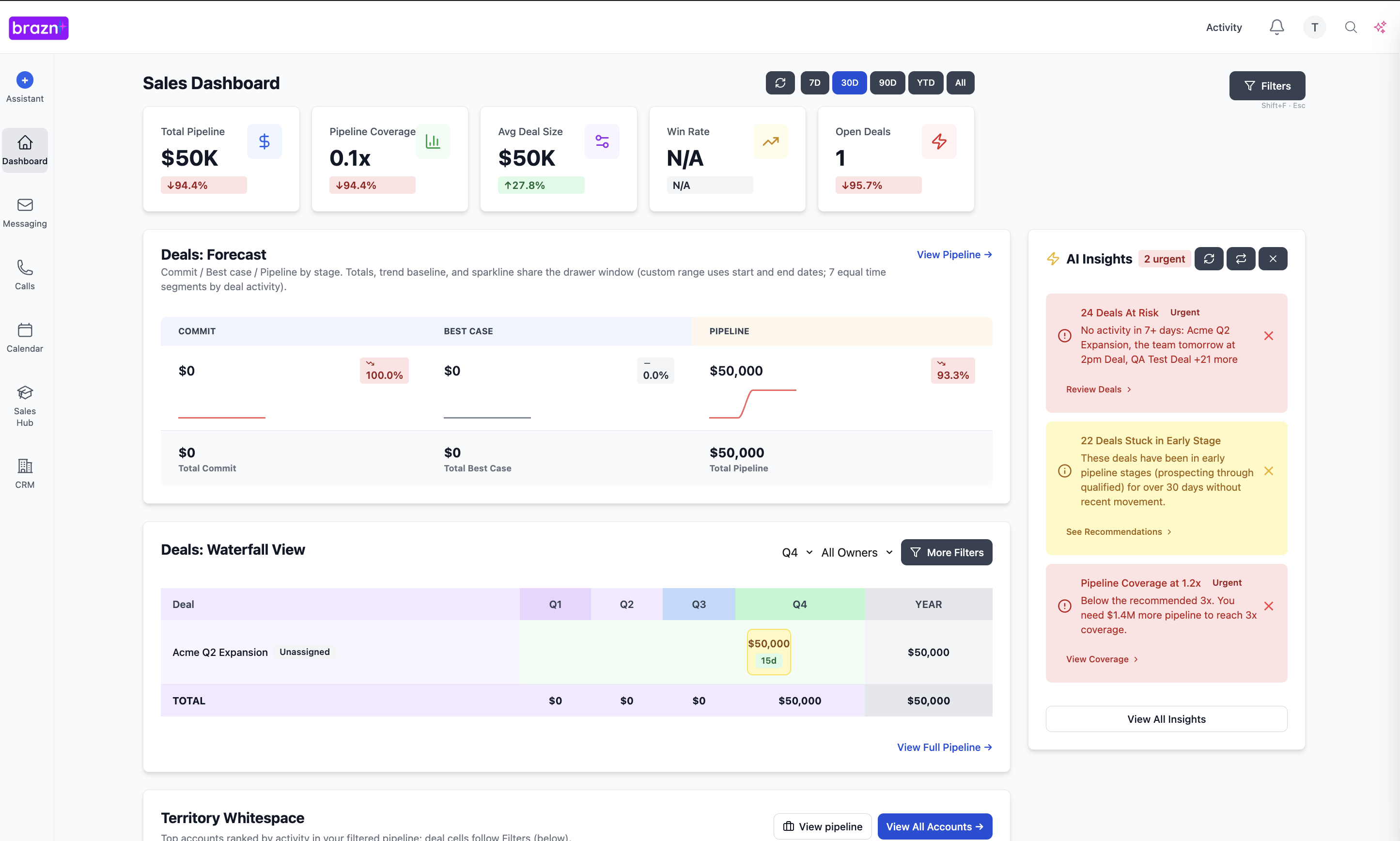
Pick one stage of your sales process (e.g., the handoff from SDR to AE). Map out every step and identify one piece of 'waste' you can eliminate. Ready to engineer a more efficient pipeline? See how Brazn's platform streamlines complex revenue workflows.
Book a demo to see how Brazn AI fits into your sales stack.

About the Author
Alex Margarit, Sales AI Expert, SaaS Sales Leader, BMC, ServiceNow, Docusign — 25+ years in SaaS sales.