


Tying Hours-Saved by AI Directly to Pipeline and Revenue
When revenue leaders pitch AI investments to their CFOs, the most common metric cited is "hours saved." They argue that automating data entry or email drafting will save reps 5 hours a week. The CFO's response is usually: "Great, but how does that translate to the bottom line? Are they just going to take longer lunches?"
"Hours saved" is a vanity metric unless you can prove that those hours are being reallocated to revenue-generating activities. To justify AI investments and drive true efficiency, RevOps must build a clear mathematical bridge between time reclaimed and pipeline created. This article explains how to tie AI efficiency directly to hard revenue.
What We'll Cover
In this article, we will cover:
- Why CFOs reject "hours saved" as a standalone metric
- The concept of "Capacity Reallocation" in sales
- How to calculate the financial value of a reclaimed hour
- 3 steps to track and measure the impact of AI on pipeline
- Building a dashboard that proves AI ROI
Understanding the Approach
"Capacity Reallocation" is the operational process of taking the time saved by automation and deliberately redirecting it toward specific, high-leverage sales activities. In a RevOps context, it means you don't just implement an AI tool and hope for the best; you simultaneously change the reps' KPIs to reflect their increased capacity for prospecting or deal management.
Example: If an AI tool saves an AE 3 hours a week on CRM updates, RevOps formally reallocates those 3 hours to outbound prospecting. They then track the specific pipeline generated during those newly created prospecting blocks to prove the ROI of the AI tool.
Why This Matters
Tying efficiency to revenue is the only way to build a sustainable, scalable AI strategy that survives budget cuts.
- Before: AI tools are viewed as expensive perks that make reps' lives easier but don't impact the bottom line. After: AI tools are viewed as strategic investments with a clear, measurable ROI.
- Before: Reps use reclaimed time for low-value tasks or personal time. After: Reps are held accountable for using reclaimed time to generate pipeline, driving growth.
- Before: The CRO struggles to secure budget for new technology. After: The CRO can easily justify new investments by pointing to the revenue generated by previous efficiency gains.
The Complete Guide
H3 Step 1: Calculate the "Value of an Hour"
Objective: Establish a baseline financial metric for rep time.
Actionable Advice: Divide your average rep's annual quota by the number of working hours in a year (roughly 2,000). This gives you the revenue value of one hour of selling time.
Best Practices: You can also calculate this based on pipeline generation (e.g., average pipeline generated per hour of dedicated Prospecting).
H3 Step 2: Mandate the Reallocation
Objective: Ensure the saved time is used for selling.
Actionable Advice: When you roll out an AI tool that saves time (e.g., automated call summaries), explicitly update the reps' weekly expectations. If the tool saves 2 hours, increase their weekly prospecting activity target proportionally.
Best Practices: Block out dedicated "Revenue Generation Time" on the reps' calendars to replace the time previously spent on admin work.
H3 Step 3: Track the Delta
Objective: Measure the change in output after the AI implementation.
Actionable Advice: Use your CRM to track the increase in leading indicators (e.g., calls made, emails sent, meetings booked) in the weeks following the AI rollout.
Best Practices: Compare the performance of a cohort using the AI tool against a control group that's still using manual processes.
H3 Step 4: Build the ROI Dashboard
Objective: Visualize the connection between AI usage and revenue.
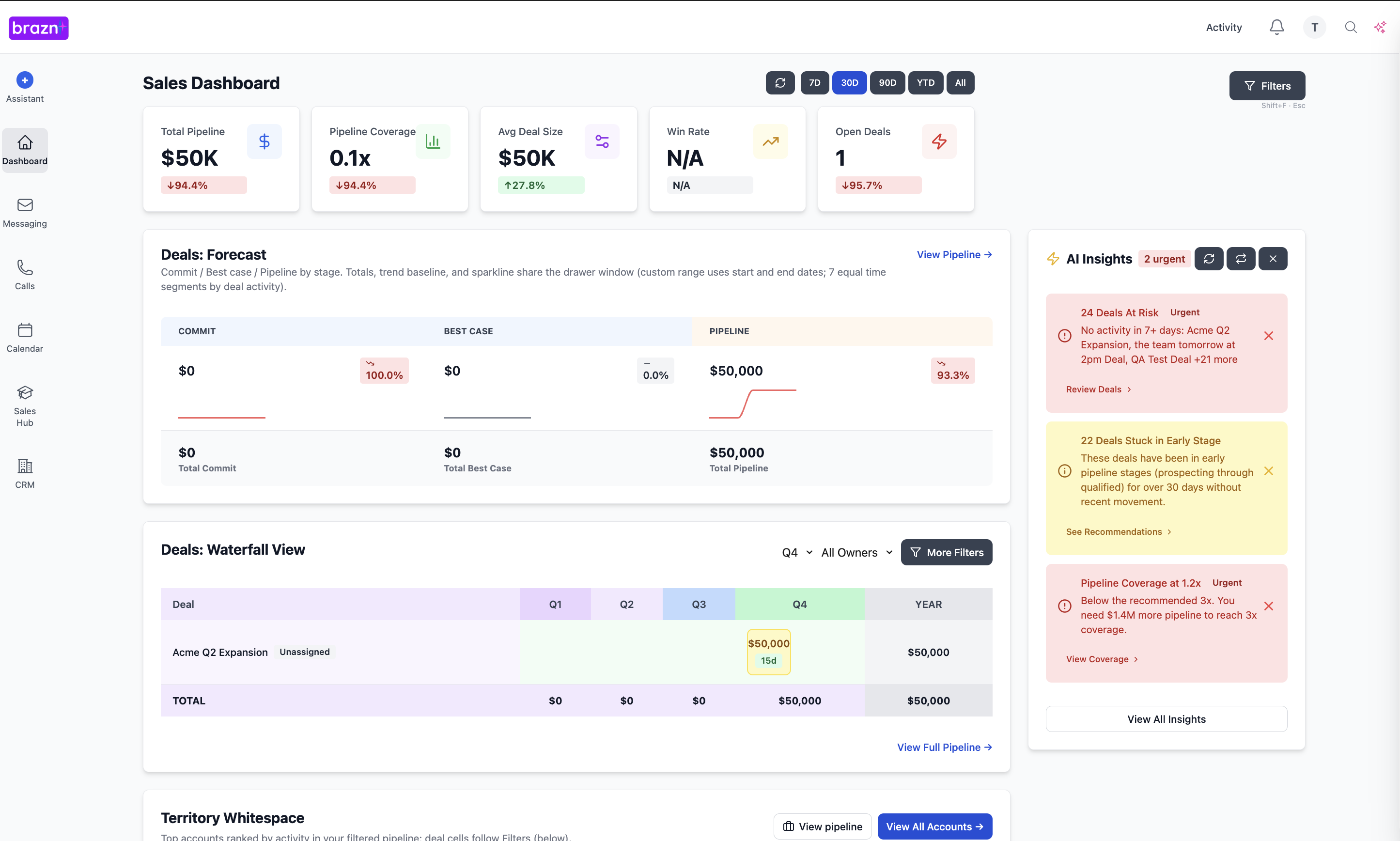
Actionable Advice: Create a RevOps dashboard that tracks: 1) AI tool usage/adoption, 2) The estimated hours saved based on that usage, 3) The increase in sales activities, and 4) The resulting increase in pipeline.
Best Practices: Share this dashboard with the CFO monthly to continuously prove the value of the investment.
How to Implement This
RevOps is responsible for building the mathematical models, tracking the data, and creating the ROI dashboards. Sales Leadership is responsible for enforcing the Capacity Reallocation—ensuring that reps actually use their reclaimed time to hit their new, higher activity targets.
Next Steps
Don't let "hours saved" be the end of your AI success story. By deliberately reallocating that time and rigorously tracking the resulting pipeline, you can prove that AI is a true revenue driver, not just a convenience tool.
Calculate the "Value of an Hour" for your sales team today. When you realize how much revenue is lost to administrative tasks, the business case for AI becomes undeniable. Ready to turn time saved into pipeline? See how Brazn's analytics track the true ROI of automation.
Book a demo to see how Brazn AI fits into your sales stack.

About the Author

Alex Margarit, Sales AI Expert, SaaS Sales Leader, BMC, ServiceNow, Docusign — 25+ years in SaaS sales.