

The Three-Question ROI Pitch Every CRO Should Practise
In a constrained economic environment, every B2B purchase is scrutinized by the CFO. Buyers are no longer swayed by vision or cool features; they need hard, undeniable proof of Return on Investment (ROI). The problem? most sales teams approach ROI entirely wrong. They present complex, 20-tab spreadsheets filled with questionable assumptions that the buyer's finance team instantly tears apart.
When a CRO or a rep delivers a convoluted ROI pitch, it signals a lack of confidence and a misunderstanding of the buyer's actual business drivers. It turns the ROI conversation into an argument over math, rather than a strategic alignment on value.
This article introduces the 'Three-Question ROI Pitch'—a radically simplified, bulletproof framework that every CRO and AE must master. This approach strips away the spreadsheet theater and focuses on the core economic drivers that actually get deals approved.
What We'll Cover
In this article, we will cover:
- Why complex ROI calculators usually kill deals rather than save them
- The psychology of presenting ROI to a skeptical CFO
- The Three-Question ROI framework explained
- How to co-create the answers with your champion
- Practicing and operationalizing the pitch across your sales team
Understanding the Approach
The 'Three-Question ROI Pitch' is a conversational framework designed to establish a mutually agreed-upon business case using the prospect's own data and assumptions, rather than vendor-supplied estimates. In the context of GTM execution, it shifts the burden of proof from the seller trying to prove ROI, to the buyer acknowledging the cost of their own problem.
Example: Instead of saying, 'Our software will save you $100k,' the rep asks three specific questions to get the prospect to say, 'We are currently losing $100k, and your software can stop that leak.' The ROI becomes their idea, not your claim.
Why This Matters
Mastering this simplified pitch is critical for increasing win rates, accelerating the final stages of the sales cycle, and protecting your pricing during negotiations.
- Before: Reps present vendor-created ROI spreadsheets that the prospect immediately dismisses as biased. After: Reps co-create a simple business case based on the prospect's own numbers, creating an undeniable argument for purchase.
- Before: Deals get stuck in 'CFO review' for weeks as finance teams argue over the assumptions in the ROI model. After: Deals pass CFO review quickly because the math is simple, conservative, and based on agreed-upon facts.
- Before: Reps discount heavily because they can't confidently defend the value of the solution. After: Reps hold firm on pricing, using the agreed-upon ROI to justify the investment.
The Complete Guide
H3 Question 1: 'What is the specific metric we're trying to improve?'
Objective: Establish a single, measurable North Star for the project.
Actionable Advice: Force the prospect to narrow their focus. Is it reducing churn by 2%? Decreasing onboarding time by 10 days? Increasing SDR meeting booked rate by 5%?
Best Practices: Do not accept vague answers like 'improve efficiency.' Demand a specific, trackable metric.
H3 Question 2: 'What is the financial value of a one-unit improvement in that metric?'
Objective: Attach a hard dollar figure to the problem using their internal math.
Actionable Advice: Ask them to calculate the value. 'If we reduce churn by 1%, how much ARR does that save the company annually?' or 'What is the average revenue value of one additional SDR meeting?'
Best Practices: Let them do the math. If they provide the number, they can't argue with it later.
H3 Question 3: 'Do we agree that our solution can conservatively deliver [X] units of improvement?'
Objective: Gain consensus on a highly conservative, easily achievable impact.
Actionable Advice: Do not promise the moon. If your case studies show a 20% improvement, ask if they agree you can deliver a conservative 5% improvement.
Best Practices: The goal is to make the conservative estimate still yield an ROI that justifies your price. If a 5% improvement yields $500k in value, and your software costs $50k, the deal is a no-brainer.
How to Implement This
Enablement must run role-play sessions where reps practice this exact three-question sequence until it feels natural. RevOps should ensure that the CRM requires reps to input the answers to these three questions before a deal can be moved to the 'Proposal' stage. The CRO must lead by example, using this framework when they're pulled into executive alignment calls.
Next Steps
If you can't explain the ROI of your solution in three simple questions, you don't understand your buyer's business well enough. Complex spreadsheets are a crutch for a weak business case.
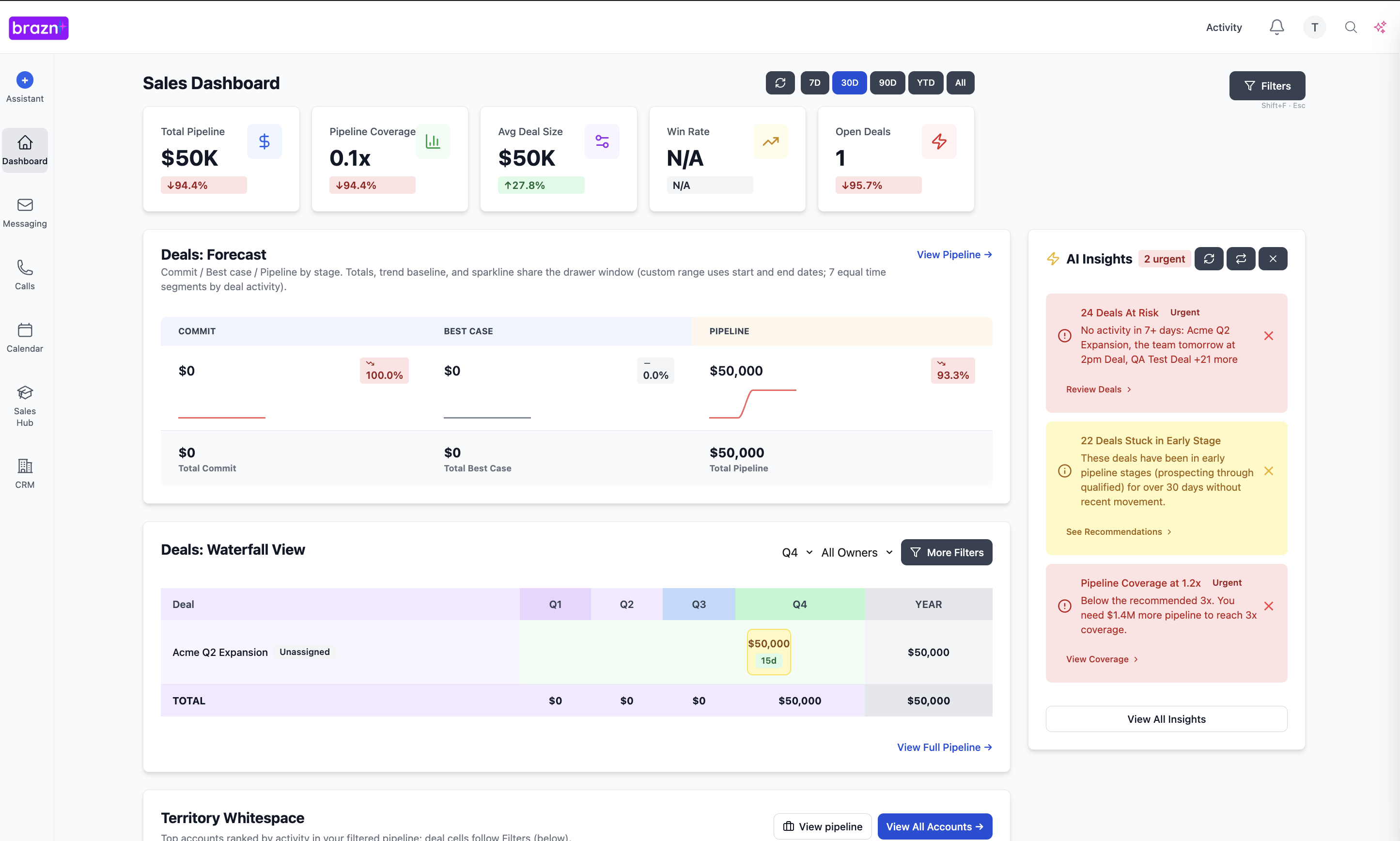
In your next pipeline review, pick a deal in the commit stage and ask the rep to answer these three questions on behalf of the prospect. If they can't do it clearly and concisely, the deal is at risk. Ready to arm your team with the tools to build bulletproof business cases? See how Brazn's platform guides reps through the perfect ROI conversation.
Book a demo to see how Brazn AI fits into your sales stack.

About the Author

Alex Margarit, Sales AI Expert, SaaS Sales Leader, BMC, ServiceNow, Docusign — 25+ years in SaaS sales.