

The Board Pack a Modern CRO Should Be Sending Monthly
The monthly board meeting is often a source of intense anxiety for a Chief Revenue Officer. The problem? many CROs approach the board pack as an exercise in data dumping. They present 40-slide decks filled with every conceivable metric—from website traffic to individual rep quota attainment—hoping that volume equates to transparency. This approach overwhelms the board, obscures the true health of the business, and leads to tactical micromanagement rather than strategic guidance.
To effectively manage the board, a modern CRO must shift from 'reporting data' to 'narrating the revenue strategy.' The board doesn't need to see every number; they need to see the right numbers, placed in the proper context, with a clear explanation of the risks and the plan to address them. This article outlines the essential components of a modern, highly effective CRO board pack.
What We'll Cover
In this article, we will cover:
- Why data-dump board decks fail to build trust
- The shift from tactical reporting to strategic narration
- The 4 essential slides every CRO board pack needs
- How to present leading indicators vs. lagging indicators
- Framing risks and 'asks' to the board
Understanding the Approach
A 'Modern CRO Board Pack' is a concise, highly structured presentation (typically 5-7 slides) that provides the board of directors with a clear, objective view of the revenue engine's performance, health, and strategic direction. In a GTM context, it elevates the conversation from 'Why did we miss the number?' to 'How are we adjusting our strategy to capture market share?'
Example: Instead of showing a complex spreadsheet of every lost deal, the modern board pack features a single 'Win/Loss Analysis' slide that highlights the top two reasons for losing deals this month, backed by AI-analyzed conversation data, and the specific product or marketing pivot being executed to fix it.
Why This Matters
A concise, narrative-driven board pack is essential for building trust with investors and securing the resources needed for growth.
- Before: The board meeting is a grueling interrogation over granular data points, leaving the CRO defensive and exhausted. After: The meeting is a collaborative strategy session focused on high-level market dynamics and resource allocation.
- Before: The board is surprised by a missed quarter because the previous packs buried the risks in a sea of positive metrics. After: The board is fully aware of Sales Pipeline risks early, thanks to clear leading indicators, and supports the CRO's mitigation plans.
- Before: The CRO spends days manually pulling data to build the deck. After: RevOps automates the core dashboards, allowing the CRO to spend their time crafting the strategic narrative.
The Complete Guide
H3 Slide 1: The Executive Summary & Scorecard
Objective: Provide the bottom line in 60 seconds.
Actionable Advice: This slide must show the 'Big 3' lagging indicators: ARR vs. Target, Net Revenue Retention (NRR), and Customer Acquisition Cost (CAC) payback period. Include a brief, written narrative (3 bullet points max) explaining the 'Why' behind the numbers. Was it a strong quarter due to a specific campaign, or a weak one due to a macro shift?
Best Practices: Use a simple Red/Yellow/Green color-coding system to instantly communicate the health of each metric.
H3 Slide 2: The Leading Indicators (The Future)
Objective: Prove that the strategy is working and the pipeline is healthy.
Actionable Advice: Don't just report on what happened; report on what will happen. Show the critical leading indicators: Net New Pipeline Created, Sales Accepted Lead (SAL) conversion rates, and Average Deal Velocity. This proves to the board that you have a predictable engine, not just a lucky quarter.
Best Practices: Always show these metrics against a historical baseline so the board understands the trend, not just the absolute number.
H3 Slide 3: The 'Friction & Fix' Slide
Objective: Demonstrate proactive risk management.
Actionable Advice: Be transparent about what isn't working. Identify the biggest bottleneck in the GTM motion right now (e.g., 'Win rates against Competitor X have dropped 15%'). Immediately follow the friction point with the specific 'Fix' you're implementing (e.g., 'Deploying new AI battlecards and retraining the team next week').
Best Practices: Never present a problem without presenting the proposed solution. This builds immense trust.
H3 Slide 4: The Strategic 'Ask'
Objective: Leverage the board's expertise and network.
Actionable Advice: End the presentation by clearly stating what you need from the board. Do you need introductions to specific target accounts? Do you need approval to increase the marketing budget based on strong leading indicators? Be specific.
Best Practices: Give the board 'homework.' They want to help, but they need you to tell them exactly how.
How to Implement This
RevOps is responsible for ensuring the data feeding the board pack is 100% accurate and automated. The CRO must own the narrative, synthesizing the data into a coherent story. It is highly recommended that the CRO reviews the draft pack with the CEO before the meeting to ensure total alignment on the message being delivered to the investors.Next Steps
Your board members are busy people; respect their time by providing clarity, not volume. By structuring your board pack around strategic narratives and leading indicators, you transform the board from an interrogation panel into a strategic asset.
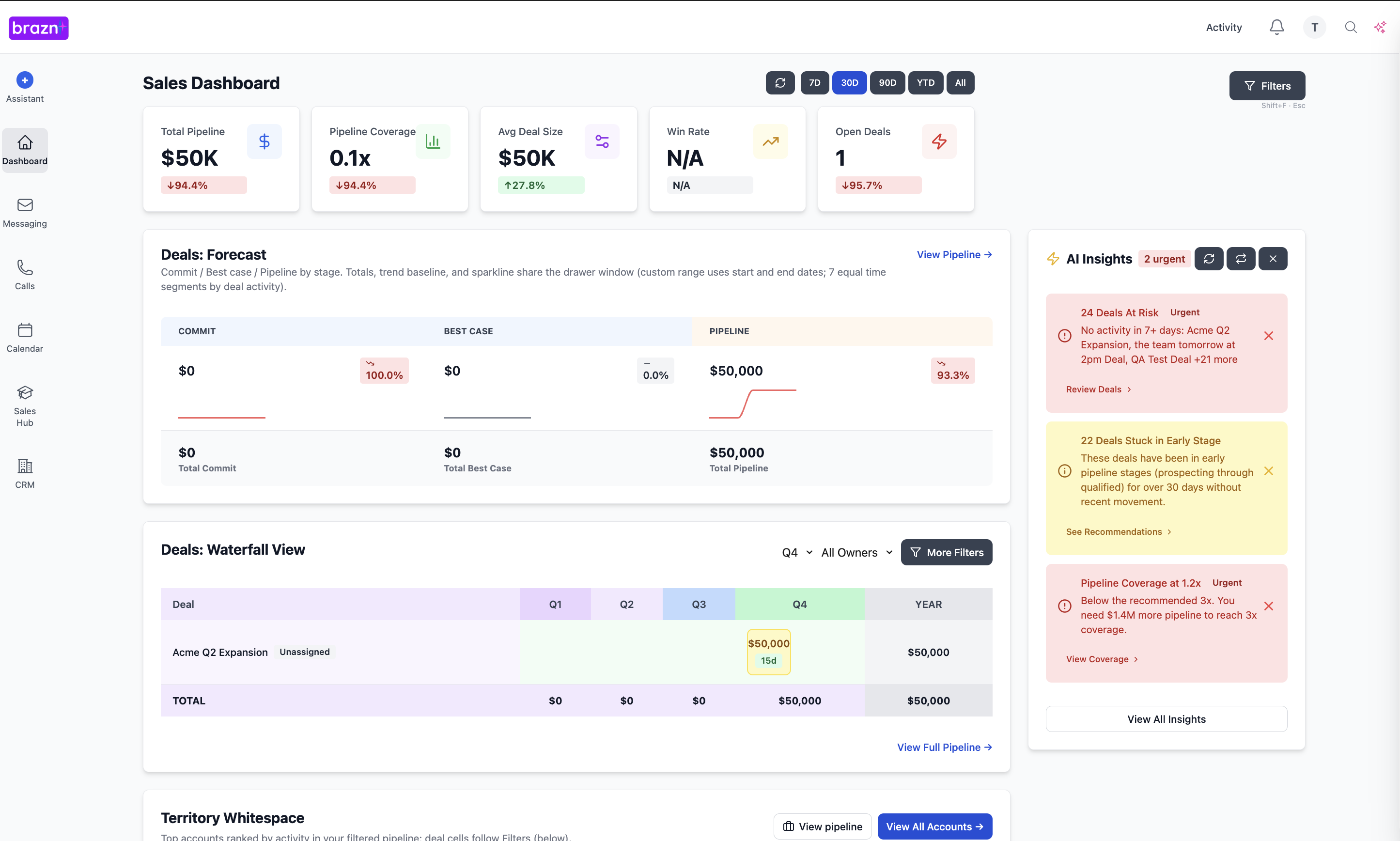
Start small: For your next board meeting, cut your slide count in half. Force yourself to summarize the 'Why' behind the numbers in just three bullet points. Ready to automate your board reporting? See how Brazn provides the high-level insights CROs need to manage their boards.
Book a demo to see how Brazn AI fits into your sales stack.

About the Author

Alex Margarit, Sales AI Expert, SaaS Sales Leader, BMC, ServiceNow, Docusign — 25+ years in SaaS sales.