

Quarterly Board Updates: A Template Every CRO Can Steal
The quarterly board meeting is the ultimate test for a Chief Revenue Officer. It’s the moment where strategy, execution, and forecast accuracy are scrutinized by the most critical audience. Yet, many CROs approach this high-stakes presentation with a sprawling, 40-slide deck filled with vanity metrics, granular deal updates, and defensive explanations for missed targets. This approach frustrates board members, who want clear narratives, objective risk assessments, and a focus on the future.
To command the room and build trust, CROs must abandon the "data dump" and adopt a structured, signal-driven reporting format. This article provides a modern, AI-augmented template for the Quarterly Board Update, designed to deliver maximum insight in minimum time, proving that you have total command of your revenue engine.
What We'll Cover
In this article, we will cover:
- Why board members hate your 40-slide revenue deck
- The shift from descriptive reporting to predictive insights
- The 4-part CRO Board Update Template
- Part 1: The Executive Summary & "The Number"
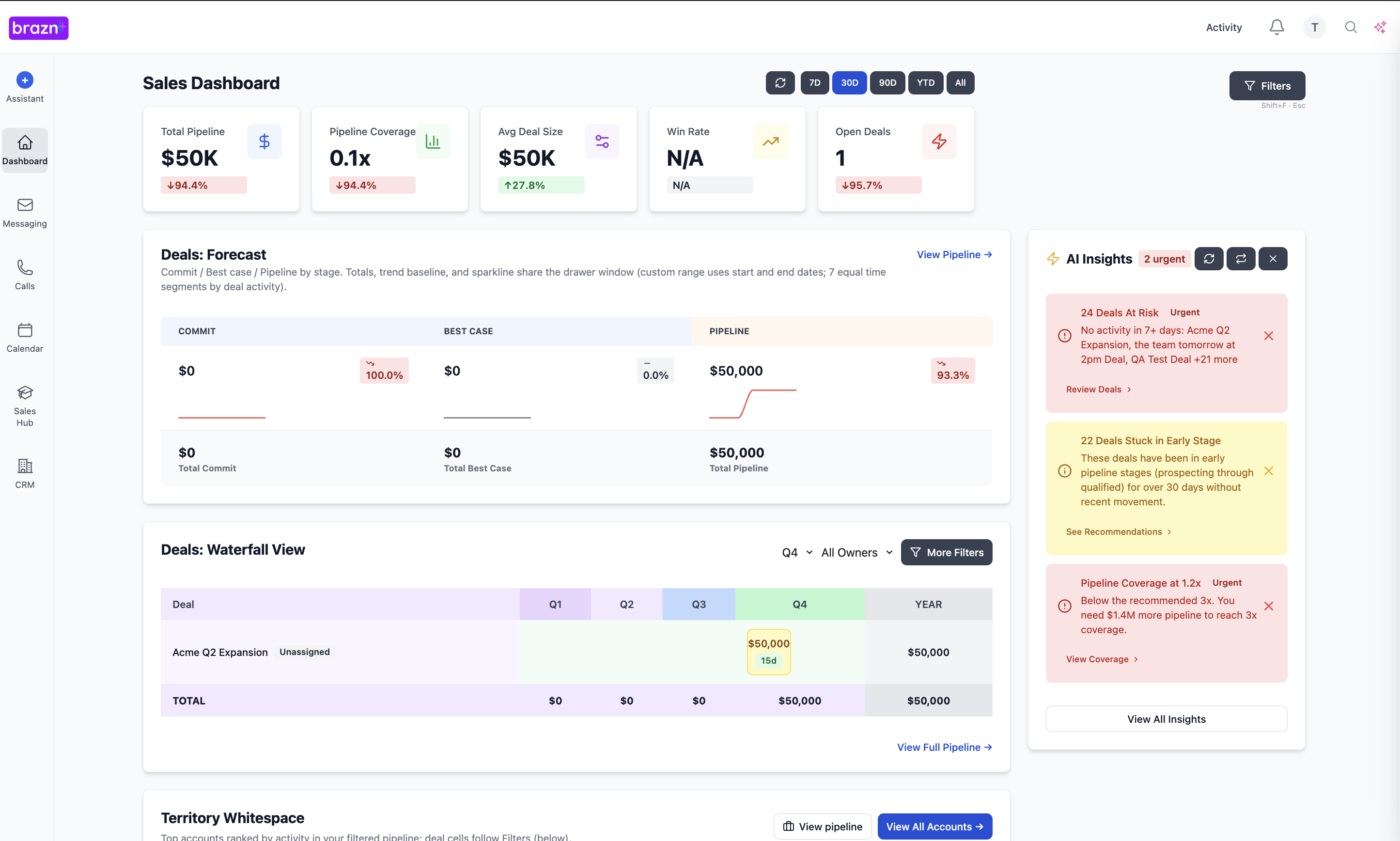
- Part 2: Pipeline Health & AI Risk Telemetry
- Part 3: GTM Efficiency & Unit Economics
- Part 4: Strategic Initiatives & "The Ask"
Understanding the Approach
A modern board update moves beyond simply reporting what happened (descriptive data) and focuses on why it happened and what will happen next (predictive insights). In an AI-native organization, this means replacing subjective rep narratives with objective data, such as AI-generated confidence bands for the forecast and aggregated conversation telemetry to explain market shifts.
Example: Instead of a slide detailing the reasons why three specific deals slipped (a reactive narrative), the CRO presents an AI-generated trend line showing that "Competitor X" mentions on discovery calls increased by 40% this quarter, leading to a 15% drop in win rates. They then immediately present the strategic play they have deployed to counter this trend.
Why This Matters
Adopting a structured, insight-driven board template is essential for building credibility, securing resources, and keeping the board focused on strategic governance rather than micromanagement.
- Before: Board meetings are defensive interrogations about individual deals and missed quotas. After: Board meetings are collaborative discussions about market trends, resource allocation, and scaling strategies.
- Before: The CRO spends 20 hours manually compiling data from disparate spreadsheets to build the deck. After: The deck is largely auto-populated from unified RevOps dashboards, saving time and ensuring data accuracy.
- Before: The board leaves the meeting confused about the true health of the pipeline. After: The board leaves with a clear, objective understanding of pipeline risk and forecast probability.
The Complete Guide
H3 Part 1: The Executive Summary & "The Number" (1 Slide)
Objective: Deliver the headline immediately. Did we hit the target, and what is the forecast for next quarter?
Actionable Advice: Start with the hard numbers: ARR Target vs. Actual, NRR, and the AI-generated Probabilistic Forecast for the next quarter (presented as a confidence band, e.g., $5M - $6.2M). Include a 3-bullet narrative explaining the primary drivers of the result.
Best Practices: Never bury the lead. If you missed the number, state it clearly on slide one, own it, and immediately pivot to the data explaining why.
H3 Part 2: Pipeline Health & AI Risk Telemetry (2 Slides)
Objective: Prove you understand the underlying mechanics of your pipeline, not just the top-line volume.
Actionable Advice: Move beyond simple "Pipeline Coverage" ratios. Show pipeline generation by source (Inbound vs. Outbound vs. Partner). Crucially, include a slide on "Pipeline Quality," using AI risk scores to show what percentage of the pipeline is "High Probability" vs. "At Risk."
Best Practices: Highlight one key insight from your conversation telemetry (e.g., "We are seeing a 20% increase in CFO involvement early in the deal cycle, which is extending our sales velocity by 14 days").
H3 Part 3: GTM Efficiency & Unit Economics (1 Slide)
Objective: Demonstrate that you're growing sustainably, not just burning cash.
Actionable Advice: Present your Customer Acquisition Cost (CAC) payback period, LTV:CAC ratio, and Sales Magic Number. Show how these metrics are trending quarter-over-quarter.
Best Practices: If your efficiency metrics are degrading, proactively explain the root cause (e.g., "CAC increased due to our new enterprise outbound motion, which has a longer ramp time") and your plan to correct it.
H3 Part 4: Strategic Initiatives & "The Ask" (1 Slide)
Objective: Outline your focus for the next 90 days and secure board alignment.
Actionable Advice: Detail the top 2-3 strategic initiatives you're executing to address the challenges highlighted in the previous slides (e.g., "Deploying an AI-driven multi-threading play to combat stalled enterprise deals"). End with a clear "Ask" of the board—whether it's budget approval, strategic introductions, or patience for a new initiative to mature.
Best Practices: Keep the initiatives highly focused; don't present a laundry list of 10 minor operational tweaks.
How to Implement This
RevOps is the engine that powers this presentation. They must build the underlying CRM dashboards that perfectly mirror the structure of this template, ensuring the CRO can pull the data instantly and accurately. The CRO must resist the urge to add "just one more slide" about a big deal. The discipline of the template is what creates the clarity the board desires.
Next Steps
Your board update isn't a status report; it's a demonstration of leadership. By adopting a concise, data-driven template that leverages AI insights, you can transform the quarterly meeting from an interrogation into a strategic advantage.
Take your last board deck and ruthlessly cut it down to 5 slides using the framework above. Notice how much clearer the narrative becomes. Ready to automate the insights for your next board meeting? See how Brazn's platform provides the executive-level telemetry you need.
Book a demo to see how Brazn AI fits into your sales stack.

About the Author

Alex Margarit, Sales AI Expert, SaaS Sales Leader, BMC, ServiceNow, Docusign — 25+ years in SaaS sales.