

Revenue Reconciliation for SaaS: A RevOps + Finance Operating Manual
In many SaaS companies, the end-of-month "Revenue Reconciliation" process is a chaotic, multi-day battle between RevOps and Finance. RevOps exports data from the CRM showing $1M in "Closed-Won" deals. Finance exports data from the billing system showing only $850k in actual invoiced revenue. The discrepancy sparks a frantic hunt for missing contracts, incorrect start dates, and unrecorded discounts. This friction delays reporting, destroys trust in the data, and distracts both teams from strategic work.
The root cause is almost always siloed systems and a lack of shared definitions. In an AI-native organization, this manual reconciliation process is automated and continuous. This article provides an operating manual for RevOps and Finance to align their systems, definitions, and workflows, turning revenue reconciliation from a monthly nightmare into an automated certainty.
What We'll Cover
In this article, we will cover:
- Why CRM data and Billing data rarely match
- Defining the "Single Source of Truth" for revenue
- Step 1: Standardizing the "Closed-Won" criteria
- Step 2: Automating the CRM-to-Billing handoff
- Step 3: Implementing continuous AI anomaly detection
- How to run a collaborative, 15-minute reconciliation meeting
Understanding the Approach
Revenue Reconciliation is the process of ensuring that the commercial data in the CRM (what Sales sold) perfectly matches the financial data in the ERP/Billing system (what the company can actually recognize as revenue). In a modern setup, this isn't a manual spreadsheet exercise; it relies on strict API integrations and automated validation rules.
Example: A rep closes a deal with a "Ramp Schedule" (e.g., 50 seats in month 1, 100 seats in month 6). If the CRM only records the final ARR value, Finance will over-bill the customer in month 1. Automated reconciliation ensures the CRM's quoting tool (CPQ) passes the exact ramp schedule data to the billing system, ensuring the invoice matches the contract perfectly.
Why This Matters
Aligning RevOps and Finance through automated reconciliation is critical for accurate board reporting, compliant accounting, and maintaining a healthy cash flow.
- Before: The month-end close takes 10 days of manual data wrangling and arguments between departments. After: The month-end close is largely automated, taking 2 days and requiring minimal manual intervention.
- Before: Sales commissions are delayed or incorrect because Finance can't verify the CRM data. After: Commissions are paid accurately and on time based on a verified, unified dataset.
- Before: The CRO and CFO present different revenue numbers to the board, destroying executive credibility. After: The entire leadership team operates from a single, unassailable revenue dashboard.
The Complete Guide
H3 Step 1: Standardizing the "Closed-Won" Criteria
Objective: Eliminate subjective definitions of a closed deal.
Actionable Advice: RevOps and Finance must jointly define the absolute requirements for a deal to be marked "Closed-Won" in the CRM. This must include: a signed MSA, a signed Order Form with specific start/end dates, and a validated billing contact. Implement hard validation rules in the CRM so a rep physically can't move the deal to "Closed-Won" if these fields are missing.
Best Practices: Do not allow "verbal commits" or "emails saying yes" to count as Closed-Won under any circumstances.
H3 Step 2: Automating the CRM-to-Billing Handoff
Objective: Remove human error from data entry.
Actionable Advice: Integrate your CRM/CPQ system directly with your billing software (e.g., Stripe, NetSuite). When a deal is marked Closed-Won, the integration should automatically create the customer record, generate the invoice, and set the subscription terms in the billing system without any manual data entry.
Best Practices: Ensure the integration handles edge cases like mid-term upgrades, downgrades, and pro-rated billing automatically.
H3 Step 3: Implementing Continuous AI Anomaly Detection
Objective: Catch discrepancies in real-time, not at the end of the month.
Actionable Advice: Deploy an AI data monitoring tool that continuously compares the CRM database against the Billing database. If the AI detects a discrepancy (e.g., a CRM deal value of $10k but a generated invoice of $8k), it immediately alerts a dedicated RevOps/Finance Slack channel for resolution.
Best Practices: Fix the root cause of the anomaly (e.g., a broken CPQ rule), not just the individual data point.
How to Implement This
This alignment requires strong executive sponsorship from both the CRO and the CFO. They must mandate that RevOps and Finance operate as a unified "Revenue Operations" function, not as competing silos. The RevOps leader is responsible for the technical architecture (the CRM/Billing integration), while the Finance leader is responsible for ensuring the resulting data meets GAAP or IFRS compliance standards.
Next Steps
You can't run a predictable SaaS business if you don't know exactly how much revenue you have actually secured. By automating the reconciliation process and establishing a single source of truth, RevOps and Finance can stop fighting over spreadsheets and start driving strategic growth.
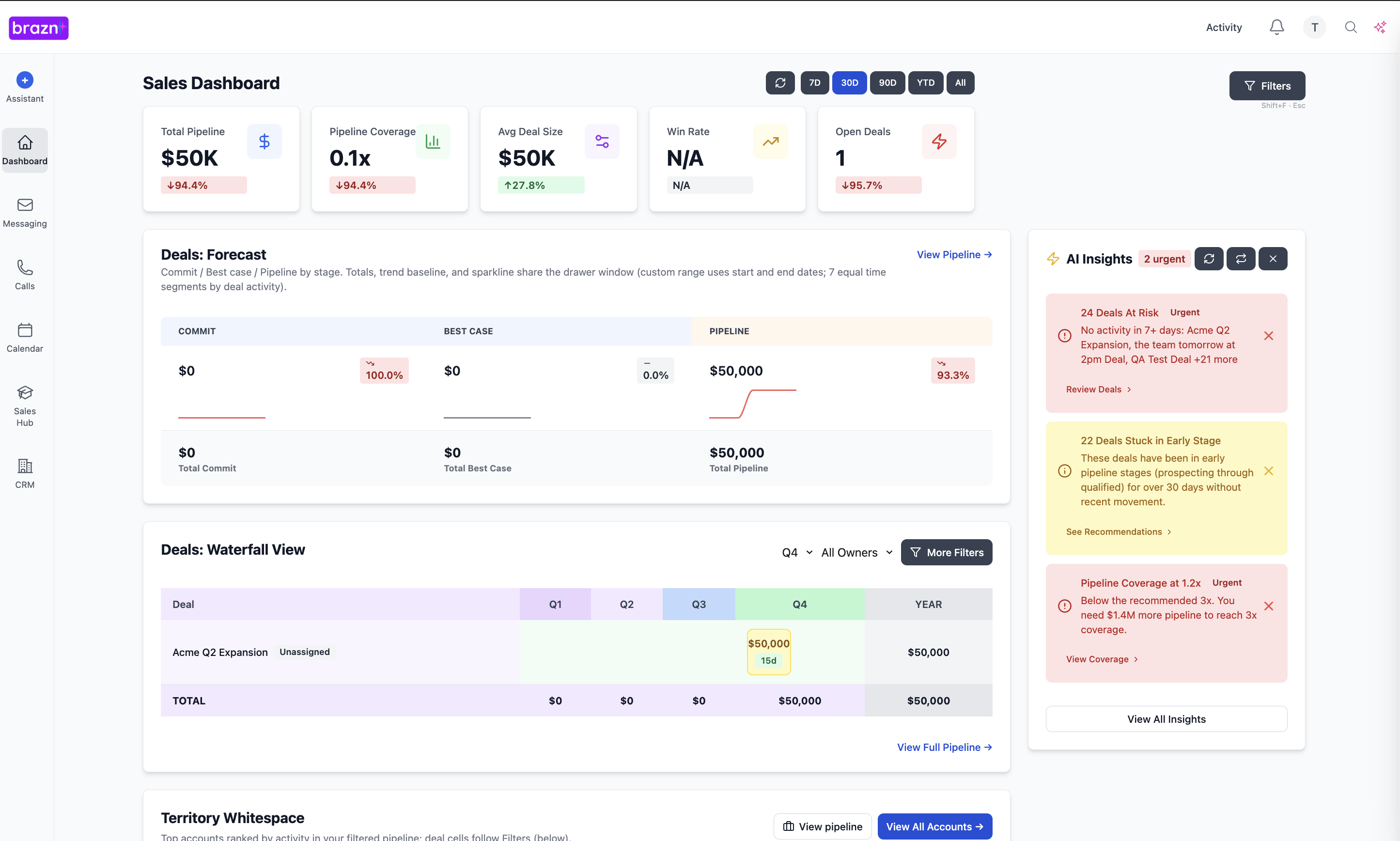
Schedule a meeting with your Finance counterpart this week. Map out the exact data fields required to generate an invoice and check if your CRM enforces those fields before allowing a deal to be marked "Closed-Won." Ready to automate your revenue data? See how Brazn ensures your CRM and Billing systems are always in sync.
Book a demo to see how Brazn AI fits into your sales stack.

About the Author

Alex Margarit, Sales AI Expert, SaaS Sales Leader, BMC, ServiceNow, Docusign — 25+ years in SaaS sales.