
Pre-Call Briefs Built From Live Account, Persona, and Intent Data
The most expensive 15 minutes in your sales organization is the time a highly paid Account Executive spends blindly clicking through Linkedin, a company website, and old CRM notes right before a Discovery Call. This manual "pre-call research" is inefficient, inconsistent, and often misses the most critical, real-time buying signals. The result? Reps show up to calls with generic questions, failing to establish immediate credibility with modern, informed buyers.
In an AI-native revenue organization, manual pre-call research is obsolete. This article details how to leverage AI to automatically generate comprehensive, real-time Pre-Call Briefs that synthesize account data, persona insights, and active intent signals, ensuring your reps enter every meeting fully prepared to drive a strategic conversation.
What We'll Cover
In this article, we will cover:
- The high cost and low ROI of manual pre-call research
- The anatomy of an AI-generated Pre-Call Brief
- Integrating Live Account Data (News, Financials)
- Integrating Persona Intelligence (Role, Priorities)
- Integrating Intent Data (Recent Activity, Competitor Research)
- How to automate the delivery of these briefs to your reps
Understanding the Approach
An AI-Generated Pre-Call Brief is an automated, one-page summary delivered to a sales rep shortly before a scheduled meeting. It uses AI to scrape, synthesize, and format data from multiple disparate sources (CRM, intent providers, public web, LinkedIn) into a highly scannable format, highlighting the specific insights the rep needs to lead a provocative discovery call.
Example: 30 minutes before a call with the VP of IT at Acme Corp, the AE receives a Slack message. The brief notes that Acme recently acquired a smaller company (Account Data), that VPs of IT in this sector are currently focused on cloud security consolidation (Persona Data), and that Acme has been reading articles about your specific competitor on third-party sites (Intent Data). It concludes with three suggested discovery questions based on this synthesis.
Why This Matters
Automating pre-call intelligence is one of the highest-ROI AI implementations, directly impacting rep productivity and first-call conversion rates.
- Before: Reps spend 20% of their week on manual research, often missing critical context. After: Reps spend zero time researching, reclaiming hours for actual selling while arriving at meetings better prepared.
- Before: Discovery calls start with generic "tell me about your business" questions, frustrating the buyer. After: Discovery calls start with a provocative hypothesis based on real-time data, immediately establishing the rep as a trusted advisor.
- Before: Intent data sits unused in a separate dashboard that reps forget to check. After: Intent signals are pushed directly into the rep's workflow at the exact moment they need them.
The Complete Guide
H3 Component 1: Live Account Data Synthesis
Objective: Understand the macroeconomic and company-specific context of the buyer.
Actionable Advice: Configure your AI tool to scrape the target company's recent press releases, 10-K filings (if public), and executive LinkedIn posts. Have the AI summarize the top 3 strategic initiatives or challenges the company is currently facing.
Best Practices: The AI must be prompted to filter out "noise" (like a new office opening) and focus only on data that indicates a potential business pain relevant to your solution.
H3 Component 2: Persona-Specific Intelligence
Objective: Tailor the conversation to the specific metrics and fears of the person on the call.
Actionable Advice: Use AI to cross-reference the prospect's job title and industry against a database of common KPIs and challenges. The brief should explicitly state: "As a [Title] in [Industry], this prospect is likely evaluated on [Metric A] and struggling with [Challenge B]."
Best Practices: Include a quick summary of the prospect's personal LinkedIn activity to find a human connection point, but keep it brief.
H3 Component 3: Real-Time Intent and Engagement Data
Objective: Capitalize on the prospect's most recent interactions with your brand and the market.
Actionable Advice: The brief must pull in data from your marketing automation and intent providers. It should highlight: "Prospect downloaded [Whitepaper X] yesterday" or "Account is showing surging intent for [Competitor Y]."
Best Practices: Use this data to generate specific "Suggested Talk Tracks" within the brief, giving the rep a direct way to bring up the intent signal naturally.
How to Implement This
Revops is responsible for building the data pipelines that feed the Pre-Call Brief. This requires integrating the CRM, calendar, intent data provider, and the AI synthesis engine. The delivery mechanism is critical: don't make reps log into a new portal to find the brief. Push the brief directly to where the rep already works—via a Slack/Teams message 30 minutes before the calendar event, or embedded directly within the CRM calendar view. Enablement must train reps to actually read the briefs and use the suggested hypotheses to open their calls.Next Steps
You can't expect reps to act like strategic consultants if they're spending their time doing manual data entry and basic web searches. By automating the creation of Pre-Call Briefs, you arm your team with the intelligence they need to win the most critical moments of the sales cycle.
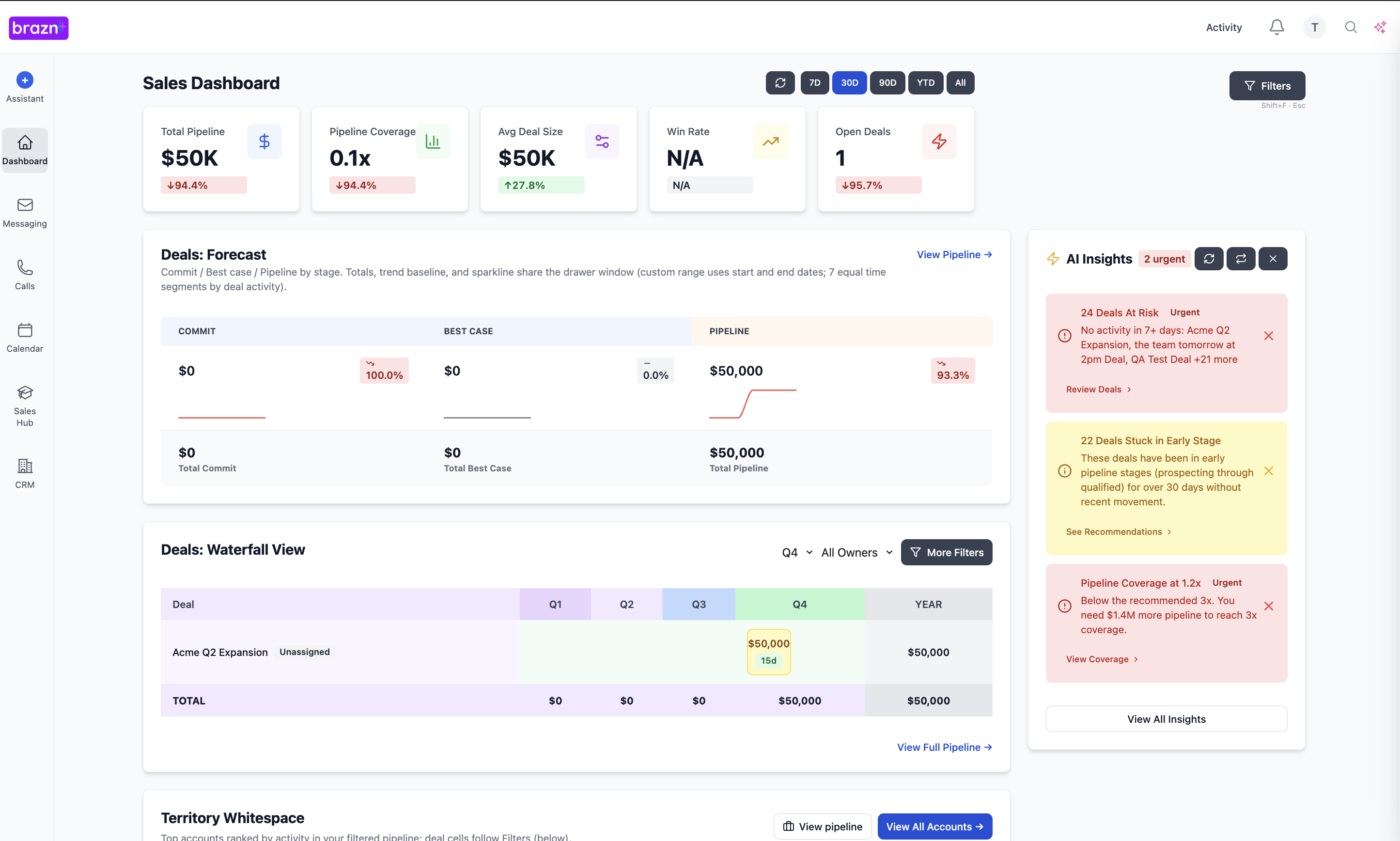
Review the last 3 discovery calls your team conducted. Did the rep reference a recent company event or a specific intent signal in the first 5 minutes? If not, you're leaving money on the table. Ready to arm your reps with real-time intelligence? See how Brazn automatically generates comprehensive Pre-Call Briefs
---
Book a demo to see how Brazn AI fits into your sales stack.

About the Author
Alex Margarit, Sales AI Expert, SaaS Sales Leader, BMC, ServiceNow, Docusign — 25+ years in SaaS sales.