
Content: # Pipeline Risk Telemetry From Conversation Data
Forecasting has long relied on a flawed source: rep opinion. Reps mark deals as commit based on optimism, missing subtle signs that momentum is stalling. This leads to slipped deals and inaccurate forecasts.
The most accurate indicators of deal health live in buyer-seller conversations. This article explains how RevOps can use AI to extract objective risk telemetry from conversation data.
What We'll Cover
In this article, we will cover:
- Why rep-entered CRM data is insufficient
- What conversation telemetry means
- Risk signals AI can extract from calls
- Integrating risk scores into pipeline reviews
- Shifting culture from interrogation to intervention
Understanding the Approach
Conversation telemetry uses AI to analyze transcripts to find patterns correlated with winning/losing. Instead of asking how the call went, analyze what was said, who spoke, and whether next steps are concrete.
Example: A rep commits a $100k deal, but AI flags that implementation questions were deferred and next steps were vague. The system lowers the health score so a manager can intervene.
Why This Matters
Conversation telemetry reduces happy ears and improves forecast accuracy.
- Before: Managers discover risk after close dates slip. After: AI flags friction weeks earlier.
- Before: Reviews are subjective debates. After: Reviews are data-driven.
- Before: Forecast accuracy is ~60-70%. After: Accuracy improves with objective signals.
The Complete Guide
Signal 1: Unresolved Objection Flag
Objective: Identify concerns not addressed well.
Actionable Advice: Flag calls where competitor, pricing, or security is raised but responses are weak.
Best Practices: Trigger a follow-up asset to address the concern.
Signal 2: Single-Threaded Warning
Objective: Detect champion-only deals.
Actionable Advice: If only one buyer voice appears across proposal-stage calls, flag high risk.
Best Practices: Require executive alignment before moving to commit.
Signal 3: Weak Next Steps
Objective: Ensure mutual accountability.
Actionable Advice: Lower momentum score when no dates/times/owners are set.
Best Practices: Surface momentum risk in CRM dashboards.
How to Implement This
RevOps integrates conversation intelligence with CRM so risk scores appear on opportunity records. Managers sort pipeline by risk and focus reviews on intervention.
Next Steps
Pick one commit deal and review the latest transcript for an unresolved objection or weak next step.
Pipeline Risk Telemetry From Conversation Data
For decades, revenue forecasting has relied on a fundamentally flawed data source: the subjective opinion of the sales rep. A rep marks a deal as "Commit" because they had a "great call" or because they desperately need it to hit quota, ignoring the subtle signs that the deal is actually stalling. This reliance on gut feeling leads to late-stage slipped deals, inaccurate forecasts, and destroyed credibility with the board.
The most accurate indicators of deal health don't live in a CRM dropdown menu; they live in the actual conversations happening between the buyer and the seller. This article explores how modern RevOps teams are using AI to extract objective "risk telemetry" directly from conversation data, transforming forecasting from a guessing game into a data science.
What We'll Cover
In this article, we will cover:
- Why rep-entered CRM data is insufficient for accurate forecasting
- The concept of "Conversation Telemetry" in B2B sales
- 3 specific risk signals AI can extract from sales calls
- How to integrate conversation risk scores into pipeline reviews
- Shifting the culture from "interrogation" to "intervention"
Understanding the Approach
Conversation telemetry involves using Natural Language Processing (NLP) and AI to analyze the transcripts of sales calls and emails to identify objective patterns that correlate with winning or losing deals. Instead of asking the rep how the call went, the AI analyzes the actual words spoken, the ratio of talking vs. listening, and the specific questions asked by the prospect.
Example: A rep updates a $100k deal to "Commit" and tells their manager the prospect is ready to sign. However, the AI analyzes the latest call transcript and flags a critical risk: the prospect asked three distinct questions about implementation timelines that the rep deferred, and the "Next Steps" discussed were vague. The AI downgrades the deal health score, prompting the manager to intervene before the deal slips.
Why This Matters
Utilizing conversation data for pipeline risk telemetry is the most effective way to eliminate happy ears, improve forecast accuracy, and proactively save at-risk deals.
- Before: Managers discover a deal is stuck only after it misses its close date. After: Managers are alerted to deal friction in real-time, weeks before the close date, allowing for proactive intervention.
- Before: Pipeline reviews are subjective debates about whether a prospect "sounded interested." After: Pipeline reviews are data-driven discussions based on objective conversational metrics.
- Before: Forecast accuracy hovers around 60-70%, leading to conservative budgeting and missed growth opportunities. After: Forecast accuracy consistently hits 90%+, building trust with the executive team and the board.
The Complete Guide
Signal 1: The "Unresolved Objection" Flag
Objective: Identify concerns the prospect raised that the rep failed to adequately address.
Actionable Advice: Configure your conversational intelligence tool to flag calls where a prospect mentions a competitor, pricing concern, or security requirement, but the rep's response is shorter than 15 seconds or uses filler words (e.g., "we can figure that out later").
Best Practices: Use this flag not to punish the rep, but to immediately trigger an email to the prospect containing a detailed case study addressing that specific concern.
Signal 2: The "Single-Threaded" Warning
Objective: Ensure the deal isn't overly reliant on one champion.
Actionable Advice: Have the AI analyze the transcripts of all calls in the "Proposal" stage. If only one unique voice from the prospect's company is detected across multiple calls, the AI automatically flags the deal as "High Risk - Single Threaded."
Best Practices: Mandate that the rep must execute an executive alignment play (e.g., an intro call between your CRO and their VP) before the deal can be moved to "Commit."
Signal 3: The "Weak Next Steps" Indicator
Objective: Ensure every interaction drives the deal forward with mutual accountability.
Actionable Advice: Train the AI to analyze the final 5 minutes of every discovery and demo call. If the AI doesn't detect specific dates, times, and assigned responsibilities for the next meeting, it lowers the deal's momentum score.
Best Practices: Integrate this score directly into your CRM dashboard so managers can easily sort their team's pipeline by "Momentum Risk."
How to Implement This
RevOps must own the integration between the conversational intelligence platform (e.g., Gong, Chorus) and the CRM, ensuring these AI-generated risk scores are highly visible on the opportunity record. Sales Managers must fundamentally change how they run pipeline reviews. Instead of asking reps to "run through their deals," managers should start the meeting by sorting the pipeline by AI risk score, focusing the entire conversation on the deals that the data says are in trouble.
Next Steps
The truth about your pipeline is hidden in the conversations your team is having every day. By leveraging AI to extract risk telemetry from those conversations, you can replace gut feelings with objective data, saving deals before they slip and forecasting with unprecedented accuracy.
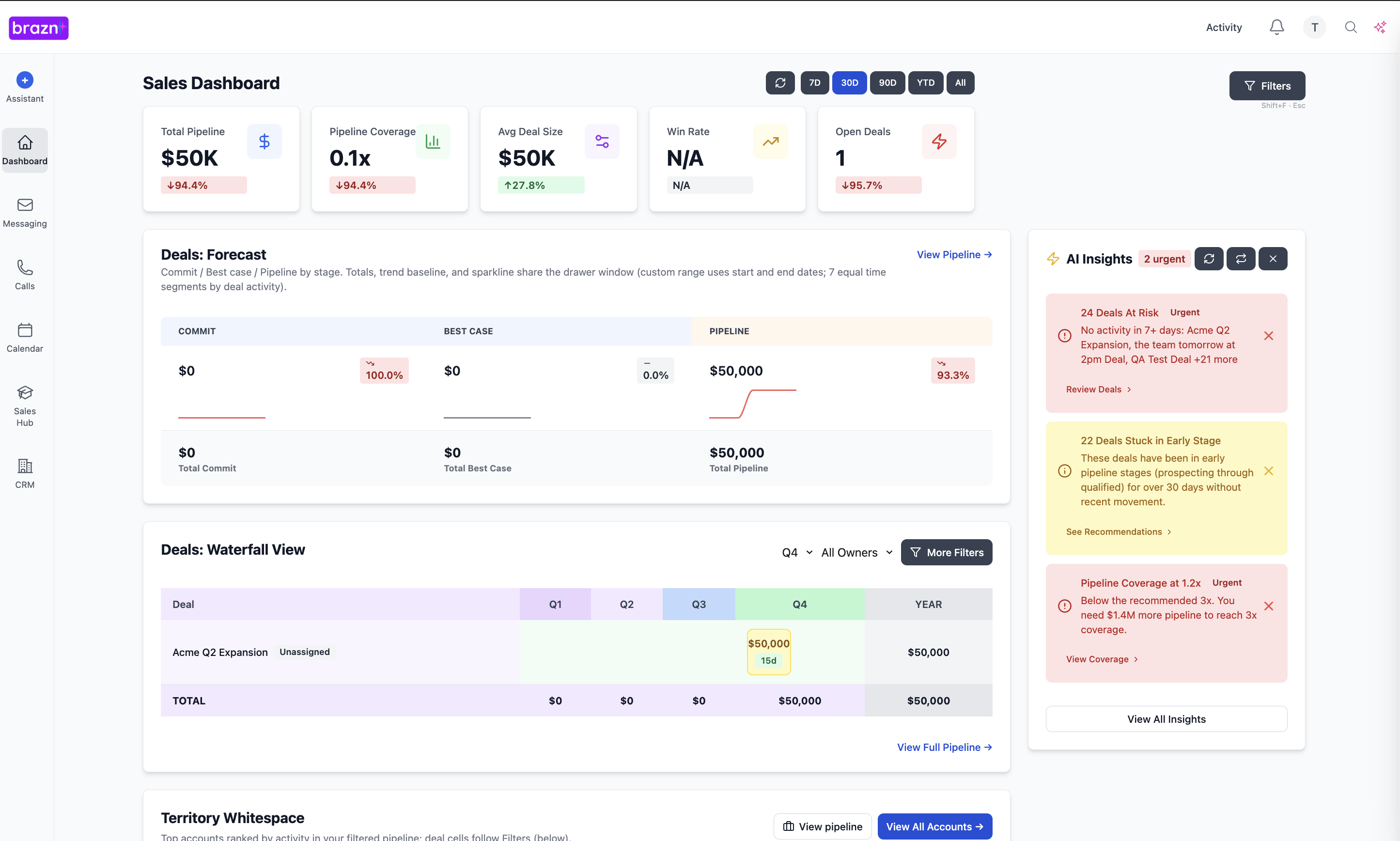
Open your conversational intelligence tool today. Find one "Commit" deal for this quarter and read the transcript of the most recent call. Look for one unresolved objection or weak next step that the rep missed. Ready to automate this analysis across your entire pipeline? Discover how Brazn surfaces the hidden risks in your conversation data.
---
Book a demo to see how Brazn AI fits into your sales stack.

About the Author
Alex Margarit, Sales AI Expert, SaaS Sales Leader, BMC, ServiceNow, Docusign — 25+ years in SaaS sales.