


Content: # Forecast Cadence for High-Velocity SaaS Teams
In enterprise sales, a monthly forecast might be sufficient. But for high-velocity SaaS teams closing deals in 30 days or less, a monthly cadence is far too slow. By the time you review the numbers, the deals have either closed or died.
A slow forecast cadence in a fast-moving market leaves leadership flying blind, unable to react to sudden shifts in lead flow or conversion rates.
This article outlines the optimal forecast cadence for high-velocity SaaS. We will discuss how to structure daily, weekly, and monthly check-ins to maintain a real-time pulse on the business without drowning the team in administrative overhead.
What We'll Cover
In this article, we will cover:
- Why high-velocity sales requires a different forecasting rhythm
- The 15-minute daily stand-up
- The weekly pipeline inspection
- The monthly strategic review
- Automating data collection to reduce rep burden
Understanding the Approach
A forecast cadence is the structured schedule of meetings and reports used to assess pipeline health. In high-velocity environments, this cadence must be frequent but brief, focusing on immediate actions rather than long-term projections.
Example: A high-velocity team replaces a 2-hour weekly pipeline review with a 15-minute daily stand-up. In the stand-up, reps only discuss deals closing that week and any immediate blockers, allowing managers to unstick deals in real-time.
Why This Matters
A tighter cadence ensures rapid response to market changes and keeps the team focused on immediate execution.
- Before: Managers discover a drop in conversion rates at the end of the month. After: Managers spot the trend within days and adjust messaging immediately.
- Before: Reps spend hours preparing spreadsheets for a weekly meeting. After: Automated dashboards provide the data, allowing the meeting to focus entirely on strategy.
- Before: Deals stall because reps wait for the weekly meeting to ask for help. After: Daily check-ins ensure blockers are removed instantly.
The Complete Guide
Step 1: The Daily Stand-Up (15 Minutes)
Objective: Address immediate blockers and align on daily priorities.
Actionable Advice: Hold a brief morning meeting where each rep shares their top priority for the day and any deals they need help pushing across the line.
Best Practices: Keep it strictly to 15 minutes. This isn't the time for deep-dive deal reviews.
Step 2: The Weekly Pipeline Inspection (45 Minutes)
Objective: Assess the health of the current month's forecast.
Actionable Advice: Review the leading indicators (new pipeline created, conversion rates) and inspect the deals committed for the current month. Focus on identifying risks and ensuring CRM hygiene.
Best Practices: Use an automated dashboard so no time is wasted debating whose numbers are correct.
Step 3: The Monthly Strategic Review (90 Minutes)
Objective: Analyze broader trends and adjust the GTM strategy.
Actionable Advice: Look back at the previous month's performance (win rates, sales cycle length) and look forward to the next quarter's pipeline generation needs.
Best Practices: Include cross-functional leaders (Marketing, Product) to ensure alignment on the broader GTM strategy.
How to Implement This
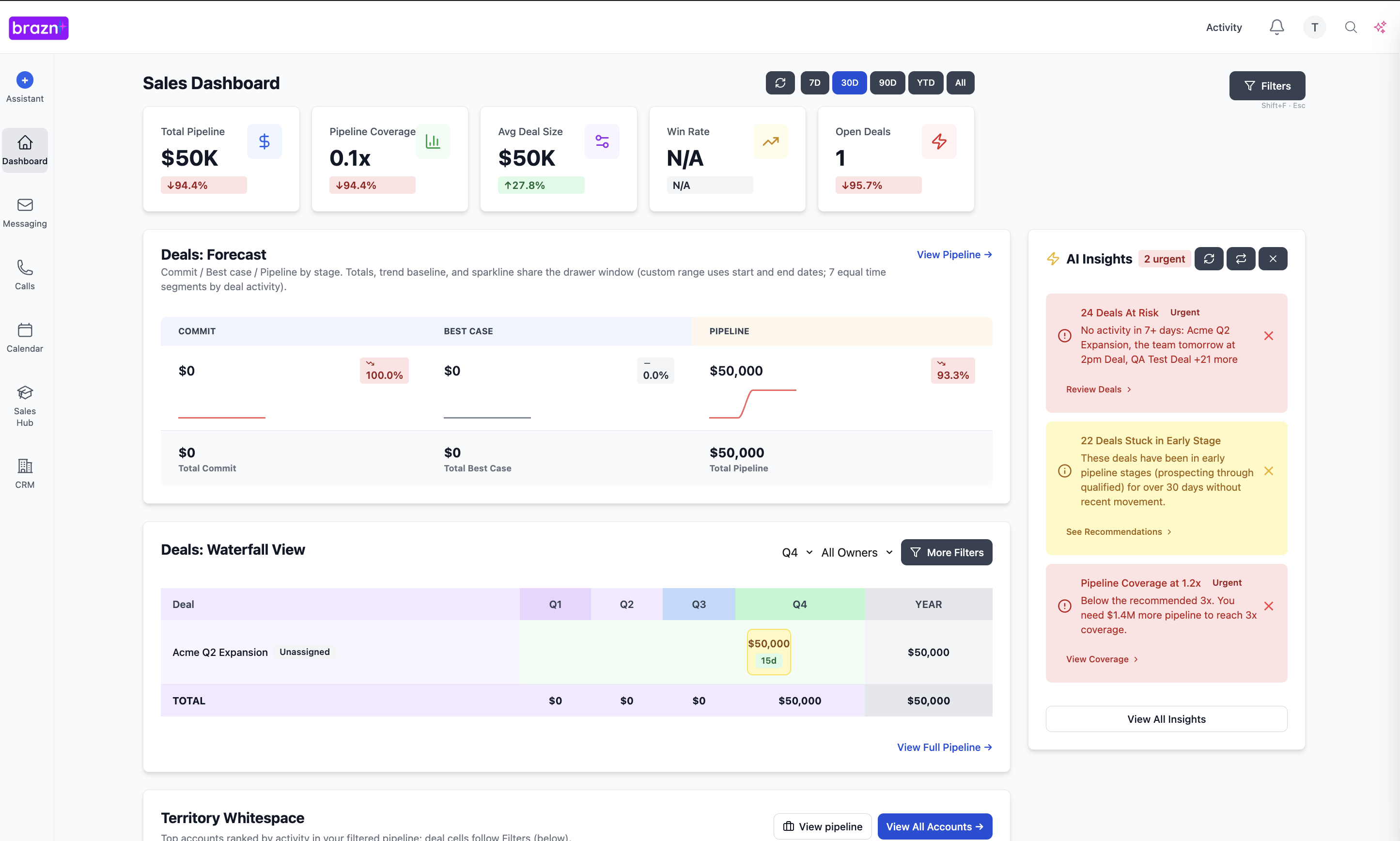
RevOps is crucial for enabling a high-velocity cadence. They must provide real-time dashboards that eliminate the need for manual reporting. If reps have to spend time building reports for a daily stand-up, the cadence will fail. Sales Managers must enforce the brevity of the meetings, ensuring they remain actionable and don't devolve into administrative updates.
Next Steps
In high-velocity sales, speed is your biggest advantage. Your forecasting cadence must match the speed of your market.
Try implementing a 15-minute daily stand-up tomorrow morning. Focus only on blockers and immediate actions. You'll be surprised at how much momentum it creates. Ready to automate your high-velocity reporting? See how Brazn provides real-time visibility for fast-moving teams.
Forecast Cadence for High-Velocity SaaS Teams
In enterprise sales, a monthly forecast might be sufficient. But for high-velocity SaaS teams closing deals in 30 days or less, a monthly cadence is far too slow. By the time you review the numbers, the deals have either closed or died.
A slow forecast cadence in a fast-moving market leaves leadership flying blind, unable to react to sudden shifts in lead flow or conversion rates.
This article outlines the optimal forecast cadence for high-velocity SaaS. We will discuss how to structure daily, weekly, and monthly check-ins to maintain a real-time pulse on the business without drowning the team in administrative overhead.
What We'll Cover
In this article, we will cover:
- Why high-velocity sales requires a different forecasting rhythm
- The 15-minute daily stand-up
- The weekly pipeline inspection
- The monthly strategic review
- Automating data collection to reduce rep burden
Understanding the Approach
A forecast cadence is the structured schedule of meetings and reports used to assess pipeline health. In high-velocity environments, this cadence must be frequent but brief, focusing on immediate actions rather than long-term projections.
Example: A high-velocity team replaces a 2-hour weekly pipeline review with a 15-minute daily stand-up. In the stand-up, reps only discuss deals closing that week and any immediate blockers, allowing managers to unstick deals in real-time.
Why This Matters
A tighter cadence ensures rapid response to market changes and keeps the team focused on immediate execution.
- Before: Managers discover a drop in conversion rates at the end of the month. After: Managers spot the trend within days and adjust messaging immediately.
- Before: Reps spend hours preparing spreadsheets for a weekly meeting. After: Automated dashboards provide the data, allowing the meeting to focus entirely on strategy.
- Before: Deals stall because reps wait for the weekly meeting to ask for help. After: Daily check-ins ensure blockers are removed instantly.
The Complete Guide
Step 1: The Daily Stand-Up (15 Minutes)
Objective: Address immediate blockers and align on daily priorities.
Actionable Advice: Hold a brief morning meeting where each rep shares their top priority for the day and any deals they need help pushing across the line.
Best Practices: Keep it strictly to 15 minutes. This isn't the time for deep-dive deal reviews.
Step 2: The Weekly Pipeline Inspection (45 Minutes)
Objective: Assess the health of the current month's forecast.
Actionable Advice: Review the leading indicators (new pipeline created, conversion rates) and inspect the deals committed for the current month. Focus on identifying risks and ensuring CRM hygiene.
Best Practices: Use an automated dashboard so no time is wasted debating whose numbers are correct.
Step 3: The Monthly Strategic Review (90 Minutes)
Objective: Analyze broader trends and adjust the GTM strategy.
Actionable Advice: Look back at the previous month's performance (win rates, sales cycle length) and look forward to the next quarter's pipeline generation needs.
Best Practices: Include cross-functional leaders (Marketing, Product) to ensure alignment on the broader GTM strategy.
How to Implement This
Revops is crucial for enabling a high-velocity cadence. They must provide real-time dashboards that eliminate the need for manual reporting. If reps have to spend time building reports for a daily stand-up, the cadence will fail. Sales Managers must enforce the brevity of the meetings, ensuring they remain actionable and don't devolve into administrative updates.Next Steps
In high-velocity sales, speed is your biggest advantage. Your forecasting cadence must match the speed of your market.
Try implementing a 15-minute daily stand-up tomorrow morning. Focus only on blockers and immediate actions. You'll be surprised at how much momentum it creates. Ready to automate your high-velocity reporting? See how Brazn provides real-time visibility for fast-moving teams.
---
####
Book a demo to see how Brazn AI fits into your sales stack.

About the Author

Alex Margarit, Sales AI Expert, SaaS Sales Leader, BMC, ServiceNow, Docusign — 25+ years in SaaS sales.