
5 Revenue Growth Plays Any SaaS Team Can Run Without Adding Headcount
In a growth-at-all-costs market, the default answer to missing pipeline targets was simple: hire more reps. But in today’s environment of constrained budgets and a focus on efficient growth, simply adding headcount is rarely an option. SaaS leaders are now tasked with doing more with the team they already have.
The challenge is that pushing your existing team to simply "work harder" leads to burnout and diminishing returns. The solution lies in working smarter by operationalizing specific, high-leverage plays that extract more value from your existing pipeline, customer base, and tech stack.
This article outlines 5 proven revenue growth plays that require zero new hires. By focusing on process optimization, AI leverage, and customer expansion, your team can drive significant revenue growth while maintaining a lean, efficient operation.
What We'll Cover
In this article, we will cover:
- Why the "hire more reps" playbook is broken
- The shift from growth-at-all-costs to efficient revenue generation
- 5 specific plays to increase revenue without adding headcount
- How RevOps can orchestrate these plays across the GTM team
Understanding the Approach
In the context of Go-to-Market strategy, "Efficient Growth" means increasing Annual Recurring Revenue (ARR) while keeping Customer Acquisition Cost (CAC) stable or decreasing it. This requires a shift from relying solely on top-of-funnel volume (which usually requires more SDRs) to maximizing conversion rates and Customer Lifetime Value (LTV).
For RevOps, this means identifying the "leaks" in the current revenue engine and deploying targeted plays to fix them. It involves breaking down silos between Sales, Marketing, and Customer Success to ensure that every opportunity is maximized, from initial inquiry to renewal and expansion.
Example: Instead of hiring two new BDRs to generate more cold leads, a Revops team might implement a "Closed-Lost Revival" play. They use AI to analyze deals lost to "timing" in the past 12 months and automate a highly personalized re-engagement sequence. This generates warm pipeline from existing data without requiring any new personnel.
Why This Matters
Implementing these headcount-neutral plays is essential for improving unit economics, increasing the ROI of your existing tech stack, and building a resilient revenue organization.
- Before: Growth targets are missed because the company can't afford to hire the necessary quota-carrying reps. After: Revenue increases through higher win rates and expansion, achieving targets efficiently.
- Before: Reps spend time chasing low-probability cold leads while warm, existing relationships are ignored. After: Plays focus rep attention on high-leverage activities, like upselling successful customers or reviving stalled deals.
- Before: Customer Success is viewed purely as a support function. After: CS is transformed into a revenue-generating engine through structured expansion plays.
The Complete Guide
Play 1: The "Closed-Lost Revival" Campaign
Objective: Generate pipeline from deals that were previously lost due to timing or budget.
Actionable Advice: Create a CRM report of all deals lost in the last 6-12 months where the reason was "Timing" or "No Budget." Use AI to draft personalized emails referencing their past evaluation and asking if their priorities have shifted, perhaps highlighting a new feature relevant to their original pain point.
Best Practices: Do not run this play on deals lost to competitors or where there was a bad product fit.
Play 2: The "Freemium to Paid" Nurture Sequence
Objective: Increase the conversion rate of existing free or trial users.
Actionable Advice: Analyze product usage data to identify the "aha moment" (the action that correlates highest with conversion). Build an automated email and in-app message sequence that guides free users toward that specific action, followed by a targeted upgrade offer.
Best Practices: Trigger the upgrade offer based on behavior (e.g., hitting a usage limit) rather than just a time-based trial expiration.
Play 3: The "White Space" Cross-Sell Analysis
Objective: Drive expansion revenue from your existing customer base.
Actionable Advice: Have RevOps map your product lines against your current customer base to identify "white space" (customers using Product A but not Product B). Arm Customer Success with specific plays and battlecards to introduce the complementary product during QBRs.
Best Practices: Ensure the cross-sell pitch focuses on how the new product enhances the value they're already getting from the first product.
Play 4: The "Speed-to-Lead" Optimization
Objective: Increase the conversion rate of inbound demo requests by eliminating wait times.
Actionable Advice: Implement a calendar routing tool (like Chili Piper or RevenueHero) on your website. Allow qualified prospects to book a meeting directly on an AE's calendar immediately after submitting the form, bypassing the SDR qualification delay.
Best Practices: Keep the initial form short, using data enrichment tools in the background to route the lead correctly.
Play 5: The "AI-Assisted Deal Review"
Objective: Improve win rates by systematically identifying risks in active opportunities.
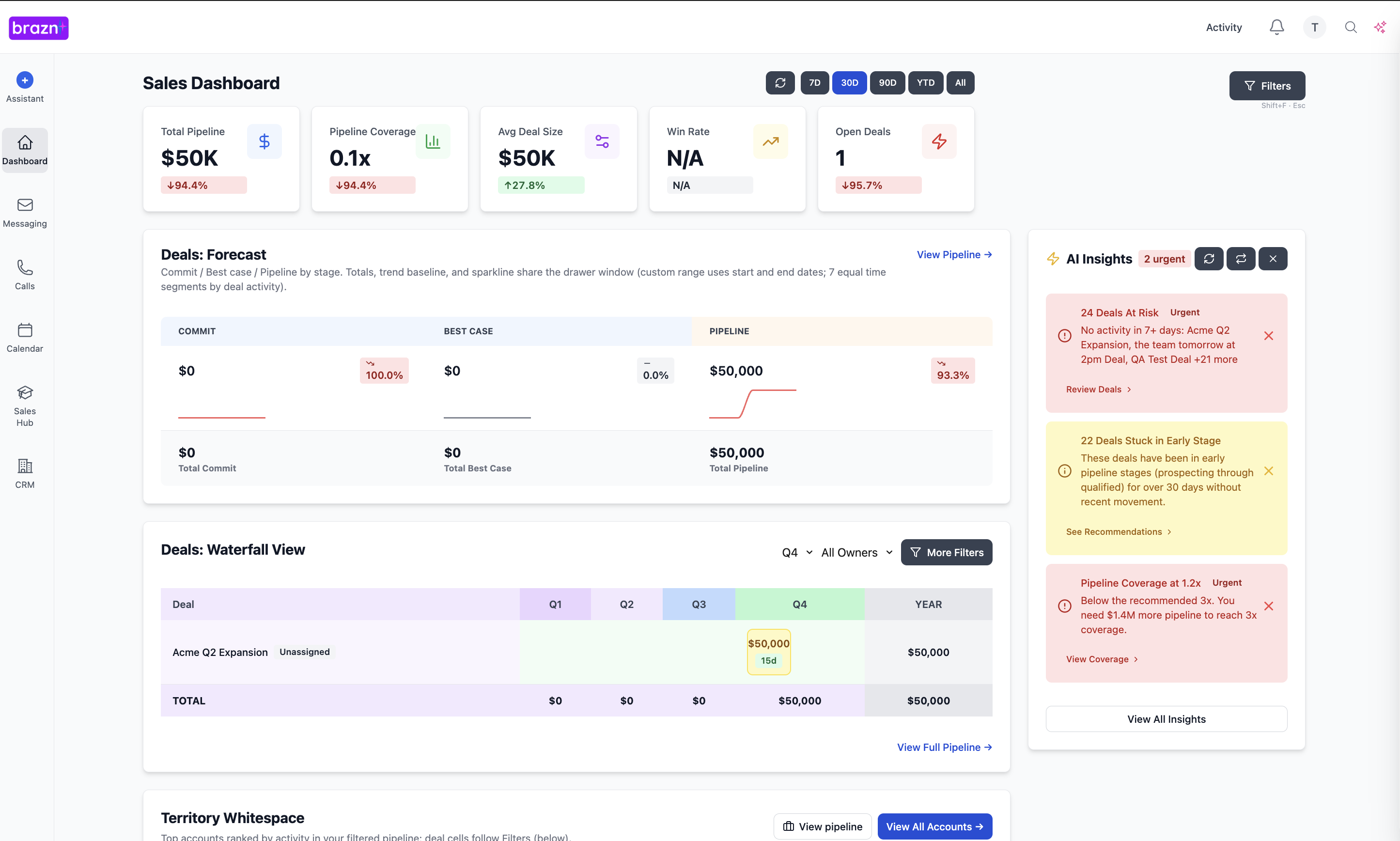
Actionable Advice: Mandate that reps run an AI prompt (e.g., "Identify missing stakeholders or unaddressed objections based on call notes") before their weekly pipeline review with their manager. Use the output to create a specific action plan for every deal in the "Commit" stage.
Actionable Advice: Mandate that reps run an AI Prompt (e.g., "Identify missing stakeholders or unaddressed objections based on call notes") before their weekly pipeline review with their manager. Use the output to create a specific action plan for every deal in the "Commit" stage.
Best Practices: Shift the manager's role from "interrogating the forecast" to collaborative problem-solving based on the AI's insights.
How to Implement This
RevOps is the engine that makes these plays possible. They must provide the data (e.g., the white space analysis, the closed-lost reports) and configure the automation (e.g., the routing tools, the nurture sequences).
However, execution requires cross-functional alignment. Sales leadership must enforce the new deal review processes, and CS leadership must train their teams on the cross-sell motions. These plays aren't just "tools to buy"; they're behavioral changes that must be managed.
Next Steps
Driving revenue growth doesn't always require expanding your team. By optimizing your existing processes, leveraging AI for efficiency, and tapping into the latent value within your current pipeline and customer base, you can achieve significant, efficient growth.
Start by picking the play that addresses your biggest current weakness. If your win rates are low, implement the AI-Assisted Deal Review. If you have a large base of free users, focus on the Freemium Nurture. By executing just one of these plays well, you can prove that lean teams can deliver outsized results.
####
Book a demo to see how Brazn AI fits into your sales stack.

About the Author

Alex Margarit, Sales AI Expert, SaaS Sales Leader, BMC, ServiceNow, Docusign — 25+ years in SaaS sales.