AI Sales Assistant for SDR: How to Prospect Faster
SDRs are the engine of pipeline generation — but they spend a disproportionate amount of their time on things that aren't prospecting: researching accounts, writing personalised emails, updating CRM, sorting through bad data, and chasing info that should already be available.AI doesn't make prospecting easier in the sense of removing the need for skill. It removes the overhead that eats time that should go to skill — to conversations, to objection handling, to learning what works.
Where SDRs Lose Time (and Where AI Wins It Back)
Account research: 15–25 minutes per account to get enough context for a personalised outreach. AI reduces this to 2–3 minutes without sacrificing quality. Email personalisation: Writing 20 genuinely personalised emails takes 90+ minutes. AI drafts them from signal data in a fraction of that. CRM logging: Logging calls, updating status fields, writing notes after every touchpoint. AI auto-captures and suggests. List building and enrichment: Sifting through bad data, finding the right contacts, verifying emails. AI tools accelerate enrichment and qualification.Across a full week, AI can recover 4–8 hours for the average SDR — and direct it toward more pipeline-generating activity.
1. AI-Assisted Account Prioritisation
Not all accounts in a territory are worth the same prospecting effort. AI helps SDRs:
Score accounts against ICP criteria before investing research time.
Flag accounts with active trigger signals (funding, hiring, leadership changes).
Identify which accounts are showing intent signals (visiting the pricing page, engaging with content).
Result: more time on accounts that are ready to engage, less time on accounts that are dormant.
2. AI-Generated Research Briefs
For each target account, AI produces:
A 3–5 sentence company summary.
2–3 recent developments relevant to the outreach.
A list of likely pain hypotheses for the target persona.
A suggested personalised opening line for the Cold Email or call.
The SDR reviews, adjusts the opening, and moves to the next account.
3. Cold Email Drafting at Scale
An AI assistant can take:
Account name and persona.
2–3 trigger signals.
A product angle or pain hypothesis.
And output a first-draft cold email in under 30 seconds. The SDR edits voice and tone, checks accuracy, and sends. Across 20 accounts, this transforms a 90-minute task into a 20-minute one.
4. Call Prep in Seconds
Before a cold call, AI surfaces:
A 30-second company summary.
The persona's likely priorities.
2–3 opener lines tied to a specific signal.
The most likely first objection and a suggested response.
Showing up to a cold call with that context makes the first 15 seconds meaningfully better.
5. CRM Logging Without the Friction
Every SDR knows the pain of logging 40 calls a day in Salesforce or Hubspot. AI auto-captures activity from call recordings and emails and suggests structured updates. The SDR reviews and confirms, rather than typing from scratch.
What AI Can't Replace in SDR Work
AI doesn't replace the SDR's judgment about whether a prospect is genuinely interested. It doesn't replace the skill of navigating a cold call that goes sideways. It doesn't replace the pattern recognition that comes from doing 80 calls a week and noticing which openers land.AI gives SDRs more at-bats per day. What they do with those at-bats is still on them.
How Brazn Helps SDRs
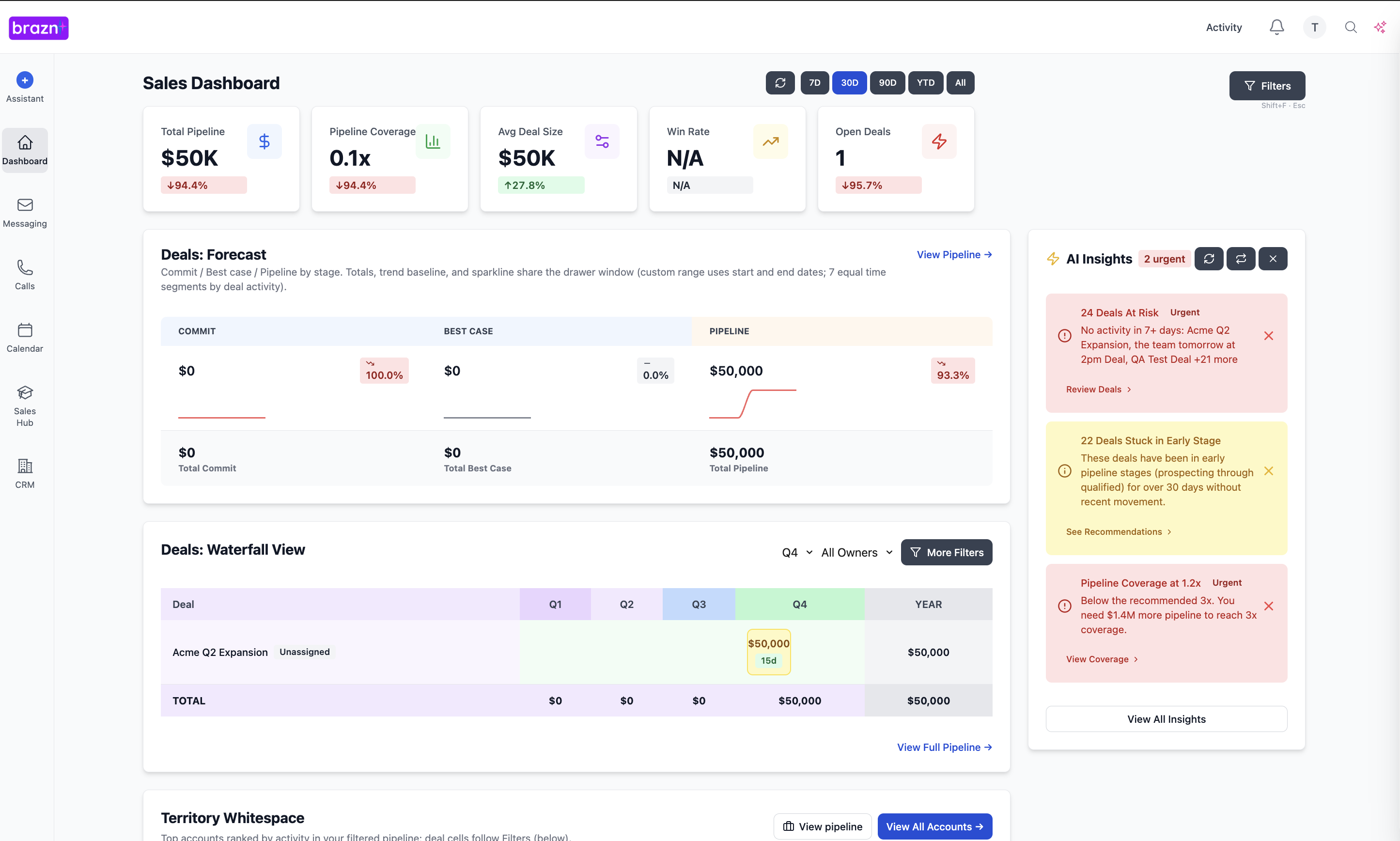
Brazn gives SDRs a pre-research layer on every target account, signal-driven outreach suggestions, and automated CRM logging — so they can run more sequences, with better context, in the same number of hours.
---
####
Book a demo to see how Brazn AI fits into your sales stack.
About the Author
Alex Margarit, Sales AI Expert, SaaS Sales Leader, BMC, ServiceNow, Docusign — 25+ years in SaaS sales.