
25 AI Prompts for SaaS Sales Reps: Copy, Paste, Close More
Most AI prompt packs for sales are too generic to be useful. "Write me a cold email" doesn't tell the AI anything about your prospect, their pain, or your product. This prompt pack is built specifically for SaaS AEs and SDRs running MEDDPICC-informed deals.
Use these across account research, prospecting, discovery prep, deal reviews, and follow-up. Each prompt includes a fill-in structure so you can adapt it to any account in under 60 seconds.
Account Research (1–6)
1. Build a prospect's business context brief> You are a SaaS sales researcher. Based on the following company description, recent news, and job postings, summarise: (1) their current growth stage, (2) the top 3 business priorities they are likely focused on, (3) any signals of budget or headcount change, and (4) the most likely pain points for a [role] at this company. Company: [name]. Context: [paste in LinkedIn About, recent press, job listings].
>
2. Identify likely economic buyers> Based on this company's org structure and the following job titles found on LinkedIn, identify who is most likely to be the economic buyer for a [product category] purchase. Explain your reasoning. Company size: [X]. Industry: [Y]. Titles found: [list].
>
3. Find trigger events worth acting on> Review the following news and LinkedIn activity for [company name] and identify any trigger events that suggest now is a good time to reach out with a [product category] solution. Triggers to look for: leadership changes, funding rounds, product launches, hiring surges, or public mentions of [pain area]. Context: [paste].
>
4. Build a stakeholder map> Based on the following LinkedIn profiles and company structure, map out the likely buying committee for a [product] sale at [company]. For each stakeholder, suggest: their likely role in the decision (Champion, Economic Buyer, Technical Buyer, Legal/Procurement), their likely concern, and what messaging would resonate. Stakeholders: [list names and titles].
>
5. Write a personalised account brief in 3 bullets> Using the context below, write a 3-bullet account brief I can use before a discovery call with [name] at [company]. Each bullet should be one sentence and cover: (1) their business context, (2) a likely pain point, (3) a relevant question I should ask. Context: [paste].
>
6. Score an account's fit for outreach> Based on the following ICP criteria and account data, rate this account's fit for outreach on a scale of 1–10. Provide a score for each criterion and an overall recommendation. ICP criteria: [list]. Account data: [paste].
>
Prospecting & Outbound (7–12)
7. Write a first-touch cold email> Write a 4-line cold email to [name], [title] at [company]. The email should: reference one specific, real trigger event or business context (not a generic compliment), connect it to a pain that [product] solves, and end with a low-friction CTA. Avoid buzzwords. Tone: direct and peer-level. Trigger/context: [paste].
>
8. Write a LinkedIn connection request> Write a LinkedIn connection request message (under 300 characters) to [name] at [company]. It should feel like a genuine peer reaching out, not a sales pitch. Reference: [one specific thing — mutual connection, shared content, company news].
>
9. Write a follow-up sequence (3 touches)> Write a 3-touch follow-up sequence for a cold outbound prospect who hasn't replied. Touch 1: soft follow-up at Day 3. Touch 2: add new value or insight at Day 7. Touch 3: breakup email at Day 14. Each email should be under 5 lines. Context about the prospect and initial email: [paste].
>
10. Personalise a sequence template for a specific account> I have the following email template. Personalise it for [name] at [company] using the account context below. Do not change the structure — only swap the personalisation tokens. Template: [paste]. Account context: [paste].
>
11. Write a multi-threaded outreach to a second stakeholder> I've been in conversation with [name/title] at [company] but want to multi-thread to [second name/title]. Write a first email to the second stakeholder that: acknowledges we're already in conversation with their colleague, frames the value from their perspective, and asks for 15 minutes. Don't make it awkward. Context: [paste].
>
12. Rewrite a generic email to be specific and punchy> Rewrite the following cold email to make it more specific, concise, and compelling. Remove all filler. Make the hook about the prospect, not us. Keep it under 5 lines. Original email: [paste].
>
Discovery Prep (13–17)
13. Generate discovery questions from account context> Based on the following account context and my product's value drivers, generate 8 discovery questions I should ask in my first call. Questions should uncover: current state, pain, impact, decision process, and timeline. Value drivers: [list]. Account context: [paste].
>
14. Anticipate objections before a call> Based on this prospect's context, role, and likely concerns, list the 3 most likely objections they will raise in our discovery call and suggest a one-sentence response to each. Product: [name]. Prospect: [title, company context]. Likely concerns: [paste].
>
15. Build a call agenda> Write a 4-part discovery call agenda for a 30-minute call with [title] at [company]. Include: a brief intro/context-setting, 2–3 discovery areas to explore, a section to share relevant insight or a proof point, and a clear next step. Goal of the call: [e.g. qualify for MEDDPICC, identify economic buyer].
>
16. Summarise a previous call and extract MEDDPICC gaps> Review the following call notes and extract what we know and what we are missing for each MEDDPICC element: Metrics, Economic Buyer, Decision Criteria, Decision Process, Identify Pain, Champion, Competition. Mark each as Known, Partial, or Unknown. Call notes: [paste].
>
17. Generate a hypothesis of value before a call> Based on this account's context, generate a hypothesis of value — a one-paragraph statement of the business problem they likely have, the impact of that problem, and how [product] would address it. I'll use this to anchor our discovery conversation. Context: [paste].
>
Deal Reviews & MEDDPICC (18–21)
18. Run a MEDDPICC gap analysis on a deal> Review the following deal notes and CRM data. For each MEDDPICC element, state: (1) what we know, (2) what is missing, (3) the risk this gap creates, and (4) the next action to close the gap. Deal data: [paste].
>
19. Score deal health and flag risks> Based on the following deal information, give this deal a health score out of 10 and flag the top 3 risks. For each risk, suggest a specific action the AE should take this week. Deal data: [paste].
>
20. Write a deal review summary for your manager> Write a structured deal review summary for my sales manager covering: current stage, key stakeholders and their status, MEDDPICC coverage, deal risks, and recommended next steps. Keep it to one paragraph per section. Deal data: [paste].
>
21. Generate champion-enabling content> My champion at [company] needs to present the business case for [product] internally to [economic buyer title]. Write a 5-bullet internal talking points doc they can use to make the case. Focus on business impact, not features. Context: [paste].
>
Follow-Up & Closing (22–25)
22. Write a post-meeting follow-up email> Write a follow-up email after a [discovery/demo/business review] call with [name] at [company]. Include: a brief recap of what we discussed, the agreed next steps with owners and dates, and one sentence reinforcing their key pain. Tone: professional but warm. Call notes: [paste].
>
23. Write a mutual close plan summary> Based on the following deal context, write a 1-page mutual close plan summary I can share with my champion. Include: decision timeline, key milestones, stakeholders involved, open items, and success criteria. Deal context: [paste].
>
24. Handle a “we need to think about it” objection> My prospect just said ‘we need more time to think about it.’ Based on the following deal context, write a response that: acknowledges their position, surfaces the real concern (without being pushy), and proposes a specific next step to maintain momentum. Deal context: [paste].
>
25. Write a lost deal debrief> We just lost a deal with [company]. Based on the following information, write a structured debrief covering: why we lost, what MEDDPICC gaps contributed, what we would do differently, and whether there is a re-engage opportunity in future. Deal data: [paste].
>
---
####
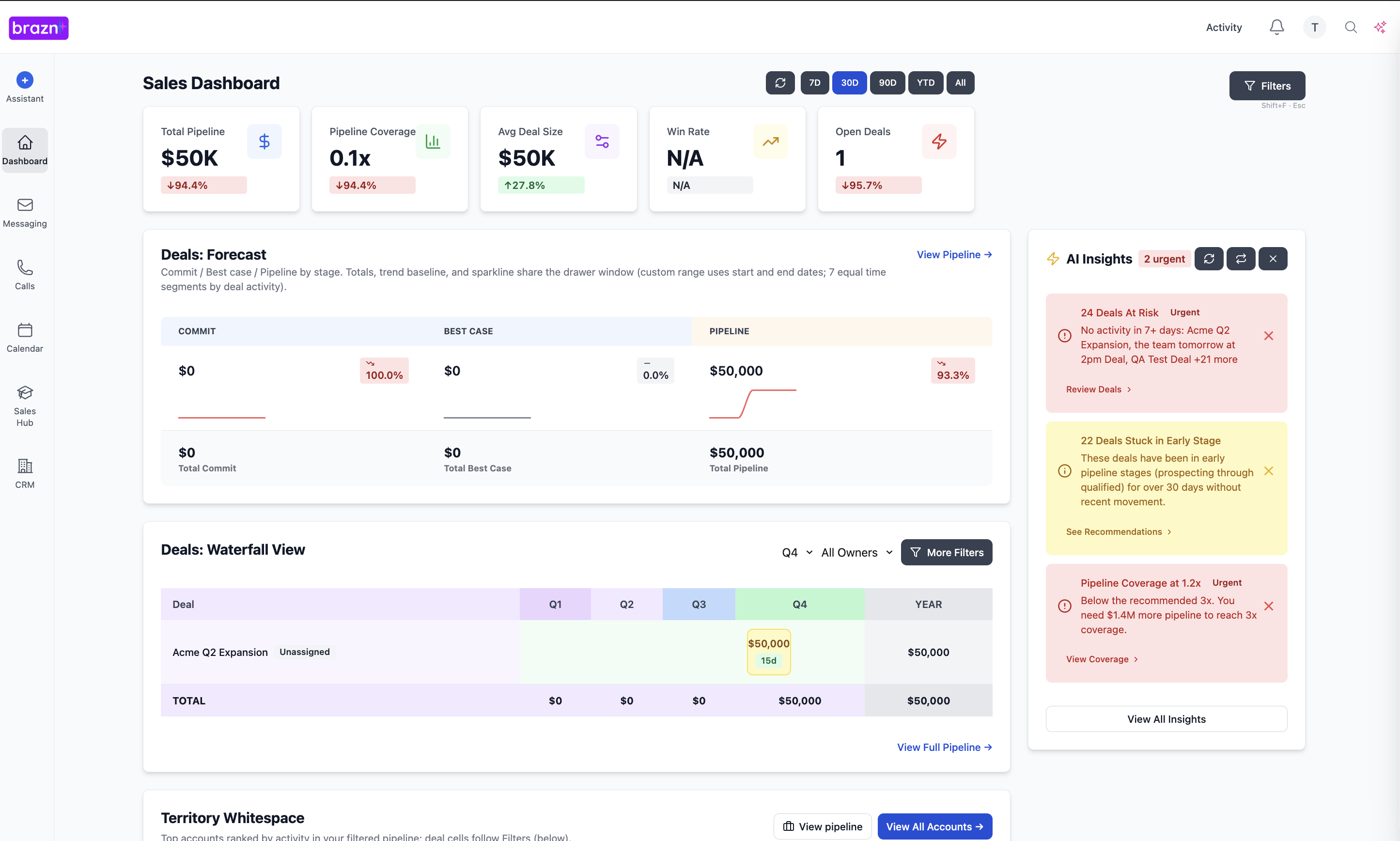
Book a demo to see how Brazn AI fits into your sales stack.

About the Author

Alex Margarit, Sales AI Expert, SaaS Sales Leader, BMC, ServiceNow, Docusign — 25+ years in SaaS sales.