What Is Sales Enablement? The 2026 Guide for SaaS Teams
Sales enablement is one of the most widely used — and most inconsistently defined — terms in SaaS. According to Forrester's Sales Enablement report, organisations with a dedicated, mature sales enablement function achieve 19% faster revenue growth and 15% better win rates than those without one. Ask five VPs of Sales what their sales enablement function does and you'll get five different answers. For some it's training and onboarding. For others it's content and collateral management. For others it's tooling, process design, or analytics. For others still, it's a catch-all for anything that isn't quota-carrying.
This guide gives you a clear definition, covers what modern sales enablement actually includes in 2026, why the function has evolved significantly in recent years, and how AI is reshaping what enablement teams can deliver.
A Working DefinitionSales enablement is the function responsible for equipping sales teams with the training, content, tools, and processes they need to sell effectively. The goal is simple: make every rep more productive, more consistent, and faster to ramp. The tactics to get there are broader than any single discipline.
A well-run sales enablement function typically covers four areas:
Training and coaching — onboarding new reps, ongoing skill development, methodology rollouts ( MEDDPICC, Challenger, Command of the Message), and manager capability building. Content and collateral — sales decks, battle cards, case studies, one-pagers, proposal templates, and anything else reps need to run a deal. Tooling and process — the sales tech stack, workflows between tools, process documentation, and adoption of new systems. Analytics and insight — measuring what's working, identifying skill gaps, surfacing coaching opportunities, and feeding improvement back into the function.The through-line across all four is that enablement exists to make the sales function more effective — not to replace the work of selling itself.
Why Sales Enablement Matters More in 2026The role has expanded significantly in the last five years. Three shifts have driven the change.
Deal complexity has increased. Enterprise SaaS deals now involve more stakeholders, longer cycles, and more sophisticated procurement processes than a decade ago. Reps can't learn this complexity through osmosis — they need structured enablement to manage it. Ramp time has become a board-level concern. Every quarter a new rep takes to reach quota is a quarter of lost productivity. Sales Enablement PRO's benchmark research shows the average SaaS rep takes 9–12 months to reach full productivity — and organisations with structured enablement cut that by 30–40%. Fast, consistent ramp is one of the highest-leverage investments a SaaS business can make, and sales enablement owns it. The sales tech stack has multiplied. A modern SaaS sales org uses 8–15 tools across CRM, sales engagement, conversation intelligence, AI sales assistants, data enrichment, and revenue operations. Enablement owns the workflow, adoption, and integration story across all of them.The result is that sales enablement has moved from a supporting function to a strategic one. In high-performing SaaS organisations, the Head of Sales Enablement reports to the CRO and has genuine influence on revenue outcomes.
What Great Sales Enablement Actually Looks LikeThe best enablement teams have a specific operating rhythm. Onboarding is structured and measurable — new reps reach defined competency milestones at weeks 2, 4, 8, and 12, with clear pass/fail criteria. Ongoing enablement is tied to specific skill gaps identified in the data, not delivered as generic "lunch and learn" sessions. Content lives in a system reps actually use, with analytics on what gets consumed and what drives deals forward.
The function is also tightly coupled with RevOps. Enablement identifies the skill gaps; RevOps measures the outcomes. Together they build the continuous improvement loop that turns sales performance data into specific, targeted capability development.
Weak enablement teams, by contrast, tend to deliver training that doesn't correlate with rep performance, build content libraries nobody uses, and roll out methodologies that degrade within two quarters. The pattern is usually the same: enablement operating in isolation from the data that would tell them what's actually working.
How AI Changes Sales EnablementAI is reshaping what enablement can deliver in 2026. The changes are structural, not cosmetic.
Diagnostic specificity. Where enablement used to rely on manager feedback and survey data to identify skill gaps, Gong's Revenue Intelligence research shows AI now provides continuous behavioural analytics on every rep — follow-up speed, MEDDPICC coverage depth, stakeholder breadth, discovery quality. Enablement can design training programmes around specific, measured gaps rather than generic hypotheses. Personalised coaching at scale. AI-surfaced coaching opportunities tied to specific deals and specific rep behaviours give managers something enablement used to have to create manually. The enablement team's job shifts from "delivering coaching" to "designing the coaching. The enablement team's job shifts from "delivering coaching" to "designing the coaching systems and ensuring managers use them well." Content intelligence. AI tracks which content gets used in which deals and which content correlates with wins. Enablement stops guessing which battle cards matter and starts investing in the ones that demonstrably move deals forward. Low-performing content gets retired; high-performing content gets invested in further. Faster onboarding. AI-generated research briefs, automated call summaries, AI-drafted follow-up emails, and continuously populated MEDDPICC fields mean new reps can perform at a higher level earlier in their ramp. The skills they need to build — discovery, qualification judgment, relationship depth — get more attention because the administrative scaffolding is handled by the system. Methodology reinforcement. MEDDPICC implementations historically degrade within two quarters because manual maintenance doesn't scale. AI makes MEDDPICC self-reinforcing — fields populate from interaction evidence continuously, gaps get flagged proactively, and the methodology stays alive rather than becoming a compliance exercise. Enablement can roll out methodologies with genuine confidence they'll stick.---
The New Skills Enablement Teams Need
The enablement function is changing, and the skills required to run it well are changing with it.
Data fluency. The best enablement leaders are now comfortable reading behavioural analytics, deal health data, and win/loss patterns — and translating them into specific capability development priorities. Enablement without data fluency defaults to generic training. Systems thinking. Modern enablement is about designing the systems that deliver ongoing capability development — not delivering ad-hoc training sessions. This requires a product-management mindset applied to internal tools and processes. AI tooling mastery. Enablement teams now need to be expert users of the AI platforms their reps work in — because they're the ones designing the workflows, defining the review habits, and embedding the tools into the sales process. Teams that outsource this to IT or RevOps end up with adoption problems. Coaching the coaches. In AI-assisted environments, the highest-leverage coaching work happens at the manager level. Enablement teams that invest in manager capability — teaching managers how to run signal-based deal reviews, how to use AI-surfaced coaching opportunities, how to develop reps diagnostically — get disproportionate returns.---
What to Measure
Sales enablement has historically struggled to prove ROI. The best modern enablement teams measure specific outcomes:
- Ramp time to quota — the gold-standard metric, broken down by hire cohort
- Methodology adoption depth — not just field completion, but the quality of MEDDPICC data, measured by AI-extracted signal strength
- Coaching cadence and quality — are managers running structured coaching conversations, and are the rep behaviours they target actually changing
- Content utilisation — which assets are used in which deals, and do deals that use specific content close at higher rates
- Win rate improvements by skill area — tied back to specific enablement interventions
If enablement can't measure these, it can't defend its budget. If it can, it becomes one of the highest-leverage functions in the revenue organisation.
---
The Bottom Line
Sales enablement in 2026 is a different function than it was five years ago. It's more strategic, more data-driven, and more tightly coupled to the revenue number. The teams getting it right are investing in AI-enabled systems that make capability development continuous rather than episodic — and the ones getting it wrong are still running the same training sessions that didn't work in 2021.
For SaaS leaders building or rebuilding their enablement function, the question isn't "do we need sales enablement?" — it's "are we designing our enablement function for the way selling actually works in 2026?" The answer to that question determines whether the function is a strategic asset or an expensive overhead.
---
See How AI Supports Modern Sales Enablement
Brazn provides enablement teams with continuous behavioural analytics, MEDDPICC adoption measurement, AI-surfaced coaching opportunities, and the tooling that makes sales methodology self-reinforcing across the team.
---
Book a demo to see how Brazn AI fits into your sales stack.

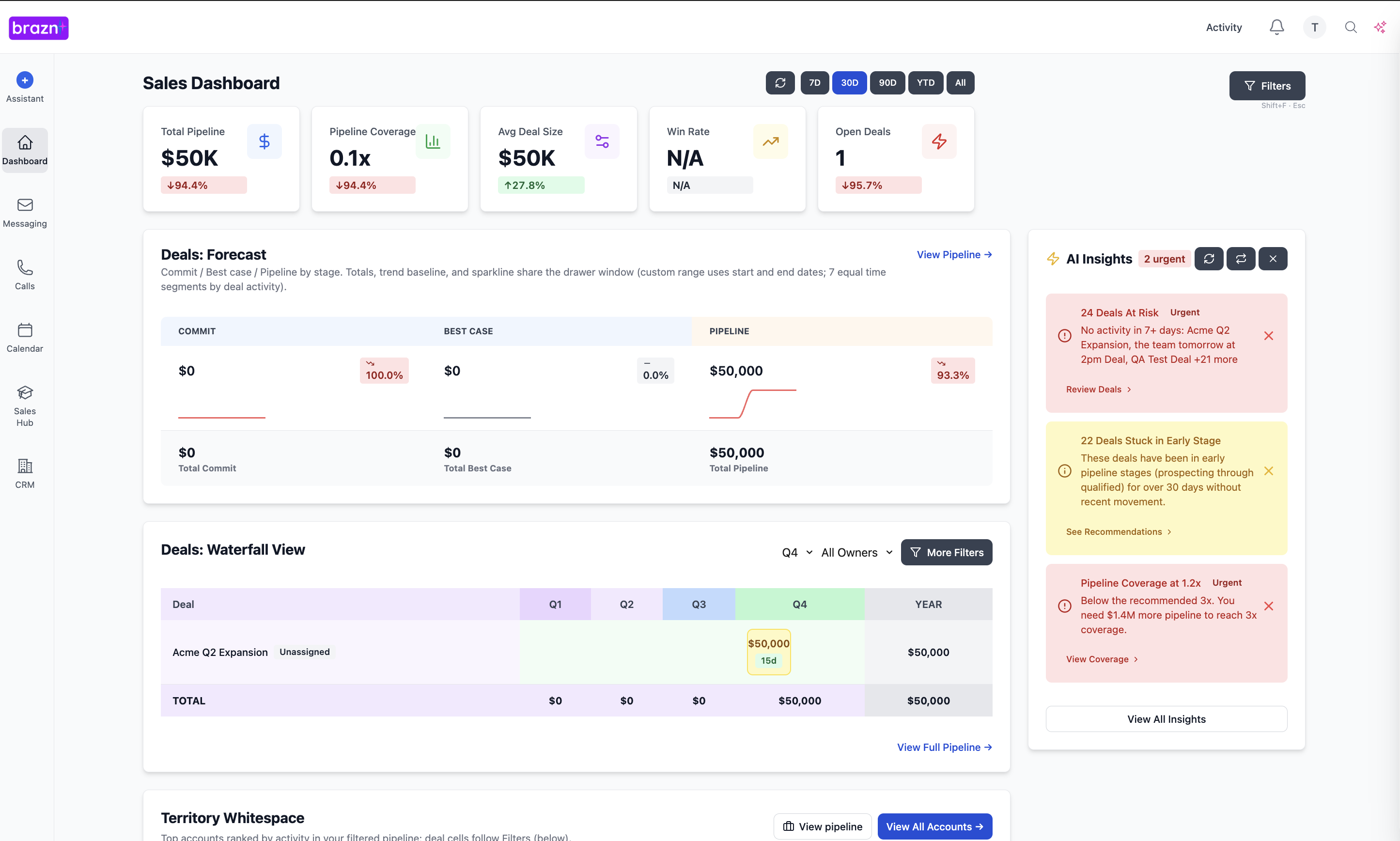
About the Author
Alex Margarit, Sales AI Expert, SaaS Sales Leader, BMC, ServiceNow, Docusign — 25+ years in SaaS sales.