

What Is Pipeline Coverage? The SaaS Sales Guide
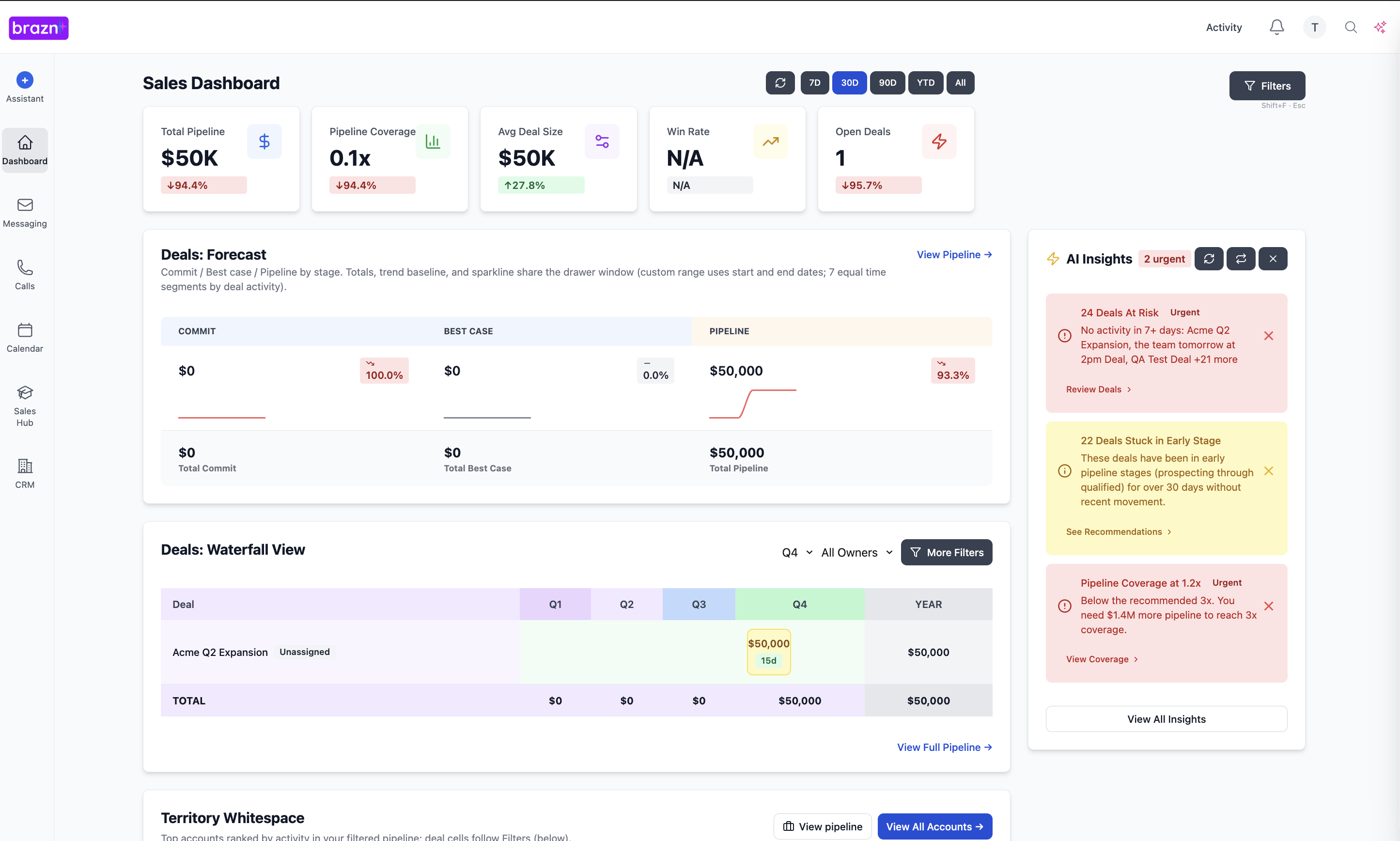
Pipeline coverage is the ratio of the total value of open opportunities in your sales pipeline to your revenue target for a given period. If your quarterly target is $1M and you have $3M of open pipeline, your pipeline coverage is 3x. It's one of the most widely used metrics in SaaS sales because it gives leaders a quick read on whether the team has enough raw material to hit their number.
But pipeline coverage is also one of the most misunderstood metrics in sales. A 3x coverage ratio doesn't mean you'll hit your target — it means you have enough pipeline to hit your target if your win rate holds. The quality, stage distribution, and velocity of that pipeline matters just as much as the raw multiple. Coverage is a starting point for the conversation, not the answer.
What Is a Good Pipeline Coverage Ratio?
The standard benchmark for SaaS teams is 3x to 4x pipeline coverage going into a quarter. This means for every $1 of target, you should have $3–$4 of qualified pipeline. The exact number depends on your win rate: a team closing 40% of opportunities needs less coverage than a team closing 25%.
The formula is straightforward: Pipeline Coverage = Total Pipeline Value ÷ Revenue Target. But calculating it accurately requires clean pipeline data — deals at the right stages, with realistic close dates, and with stale or unqualified opportunities removed. A coverage ratio built on bloated pipeline is worse than useless because it creates false confidence.
Most SaaS leaders track coverage at multiple levels: total pipeline vs. target, late-stage pipeline vs. target (which gives a more conservative near-term view), and coverage by rep and segment. A team average of 3.5x can mask a rep at 1.2x and another at 6x — both of which require different interventions.
Pipeline Coverage vs. Pipeline Quality
Coverage tells you how much pipeline you have. Quality tells you whether it's real. The two metrics work together — you need sufficient coverage AND sufficient quality to have confidence in your forecast.
Pipeline quality is assessed through qualification depth. A deal with full MEDDPICC coverage — identified pain, confirmed economic buyer, clear decision process, active champion — is a high-quality opportunity. A deal where the rep had one discovery call three months ago and hasn't engaged since is low quality, regardless of its stated value. Including low-quality deals in your coverage calculation inflates the number without improving your odds of hitting target.
The most common pipeline quality problem in SaaS sales teams is deals that should have been disqualified but weren't. Reps are reluctant to remove deals from their pipeline because it reduces their coverage number and draws scrutiny. This creates a cycle where pipeline looks healthy but is actually full of opportunities that will never close — and the miss only becomes visible at the end of the quarter.
How to Use Pipeline Coverage in Practice
Pipeline coverage is most useful as a diagnostic tool in weekly and monthly pipeline reviews. The questions it should prompt are: Do we have enough pipeline to hit target this quarter? If not, where is the gap — volume, stage distribution, or deal size? Which reps are under-covered and what is the plan to address it? Are the deals making up our coverage actually qualified?
Late-stage coverage deserves special attention. The deals in your final one or two stages before close are your most reliable revenue signal. If late-stage coverage is thin, you have a near-term problem regardless of what your total pipeline looks like. Early-stage pipeline replenishes over a quarter; late-stage pipeline is what closes this quarter.
The best sales teams set coverage targets by stage, not just in aggregate. For example: 1.5x coverage in the final two stages, 1.5x in mid-stages, and 1x in early stages — giving a total of 4x with the right distribution to support both near-term and future quarters.
How AI Improves Pipeline Coverage and Quality
AI improves pipeline coverage in two ways: by helping reps build more qualified pipeline faster (better research, better outreach, better discovery), and by keeping the existing pipeline clean (flagging stale deals, surfacing MEDDPICC gaps, identifying opportunities that should be disqualified before they distort the coverage number).
Brazn monitors your pipeline health in real time — tracking deal activity, qualification coverage, and velocity signals across every open opportunity. When a deal is showing signs of stalling, Brazn flags it before it becomes a quarter-end surprise. When coverage is thin in a specific segment or rep territory, Brazn surfaces the most promising accounts to target for pipeline generation.
The result is a pipeline coverage ratio you can actually trust — built on qualified, active opportunities rather than wishful thinking.
See how Brazn helps SaaS teams maintain healthy pipeline coverage.---
Book a demo to see how Brazn AI fits into your sales stack.

About the Author

Alex Margarit, Sales AI Expert, SaaS Sales Leader, BMC, ServiceNow, Docusign — 25+ years in SaaS sales.