What Is a Champion in Sales? MEDDPICC Explained
In complex SaaS sales, the single most important person in any deal isn't the rep, the economic buyer, or even the end user. It's the Champion — the internal advocate inside the buyer's organisation who believes in your solution and is willing to sell on your behalf when you're not in the room. Deals with a strong Champion close. Deals without one stall, get deprioritised, or quietly die in procurement.
This guide defines what a Champion actually is in MEDDPICC, how to identify one, how to develop one, the common mistakes reps make, and how AI changes the ability to track Champion health at scale.
---
The MEDDPICC Definition of a Champion
A Champion in MEDDPICC is defined by three specific criteria, all of which must be true. A contact who meets one or two isn't a Champion — they're a coach, a supporter, or an ally, and treating them like a Champion is one of the most common reasons deals get lost.
1. They have power and influence. The Champion needs to be respected inside their organisation and have the internal credibility to move the decision. A junior evangelist who loves your product but has no political capital isn't a Champion. A senior stakeholder whose voice carries weight in leadership meetings is. 2. They believe in your solution. Genuine belief — not polite interest. The Champion is personally invested in your product winning because they see how it solves a real problem they care about, often one tied to their own career or team's success. 3. They will sell on your behalf when you're not in the room. This is the decisive test. When the economic buyer asks "why this vendor?" in a meeting the rep isn't in, the Champion advocates forcefully and specifically. If the contact wouldn't do that — or wouldn't be effective if they tried — they aren't a Champion.---
Champion vs Coach vs Supporter vs Sponsor
Reps often conflate these roles. The distinctions matter:
Coach — shares information about the organisation, the buying process, and internal politics. Valuable, but doesn't advocate internally. Supporter — likes the product and is friendly to the rep, but lacks influence or isn't willing to put their credibility on the line. Sponsor — a high-level figure who endorses the initiative but isn't doing the day-to-day internal selling. Champion — has power, belief, and active willingness to advocate. This is the person who moves deals.A well-qualified deal often has a Champion plus a Coach and one or two Supporters. The Champion is the one doing the internal selling.
---
How to Identify a Champion
Identifying a Champion isn't about asking "are you our Champion?" — most contacts will say yes because they like you. It's about watching for specific behavioural signals:
- They proactively share internal context — political dynamics, stakeholder priorities, timing pressures
- They introduce you to other stakeholders without being asked
- They prepare you for executive meetings by briefing you on the decision-maker's priorities
- They push back on internal objections and resistance on your behalf
- They treat the deal as a personal priority, not just a vendor evaluation
- They're willing to be explicit: "I want this. Here's what I need to make it happen."
If a contact is doing these things, they're likely a Champion. If they're polite and responsive but not doing these things, they're a Supporter at best.
---
How to Develop a Champion
Identifying a Champion isn't enough. A Champion needs to be developed — given the language, the data, and the internal narrative they need to advocate effectively. Most reps find a Champion and then stop investing in them. The best reps coach their Champion continuously.
Give them the business case. Help the Champion build the economic argument for the purchase in the language that will resonate with the Economic Buyer. ROI calculations, risk narratives, implementation plans — package these so the Champion can present them internally without you in the room. Prepare them for objections. Role-play the likely pushback from the Economic Buyer, procurement, and other stakeholders. Give the Champion clear responses to each one. Make them look good. A Champion is putting their credibility on the line. The more you help them be effective, the more invested they become in the deal closing. Maintain engagement cadence. A Champion who hasn't heard from you in two weeks is a Champion whose internal advocacy is cooling. Regular, specific, valuable touchpoints keep the relationship warm.---
The Common Mistakes
The most common Champion mistakes reps make:
Mistaking a Supporter for a Champion. The rep thinks they have internal advocacy when they actually have a friendly contact who won't fight for the deal. Single-threading through the Champion. Relying entirely on one person creates enormous risk — if the Champion leaves, changes roles, or loses influence, the deal collapses. Not developing the Champion. Finding them and stopping. A Champion without the tools to sell internally is a well-intentioned obstacle. Ignoring Champion disengagement signals. When a Champion goes quiet, most reps assume they're busy. In reality, it's usually a warning sign that internal momentum has stalled.---
How AI Changes Champion Tracking
In manual MEDDPICC environments, Champion health is assessed subjectively and inconsistently. A rep "has a Champion" until the deal dies — at which point everyone realises the Champion wasn't actually a Champion, or had lost influence, or had quietly disengaged weeks earlier.
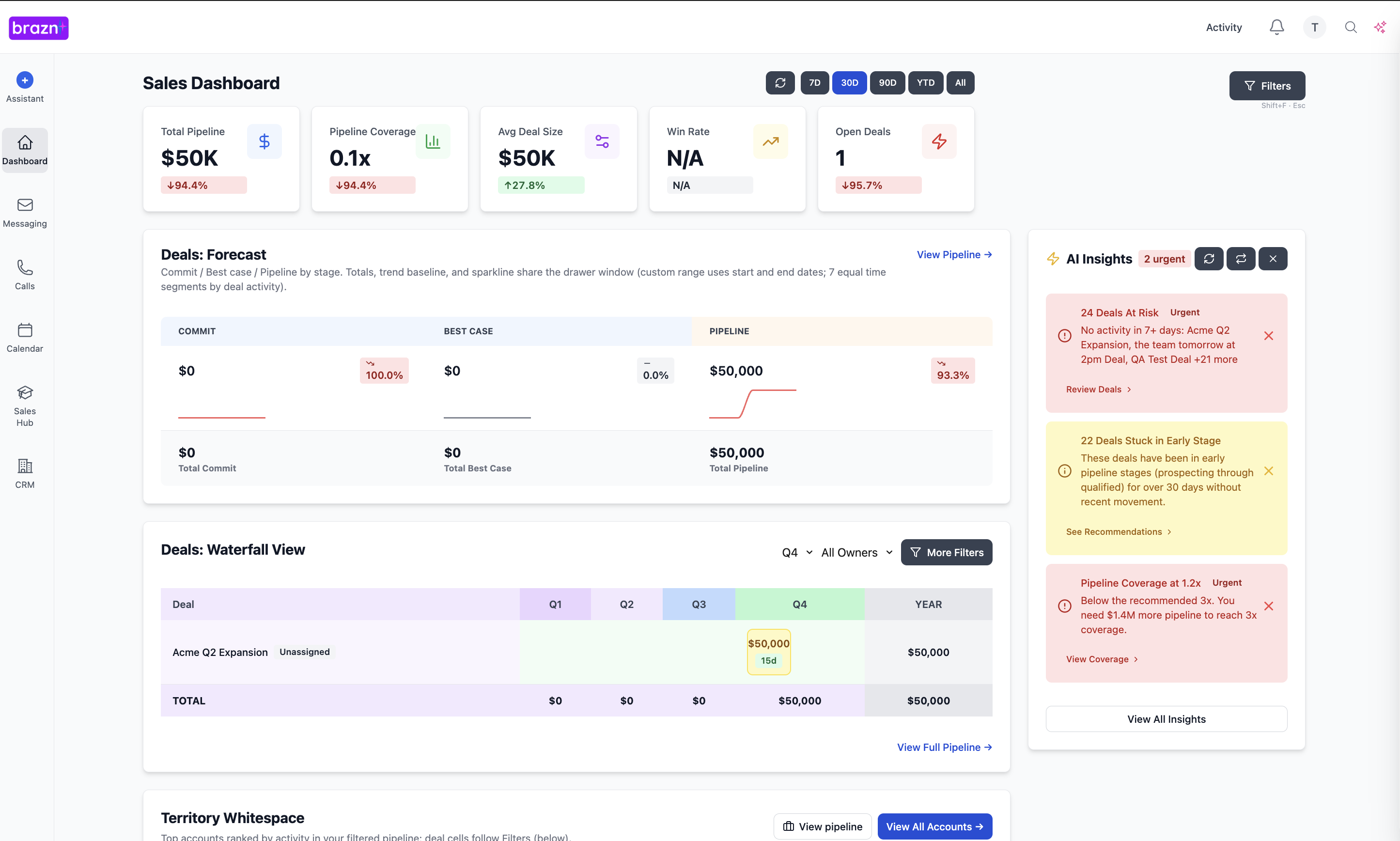
AI changes this structurally. Platforms like Brazn track Champion engagement as a specific dimension of deal health — monitoring email frequency, meeting attendance, response speed, and role changes continuously. When a Champion's engagement drops, the system flags it immediately with a specific recommended action. When the Champion's LinkedIn shows a role change or company move, the risk gets surfaced before the deal is affected.
This turns Champion development from an art into a measurable practice. Managers can coach reps specifically on Champion strength. Forecasts can weight deals with strong Champions differently from deals with weak ones. At-risk Champions get attention before the deal dies, not after.
---
The Bottom Line
The Champion is the single most important stakeholder in any complex SaaS deal. Identifying one correctly, developing them properly, and tracking their engagement continuously is the difference between deals that close and deals that don't.
Most reps underinvest in Champion development because they underestimate how much of the deal is happening in conversations they're not part of. AI makes those invisible conversations visible — and the reps who pay attention to the signals win the deals.
---
See AI-Assisted Champion Tracking in Action
Brazn tracks Champion engagement continuously, flags disengagement before deals slip, and surfaces specific actions to develop Champions across your pipeline.
---
Book a demo to see how Brazn AI fits into your sales stack.

About the Author
Alex Margarit, Sales AI Expert, SaaS Sales Leader, BMC, ServiceNow, Docusign — 25+ years in SaaS sales.