
What Is a Close Plan in B2B Sales?
A close plan — also called a Mutual Success Plan (MSP), a Mutual Close Plan, or a Joint Execution Plan — is a shared document that maps every step required from both the vendor and the buyer to reach a signed contract by a specific date. It names the owner and deadline for each action, surfaces the dependencies between steps, and creates a shared accountability structure that advances the deal with the buyer's active participation rather than the vendor's passive hope.
The close plan is the single most underused tool in B2B enterprise SaaS sales. Most deals that slip quarters do so because the paper process was not mapped, the buyer-side dependencies were not identified, and the vendor's close date was based on a verbal commitment rather than a realistic assessment of the steps between agreement and signature.
Why Most Deals Don't Have a Close Plan
The close plan requires asking the prospect to participate in a planning exercise that implicitly commits them to a timeline. Many AEs avoid this conversation because it feels presumptuous — "what if they're not as committed as I think?" The avoidance of this discomfort is the primary reason deals slip.
The irony is that asking a prospect to co-create a close plan is one of the strongest signals of deal health available. A prospect who engages willingly with the close plan is demonstrating genuine internal commitment. A prospect who deflects, hedges, or doesn't complete their assigned steps is signalling that the deal is not as advanced as the rep believes — and the earlier that signal is visible, the more time the AE has to address it.
The close plan conversation is not presumptuous — it is a service to the buyer. It surfaces the procurement, legal, and technical steps the buyer's own organisation requires, helps them plan internally, and demonstrates the vendor's seriousness about making the implementation successful from day one.
What a Close Plan Contains
1. Shared objective statementA one-paragraph description of the shared goal: "The objective is to complete the commercial and procurement process to allow [Company] to begin implementation by [date], achieving [specific outcome] within [timeframe]." Both parties agree on the objective before working through the steps.
2. Vendor-side action table| Action | Owner | Date | Status |
| --- | --- | --- | --- |
| Send final commercial proposal | AE name | [Date] | ✅ Complete |
| Provide security questionnaire response | SE name | [Date] | In progress |
| Provide implementation timeline | CS name | [Date] | Not started |
| Legal redline response | Legal name | [Date] | Not started |
3. Buyer-side action table| Action | Owner | Date | Status |
| --- | --- | --- | --- |
| Internal stakeholder alignment meeting | Champion name | [Date] | Scheduled |
| Security review completion | IT Security name | [Date] | In progress |
| Procurement approval | Procurement name | [Date] | Not started |
| Legal review and redline | Legal name | [Date] | Not started |
| Finance approval | CFO name | [Date] | Not started |
| Contract signature | EB name | [Date] | Not started |
4. Shared milestones| Milestone | Date |
| --- | --- |
| Commercial proposal agreed | [Date] |
| Security review complete | [Date] |
| Legal review complete | [Date] |
| Contract executed | [Date] |
| Implementation kickoff | [Date] |
| First value milestone | [Date] |
5. Risks and dependenciesA brief section naming the steps most likely to cause delay — typically legal review, security assessment, and finance approval — with the contingency plan for each.
When to Introduce the Close Plan
The close plan is most effective when introduced at or before the proposal stage — ideally at the same meeting where the commercial proposal is presented. The framing:
"We want to make sure we can get you live by [date] — which means the procurement and legal process needs to start this week. I've put together a draft joint plan that maps out every step on both sides. Can we spend 10 minutes reviewing it to make sure I've captured the right process on your end?"This framing does three things: it validates that the stated timeline is genuine, it surfaces the buyer-side process steps that the vendor doesn't control, and it creates shared accountability that makes the timeline a mutual commitment rather than a vendor request.
The Close Plan as a Qualification Tool
Beyond its operational value, the close plan is a powerful qualification instrument. The prospect's response to the close plan conversation reveals:
Champion strength. A strong champion engages with the close plan immediately, adds detail from the internal process, and begins assigning buyer-side steps proactively. A weak champion delays, deflects, or returns an incomplete version — signalling that they don't have the internal access or authority the vendor assumed. Deal reality. The close plan surfaces the actual procurement timeline — which is frequently longer than the verbal commitment the rep received. A deal the champion said could close in 30 days often has 45–60 days of procurement steps when mapped explicitly. Discovering this at Stage 3 is manageable; discovering it in the final week of the quarter is a missed number. Internal consensus. The buyer-side steps reveal who else is involved in the decision — procurement, legal, IT security, finance. Each named stakeholder is a potential risk and a potential champion. The close plan surfaces the full stakeholder map in a way that discovery alone often doesn't.Close Plan Best Practices
Maintain it in a shared, live document. A close plan that lives only in the AE's notes is a task list, not a mutual plan. The power of the close plan comes from the champion being able to see and update it — creating shared ownership of the timeline. Review it on every call. Every call with the champion or any buyer stakeholder should include a brief close plan review — what's been completed, what's overdue, what the next step is. This keeps the timeline visible and creates natural accountability. Update the CRM close date from the close plan. The close date in the CRM should reflect the contract signature date on the close plan — not the rep's optimistic estimate. If the legal review takes 14 days and the security assessment takes 10, and neither has started, the close date is at minimum 14 days after those processes begin. Escalate when steps slip. When buyer-side steps slip their dates without explanation, the AE should address it directly — not ignore it and hope the timeline holds. "I noticed the procurement step hasn't moved yet — is there something blocking it? Can the champion help move it forward?" The close plan gives the AE the standing to have this conversation.How Brazn Generates Close Plans
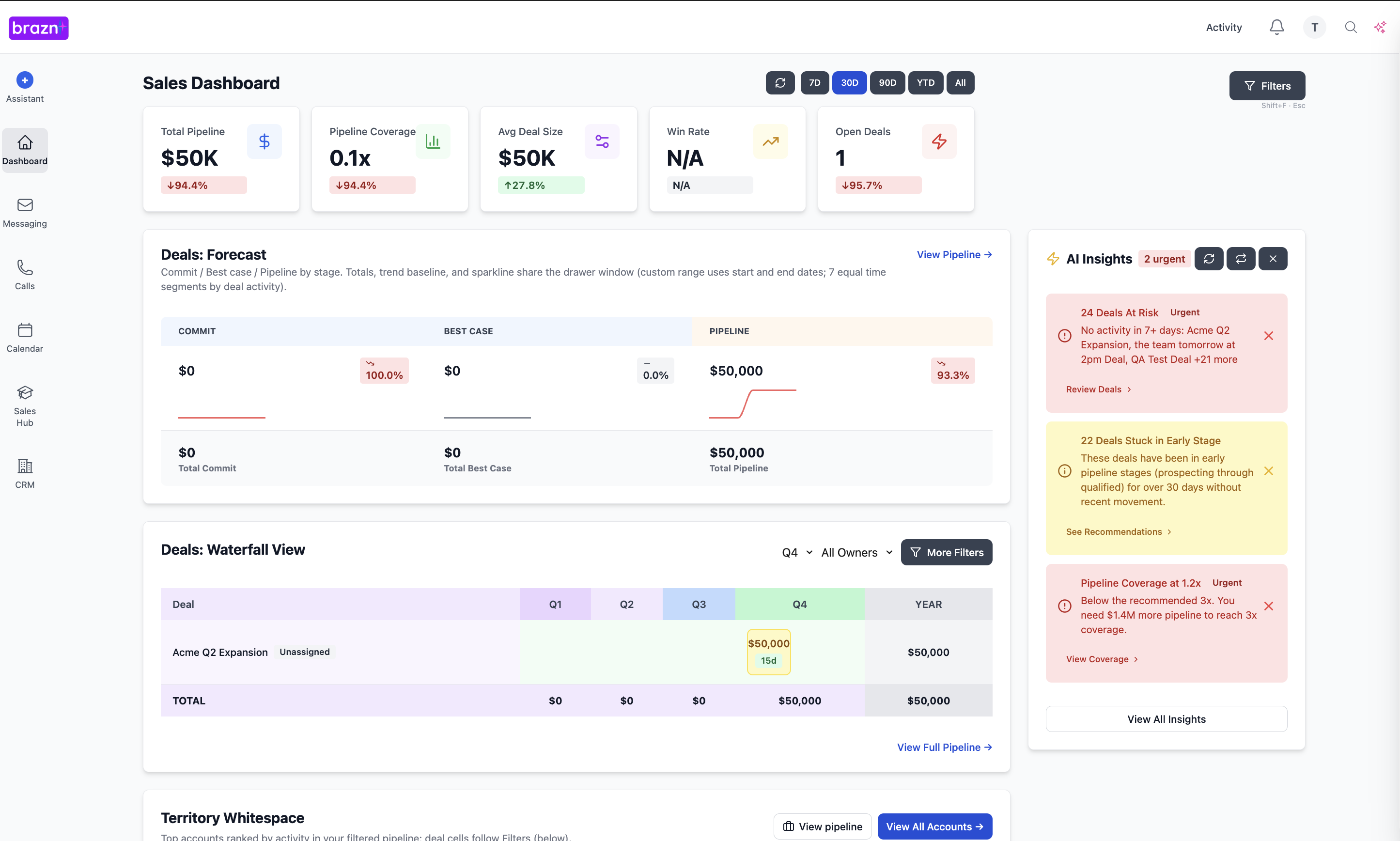
Brazn generates a draft Mutual Success Plan from the deal record — pulling the MEDDPICC data, the named stakeholders, the agreed close date, and the known paper process steps into a structured template. The AE reviews and sends to the champion within minutes of the proposal call, rather than spending 45 minutes building the document from scratch. The close plan is kept current through Brazn's deal monitoring — flagging when buyer-side steps slip their dates and surfacing the risk in the weekly pipeline review.
---
Book a demo to see how Brazn AI fits into your sales stack.

About the Author

Alex Margarit, Sales AI Expert, SaaS Sales Leader, BMC, ServiceNow, Docusign — 25+ years in SaaS sales.