
How to Use Intent Data for Outbound Prospecting
Intent data is one of the most significant developments in B2B prospecting in the past decade — and one of the most misapplied. At its best, intent data surfaces the accounts that are actively researching the problem your product solves, enabling you to engage them with relevance and timing that cold outreach to a static list can't match. At its worst, it's an expensive data feed that tells reps which companies have visited a website, which gets turned into another cold call list that is treated no differently from any other.
The difference between intent data that drives pipeline and intent data that collects in a dashboard is how it's acted on — how quickly, with what message, and with what level of account-level research behind the outreach.
---
Understanding the Types of Intent Data
First-party intent dataGenerated by your own properties — website visits, content downloads, webinar registrations, pricing page views, feature comparison pages. This is the highest-quality intent signal because it's direct engagement with your specific brand.
First-party intent is the easiest to act on: the account has demonstrated specific interest in you. The outreach can reference that engagement directly — with care, to avoid feeling surveillance-like — and the pitch is highly specific to what they were looking at.
Second-party intent dataData shared between two organisations — a partner, a marketplace, a review platform. G2 and Capterra buyer activity is a common source: when a company's employees are reading reviews of your product category on G2, that signal is available to vendors on the platform. This intent is category-level rather than vendor-specific.
Third-party intent dataGenerated from content consumption across a network of publisher sites. Providers like Bombora aggregate content consumption across B2B media — when multiple employees at a company are consuming content on topics related to your category (sales enablement, CRM, revenue intelligence), a surge signal is generated. This is the widest-coverage but least precise intent signal type.
---
The Intent Signal Prioritisation Framework
Not all intent signals are equal. Prioritise outreach based on signal quality:
Tier 1: High-priority signals (act within 24 hours)- Pricing page visit (your website)
- Demo request or trial sign-up (abandoned or completed)
- G2/Capterra category review activity
- Direct comparison of your product vs a competitor
- Multiple employees from the same account engaged with your content in the same week
Tier 2: Medium-priority signals (act within 72 hours)- Multiple content downloads or blog visits in a single session
- Webinar attendance or registration
- LinkedIn ad engagement (click-through from a targeted ad)
- Third-party intent surge in your primary topic cluster
Tier 3: Contextual signals (add to prospecting list, enrich outreach)- Single content page visit (awareness, not yet evaluation)
- Social media engagement (like or comment on relevant content)
- Third-party intent signal in a secondary topic cluster
---
The Intent-Driven Outreach Playbook
Intent data is only valuable when it produces better outreach — not just faster outreach. The temptation is to trigger an automated sequence the moment an intent signal fires. The result is often an email that references the intent signal clumsily ("I saw you visited our pricing page") and reads as surveillance rather than relevance.
The better playbook:
Step 1: Identify the account contextBefore reaching out on an intent signal, spend 5 minutes understanding the account. Is this a genuine ICP fit? What is the most likely use case? Has anyone at this account been in the pipeline before?
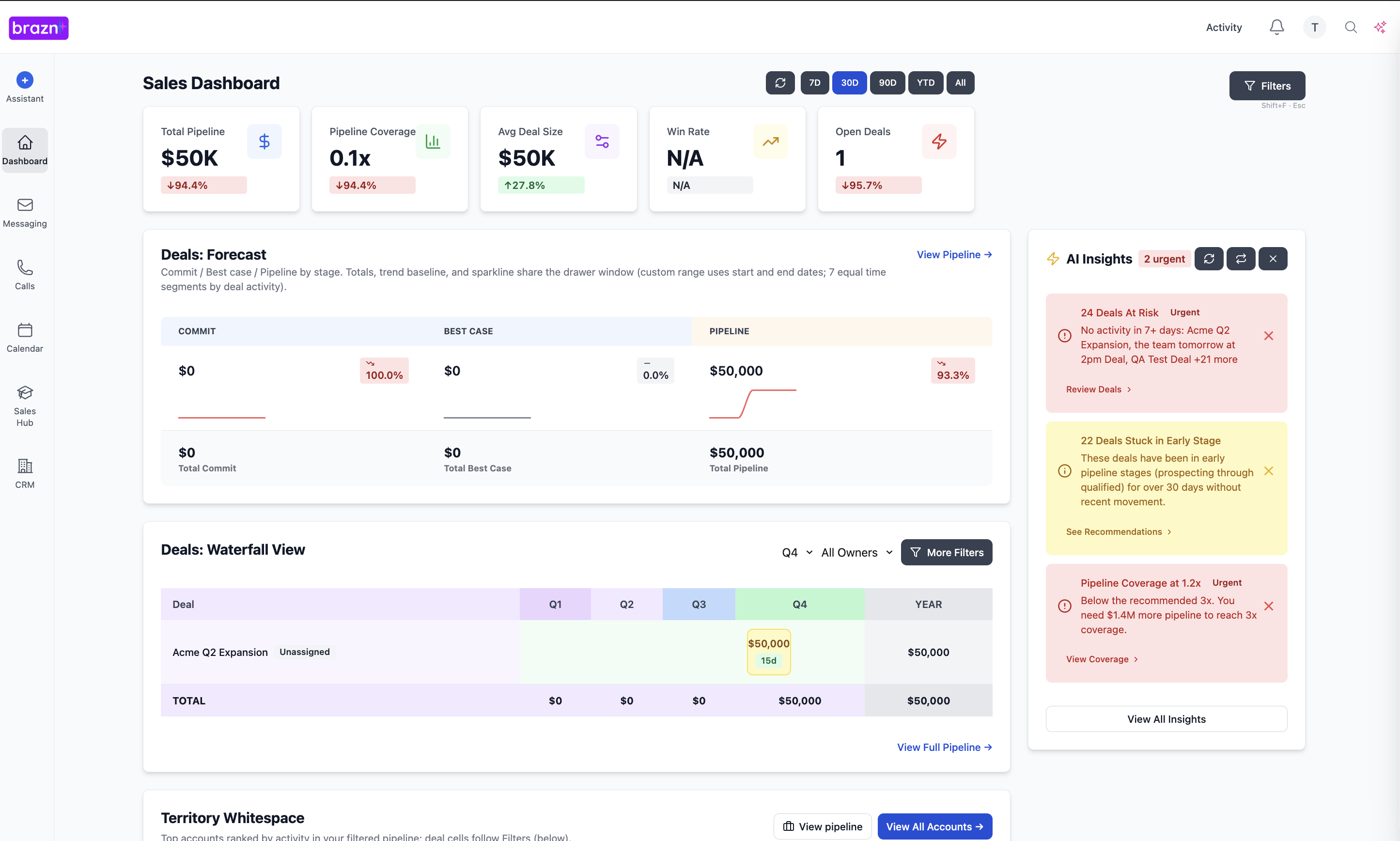
For Tier 1 signals, Brazn generates an automatic account brief when the intent signal fires — so the rep has the context before reaching out.
Step 2: Identify the right contactThe intent signal identifies the company — not always the right person. Find the functional owner of the problem your product solves. Don't reach out to the person who visited the pricing page if they're a junior analyst and the decision-maker is the VP of Sales.
Step 3: Write intent-informed outreach without citing the signalUse the intent signal to inform the relevance and timing of the outreach — not as the subject of the outreach. Don't say "I noticed you visited our pricing page." Say "Given that [Company] is at the growth stage where [specific problem] usually surfaces, I wanted to reach out about..."
The outreach is relevant because of what the intent signal told you. The prospect doesn't need to know you're watching.
The exception: first-party signals from high-intent actions (demo request, trial sign-up) — where referencing the action is natural and expected.
Step 4: Prioritise speed on Tier 1 signalsThe intent signal tells you the account is actively evaluating. Speed matters — companies in active evaluation are talking to multiple vendors. The vendor who engages first, with the most relevant and specific outreach, has a positioning advantage.
For Tier 1 signals: personalised, researched outreach within 24 hours. Not a generic automated email — a specific, human-written message that demonstrates you've done the work.
Step 5: Sequence persistence on Tier 2 signalsFor medium-priority signals, a multi-touch sequence over 2–3 weeks — personalised initial outreach followed by value-add follow-ups (relevant case study, relevant insight, relevant event) — maintains presence without pressure.
---
Intent Data Mistakes to Avoid
Treating intent as confirmation of purchase intent. An intent signal means the account is researching — not that they're ready to buy, that they have budget, or that they're the right fit. Intent data improves prospecting prioritisation; it doesn't replace qualification. Acting on intent without ICP filtering. A company that is actively researching your category but doesn't match your ICP is still not a good prospect. Apply ICP scoring before the outreach investment, even on strong intent signals. Over-automating the response. An automated sequence triggered by a pricing page visit that sends 8 emails over 14 days is not intent-driven outreach — it's triggered spam. Intent data justifies personalised, researched outreach. It doesn't justify volume automation. Not sharing intent data with marketing. Intent signals from accounts not yet engaged by sales are valuable inputs to targeted advertising, retargeting, and ABM campaigns. Intent data works best when it informs both the sales and marketing motion simultaneously.---
How Brazn Integrates Intent Data
Brazn integrates intent signals from first-party website analytics, G2 buyer intent, and Bombora third-party intent data — combining them with account intelligence and ICP scoring to surface the highest-priority intent accounts for each rep's territory. When a Tier 1 intent signal fires on an ICP-matched account, Brazn generates an automatic account brief and suggested outreach message — enabling a rep to respond with researched, personalised outreach in under 10 minutes from signal to send.
---
####
Book a demo to see how Brazn AI fits into your sales stack.

About the Author

Alex Margarit, Sales AI Expert, SaaS Sales Leader, BMC, ServiceNow, Docusign — 25+ years in SaaS sales.