
How to Multi-Thread a Deal in SaaS Sales
Multi-threading is the practice of building relationships with multiple stakeholders at the prospect's organisation simultaneously — rather than running the entire deal through a single contact. It is one of the most consistently underutilised practices in SaaS sales, and one of the highest-leverage interventions available to any rep who wants to improve their win rate.
The data is unambiguous: single-threaded deals — where the rep's only relationship is with one contact — lose at dramatically higher rates than multi-threaded deals. The reasons are structural. A single contact can leave, go cold, lose internal support, or fail to get access to the Economic Buyer. When any of those things happen, a single-threaded deal has no recovery path. A multi-threaded deal survives the same events because other relationships exist.
---
Why Reps Avoid Multi-Threading
Understanding the avoidance pattern is the prerequisite for changing it.
The champion relationship feels complete. The rep has a strong relationship with the champion, who is responsive, enthusiastic, and seems influential. Multi-threading feels unnecessary — and potentially risky, as if going around the champion implies distrust. It's uncomfortable to ask for introductions. Asking the champion to introduce the rep to their colleagues, their manager, or the Economic Buyer feels presumptuous. Reps avoid the discomfort by waiting for the champion to volunteer these introductions — which rarely happens unprompted. The rep doesn't know who else to involve. Without a clear stakeholder map, the rep doesn't have a mental model of who else should be engaged or how to get to them. There's a fear of losing control. Introducing more stakeholders into the deal feels like it creates more variables, more potential objections, and more complexity. In reality, those stakeholders are already involved — they're just not engaged with the vendor.---
The Stakeholder Map: Who to Thread
Before threading, map the full stakeholder landscape. Every complex SaaS deal has four categories of stakeholder:
Economic Buyer (EB): The person with ultimate budget authority. Signs the contract or can veto it. Often not in the initial discovery conversation but must be engaged before Stage 4. Champion: The internal advocate. Already identified and developed. The foundation of the multi-threading effort — your primary source of introductions. Influencers and evaluators: The people who will use the product, evaluate it technically, or be affected by its implementation. In a sales intelligence deal: the VP RevOps, the Sales Ops manager, the CRO's EA who manages the tool stack. Each has an opinion and a vote in the buying committee. Blockers and detractors: Stakeholders who have reason to oppose the purchase — a competing vendor's internal advocate, a sceptical procurement lead, an IT security officer who hasn't been engaged. Identifying blockers is as important as identifying advocates — an unengaged blocker becomes a late-stage surprise.For each identified stakeholder, record: name, title, MEDDPICC role, current relationship status, influence level, and coverage owner.
---
The Multi-Threading Plays
Play 1: The champion-facilitated introductionThe most natural and highest-conversion multi-threading approach. Ask the champion directly for a specific introduction:
"We're at the stage where it would be really valuable to involve [EB name / VP of RevOps / Head of IT Security] — not to go around you, but to make sure the right people are part of the conversation before we get to commercials. Would you be able to set up a 20-minute introduction call?"Frame every introduction request as being in the champion's interest — helping them build internal support, ensuring the deal has the right approvals in place, and making their internal advocacy more effective.
If the champion is hesitant:
"I could draft a short note that you send on your behalf — I know you're busy. It would just be a quick note introducing the initiative and asking if [stakeholder] has 20 minutes."Providing the draft reduces friction to near zero. Most champions who are hesitant will send a draft they've been given.
Play 2: The direct LinkedIn approachFor stakeholders who can be reached without a champion introduction — typically senior stakeholders who are publicly visible — a direct, relevant LinkedIn outreach can open the thread:
"Hi [Name] — I've been working with [Champion] on [initiative]. I came across [specific public signal — post, article, announcement] and thought it was worth reaching out directly. [One-sentence relevant observation]. Would it be worth connecting?"This is not a cold approach — the shared context with the champion makes it a warm, informed outreach. It is positioned as peer-level engagement, not vendor-to-buyer.
Play 3: The executive sponsorship threadThe AE's manager or company executive reaches out to the equivalent executive at the prospect — not as escalation but as executive sponsorship:
"Hi [EB Name] — [AE name] has been working with [Champion] on [initiative]. I wanted to reach out personally to make sure you have everything you need from our side to make the best decision for [Company]. Happy to connect if it would be useful."This thread serves two purposes: it opens an executive relationship independent of the champion, and it signals to the prospect that the vendor is serious and committed at a senior level.
Play 4: The content threadA relevant piece of content — a case study from a similar company, a benchmark report, a tactical guide — sent directly to a secondary stakeholder with a specific, personalised note:
"Hi [Name] — I've been working with [Champion] on [initiative]. I thought this [specific content] might be relevant to your work on [their specific area]. Happy to walk through it if useful."Content provides a natural, low-pressure reason to engage a new stakeholder. It positions the rep as a resource rather than a vendor, making the initial contact feel like value delivery.
Play 5: The user-level threadFor products with multiple end users, direct outreach to future users — the AEs who will use the sales intelligence tool, the SDRs who will use the sequencing platform — creates a bottom-up thread that complements the top-down champion thread. Users who are excited about the product become internal advocates even when they're not formally involved in the buying process.
---
Timing: When to Multi-Thread
Multi-threading should begin at Stage 2 — not at Stage 4 when the deal is already at risk. The progression:
Stage 1: Identify all potential stakeholders. Confirm champion. Begin stakeholder map. Stage 2: Champion-facilitated introduction to the primary influencer. Direct outreach to any publicly visible secondary stakeholders. User-level outreach initiated if relevant. Stage 3: EB introduction secured and scheduled. All identified influencers engaged at least once. Blocker identified and a plan to address them in place. Stage 4: EB actively engaged. Multi-threaded at a minimum of three unique stakeholders. Procurement contact engaged. Legal or security contact identified.A deal that reaches Stage 4 single-threaded is a deal that has not been properly qualified — regardless of how enthusiastic the champion is.
---
Handling Champion Resistance to Multi-Threading
Some champions resist multi-threading — they want to manage the internal process themselves and are uncomfortable with the vendor engaging their colleagues directly.
The right response is not to force the issue. Instead:
"I completely respect that — you know the internal dynamics better than I do. Let me ask: as we get closer to the commercial conversation, is there anyone else internally whose input or support would make the decision easier? I just want to make sure we're not creating unnecessary obstacles for you."This reframes multi-threading as being in the champion's service, not a threat to their control. Most champions, when they think about it, can identify a stakeholder whose engagement would make their internal advocacy easier — and that's the thread to pursue first.
---
How Brazn Tracks Multi-Thread Coverage
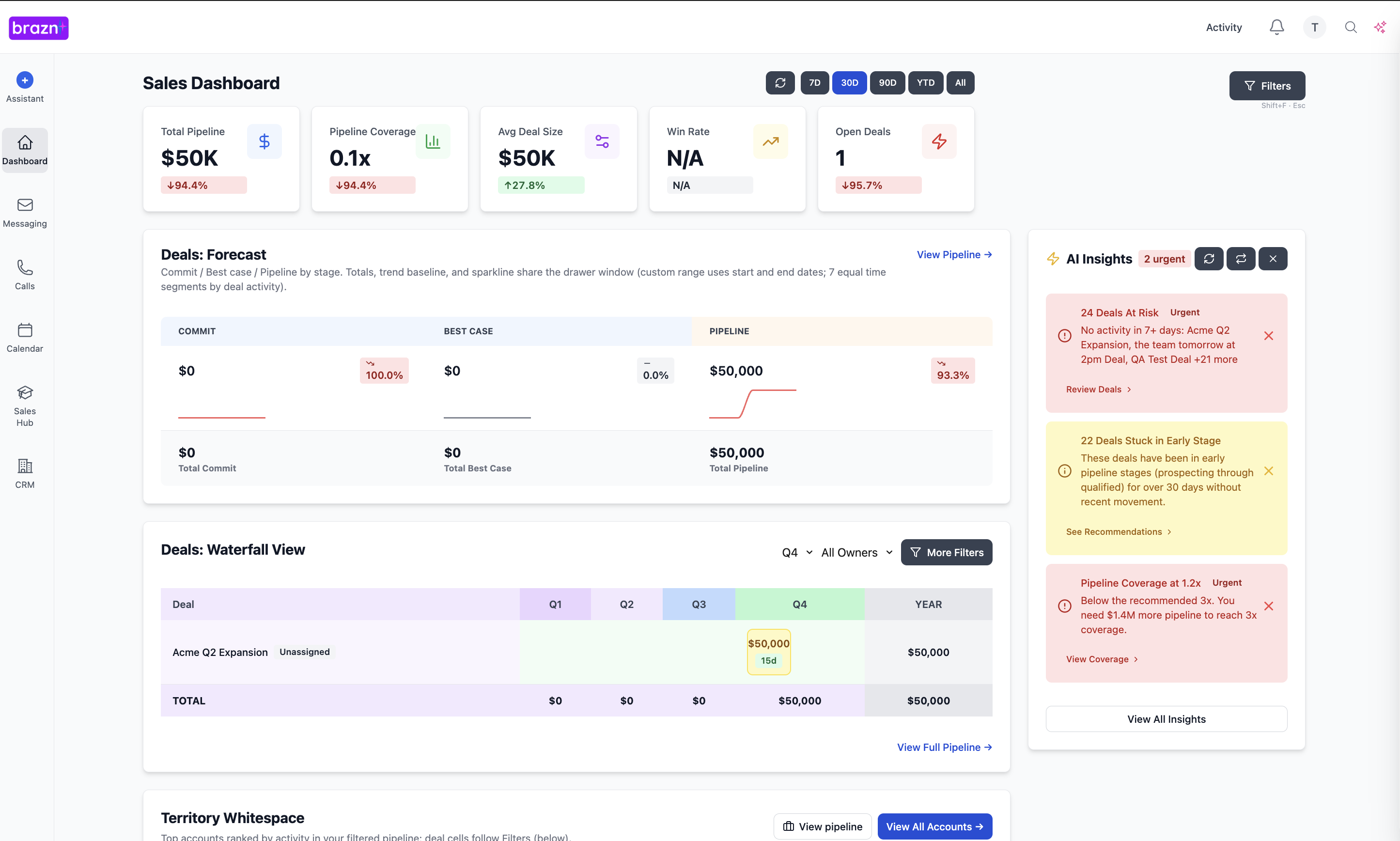
Brazn's stakeholder map tracks every contact who has been part of a recorded call or mentioned in a deal context — building a live view of stakeholder coverage that updates as the deal progresses. The MEDDPICC Champion and Economic Buyer fields are scored not just on identification but on engagement depth: a contact who has been named but never spoken to scores differently from one who has been in two calls and shared internal information. Multi-thread coverage is visible in the deal intelligence view, giving managers an objective basis for the coaching conversation: "This deal has one engaged stakeholder at Stage 3 — who else needs to be in this?"
---
####
Book a demo to see how Brazn AI fits into your sales stack.

About the Author

Alex Margarit, Sales AI Expert, SaaS Sales Leader, BMC, ServiceNow, Docusign — 25+ years in SaaS sales.