How to Build a Sales Sequence with AI
A sales sequence is the structured series of touchpoints — email, phone, Linkedin, and other channels — that moves a prospect from cold to conversation. Building one that actually works has two components: the structural design (how many steps, which channels, what spacing) and the content (what each touchpoint says and why).
AI changes both. At the structural level, AI analyses historical sequence performance data to identify what's working. At the content level, AI generates personalised outreach at scale — reducing the time required to personalise individual emails from minutes to seconds while maintaining specificity that generic templates can't achieve.
Step 1: Define the Sequence Purpose Before Building
Every sequence should be designed for a single, specific situation. The most common mistake is building one sequence and deploying it universally. A prospect who has just raised Series B is in a different situation than a prospect who requested a demo six months ago and went cold — and they need a different sequence.
Define before building:
Prospect type: Cold outbound to ICP list, warm inbound lead, re-engagement of old contact, conference follow-up, post-demo nurture, expansion prospect. Persona: SDR reaching VP of Sales vs AE reaching CFO vs CS reaching Head of Customer Success. Each persona needs a different tone, channel mix, and value angle. Objective: Book a discovery call, re-engage a dormant deal, convert a trial user, expand an existing account.With these three dimensions clear, every content and structural decision in the sequence becomes specific rather than generic.
Step 2: Design the Structure with AI Guidance
AI sequence analysis tools (built into Apollo, Outreach, Salesloft, and Brazn's integration layer) can analyse your historical sequence performance data to recommend structural parameters:
Optimal length: How many steps before the historical reply rate drops to near zero? For most B2B SaaS sequences, this is 10–16 steps. AI analysis of your specific data may show that for your ICP, replies are concentrated in steps 1–6 and steps 12–14 (the break-up period) — suggesting you can safely reduce the middle. Optimal channel mix: What percentage of replies are coming from email vs call vs LinkedIn in your historical data? If 80% of replies come from email and 5% from call, your channel mix should reflect that — not the generic 60/20/20 split. Optimal spacing: What day gaps produce the best reply rates for your ICP? AI analysis of reply timing relative to previous touchpoints gives you data-driven spacing rather than convention-based guesswork.Use this analysis to design a structural template before writing a word of copy.
Step 3: Generate the Opening Line at Scale
The opening line of the first email is the highest-leverage personalisation point in any sequence. A specific, research-based opening dramatically outperforms any generic alternative. The challenge: writing specific opening lines for hundreds of prospects manually is slow.
AI generates personalised opening lines at scale by reading:
Company news (funding announcements, product launches, expansion news)
Prospect's recent LinkedIn activity (posts, comments, job changes)
Company website signals (new job postings, product updates)
Trigger data (CRM-attached intent signals, technographic changes)
The AI synthesises these inputs into a specific, natural opening line that signals genuine awareness of the prospect's context — at a speed that makes personalisation viable across a full prospect list.
Example AI-generated opening lines:
"Saw Company] just announced the EMEA expansion — that kind of growth usually comes with some interesting [Revops challenges." "Noticed you posted about the difference between pipeline coverage and pipeline quality last week — that's exactly the distinction our customers say matters most." "[Company]'s Q4 hiring push for AEs looks significant — usually a good indicator that you need the rest of the revenue infrastructure to keep pace."Each of these requires the AI to read real data sources about the prospect's company — not fill in a template with a company name.
Step 4: Generate the Body and CTA with AI Assistance
AI writes solid first drafts of the body and CTA for each step based on:
The sequence purpose (cold outbound, re-engagement, etc.)
The persona and their known pain points
The social proof most relevant to this ICP segment
The specific ask (discovery call, 15-minute call, specific question)
The AI draft requires human review and editing — not because AI copy is bad, but because the human rep should own their own voice and ensure the email genuinely sounds like them. The AI reduces the time to first draft from 15 minutes to 2 minutes; the rep spends the remaining time editing rather than writing from scratch.
Prompt structure for sequence email generation:textWrite a 4-sentence cold outbound email to a [VP of Sales] at a [Series B SaaS
company with 20 AEs]. The email follows this opening line: [personalised opening].
The primary pain is [forecast accuracy — they're committing deals that aren't
qualified]. The social proof is [we helped a similar company reduce late-stage
deal loss by 40% in one quarter]. The ask is a 20-minute Discovery Call. Tone:
direct, no marketing language, no superlatives. Max 100 words.
The specificity of the prompt determines the quality of the output.
Step 5: Build the Full Sequence Content
With the structural template and AI-assisted content approach established, build each step:
| Step | Channel | Personalisation Level | Content Focus |
| --- | --- | --- | --- |
| 1 | Email | High — specific opening line | Trigger + relevance + social proof + ask |
| 2 | LinkedIn | Medium — brief reference to email | Connection request with short note |
| 3 | Call | Low — voicemail script | Reference email, single sentence on value, ask to reply |
| 4 | Email | Medium — different value angle | Pain-first, no repeat of step 1 |
| 5 | LinkedIn | Low | Message on relevant post or company news |
| 6 | Call | Low | Second voicemail, acknowledge persistence |
| 7 | Email | Medium | Peer reference — specific company, specific outcome |
| 8 | Call | Low | Third voicemail |
| 9 | Email | Low | Content or insight — no pitch |
| 10 | LinkedIn | Low | Direct question about current priority |
| 11 | Call | Low | Final voicemail |
| 12 | Email | Low | Break-up email — explicit withdrawal |
Step 6: Test, Measure, and Optimise with AI
Build a continuous optimisation process:
A/B test subject lines: Every email step should have two subject line variants. Run for a minimum of 100 sends per variant before concluding. Measure open rate as the primary subject line metric. A/B test body content: Test different value angles, social proof examples, and CTA formulations. Measure reply rate and meeting conversion as the primary content metrics. AI performance analysis: Sequence analytics tools in Apollo, Outreach, and Salesloft identify which steps are underperforming. AI analysis adds the why — "Step 4's reply rate is low because the value angle is the same as Step 1, creating diminishing returns. Consider switching to a peer reference angle." Continuous improvement cycle:Monthly: Review step-level performance across all active sequences. Identify the two lowest-performing steps.
Quarterly: Full sequence audit — structure, content, and performance against ICP and persona benchmarks. Retire sequences that are underperforming their historical baseline.
Annually: Full playbook review — are the sequences still reflecting the product's current positioning and the market's current concerns?
How Brazn Supports Sequence Intelligence
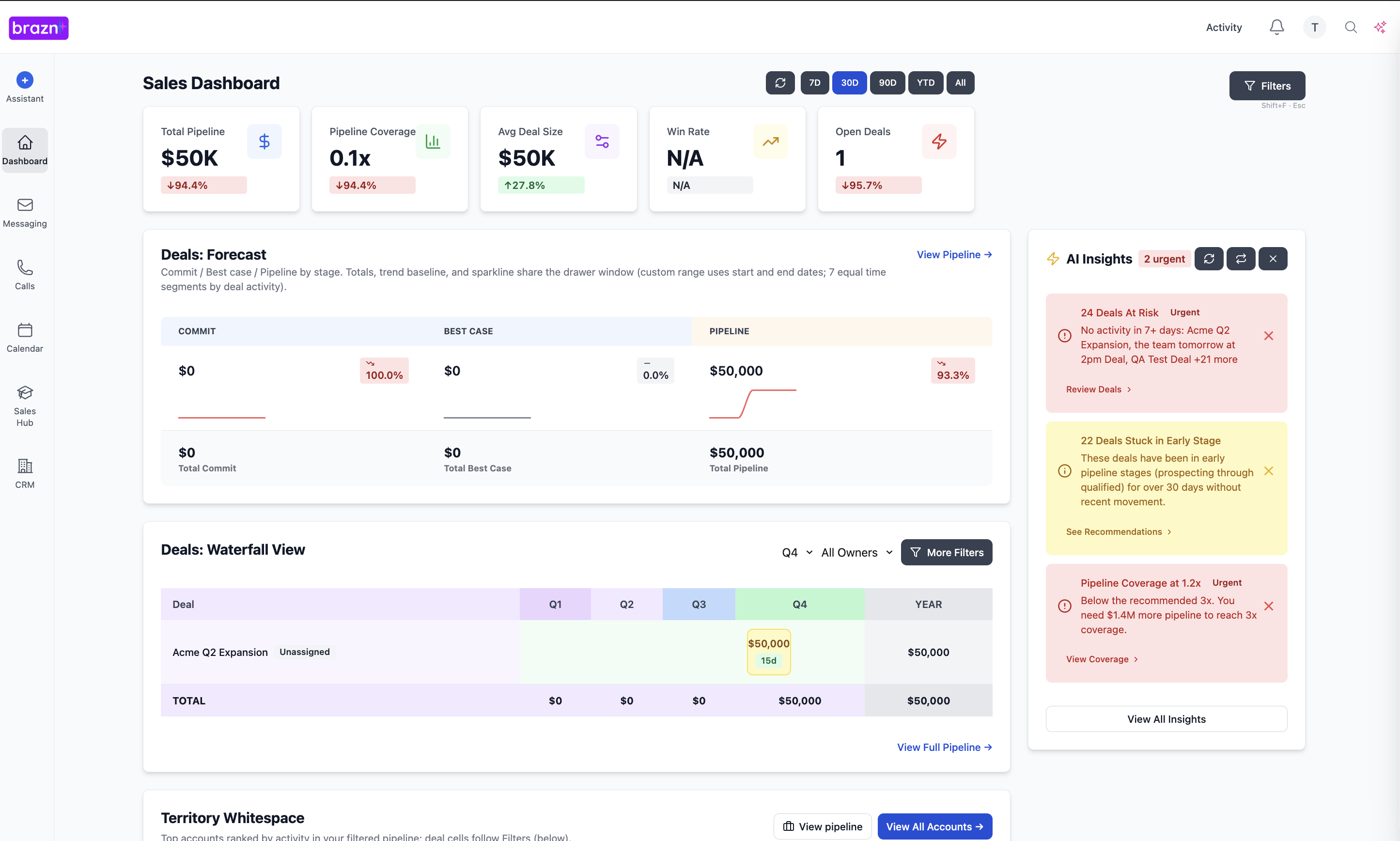
Brazn connects sequence-generated pipeline to qualification outcomes — enabling the insight that Apollo and Salesloft alone can't provide: which sequences are producing well-qualified opportunities vs which are generating meetings that don't progress. This closes the feedback loop between outbound execution and deal quality, enabling sequences to be optimised for pipeline quality, not just meeting volume.
---
####
Book a demo to see how Brazn AI fits into your sales stack.

About the Author
Alex Margarit, Sales AI Expert, SaaS Sales Leader, BMC, ServiceNow, Docusign — 25+ years in SaaS sales.