How to Become a SaaS Sales Rep
SaaS sales is one of the most accessible high-earning career paths in tech. Unlike software engineering or product management, it doesn't require a specific degree or technical background. What it requires is structured communication skills, genuine curiosity about business problems, resilience in the face of rejection, and the discipline to execute a process consistently.
The SaaS sales career path is well-defined: SDR → AE → Senior AE / Account Manager → Team Lead → Manager → Director → VP. Each step has clear performance requirements, and the best performers move through them faster than almost any other career track in technology.
The SaaS Sales Career Path
SDR (Sales Development Representative)The entry point. SDRs are responsible for top-of-funnel activity — cold outreach, qualification of inbound leads, and booking meetings for AEs. The job develops the foundational skills of every sales career: prospecting discipline, rejection resilience, objection handling, and the ability to hold a concise, compelling conversation with a busy executive.
Average time in role: 12–18 months before progression to AE.
AE (Account Executive) AEs own the full sales cycle from first qualified meeting to signed contract. In mid-market and enterprise SaaS, this means managing multi-stakeholder deals over weeks or months — running discovery, demos, proposals, business case presentations, and negotiations. AEs are measured on quota attainment, average deal size, and win rate.Average time in role: 2–4 years, with progression to Senior AE or team lead.
Senior AE / Strategic AESenior AEs own the largest, most complex deals — enterprise accounts with long cycles, multiple stakeholders, and significant contract values. The skills required shift from process execution toward strategic account management, executive relationship building, and complex negotiation.
Management trackTop-performing AEs with leadership interest move into team lead → manager → director → VP of Sales or CRO roles. The transition requires a different skill set: coaching, process design, hiring, and the ability to produce results through others rather than through personal activity.
How to Get Your First SDR Role
Step 1: Understand what SDRs actually doBefore applying, research the role thoroughly. Understand the difference between inbound and outbound SDR work, what a sales sequence looks like, what tools are used (Salesforce, HubSpot, Apollo, Salesloft), and what metrics you'll be measured on (meetings booked, pipeline generated, call volume).
Step 2: Build foundational knowledgeYou don't need a sales degree. You need to demonstrate that you've taken the time to learn the craft independently. Resources worth covering:
The Sales Development Playbook by Trish Bertuzzi. Fanatical Prospecting by Jeb Blount. The MEDDPICC Handbook and online resources on qualification methodology.SaaStr, Pavilion, and Salesloft's sales methodology content.
Brazn's own content library on MEDDPICC, cold outreach, and sales process.
Step 3: Target the right companiesEarly-career SaaS sales opportunities exist across the full spectrum, but the best training grounds for a long career are companies with: a defined sales methodology (MEDDPICC, Challenger, SPICED), a structured SDR programme with clear progression criteria, managers who prioritise coaching, and a strong product with a credible market position.
Step 4: Treat the application process as a sales processA CV and cover letter get you in the door. The interview is where you demonstrate you can sell. Prepare a well-researched, specific understanding of the company's product, ICP, and competitive position. Come with a 30-60-90 day plan. Treat objections in the interview as buying signals, not barriers.
Step 5: Get familiar with the toolsHubSpot offers free CRM training with certification. Apollo has a free tier for personal use. LinkedIn Sales Navigator has trial access. Demonstrating familiarity with the actual tools of the trade before your first day is a meaningful differentiator.
Skills That Separate Good SaaS Sales Reps from Great Ones
Discovery qualityThe ability to ask questions that uncover genuine business pain — not just surface-level requirements — is the most important skill in SaaS sales. Great discovery involves listening to what's said and what's not said, following threads rather than following a script, and connecting the prospect's language to business outcomes.
MEDDPICC qualification disciplineUnderstanding and applying MEDDPICC as a qualification framework — not as a checklist to complete once but as a living model of the deal that's updated after every interaction — separates the reps who consistently forecast accurately from those who perpetually surprise themselves at quarter-end.
Multi-threadingThe instinct to build relationships across the buying committee — not just with the initial contact — is the difference between deals that die when a champion goes quiet and deals that survive stakeholder changes.
Business acumenThe ability to speak the language of business outcomes — revenue impact, cost reduction, risk mitigation — rather than product features. Buyers at VP and C-suite level make decisions based on ROI; reps who can quantify and articulate it close at higher rates.
Pipeline disciplineManaging a clean, current pipeline with accurate stage progression, up-to-date qualification data, and reliable close date estimates. Reps who are honest about their pipeline — even when it's uncomfortable — become the forecasters that managers trust and promote.
Building Long-Term Career Capital
The SaaS sales reps who build the strongest careers are those who:
Treat every role as a methodology education — learning the framework, not just the motion.
Invest in their own development between formal training sessions.
Build relationships with managers, customers, and peers who will become their network for future roles.
Document their results — quota attainment percentages, deal sizes, win rates — to tell a compelling story at the next career step.
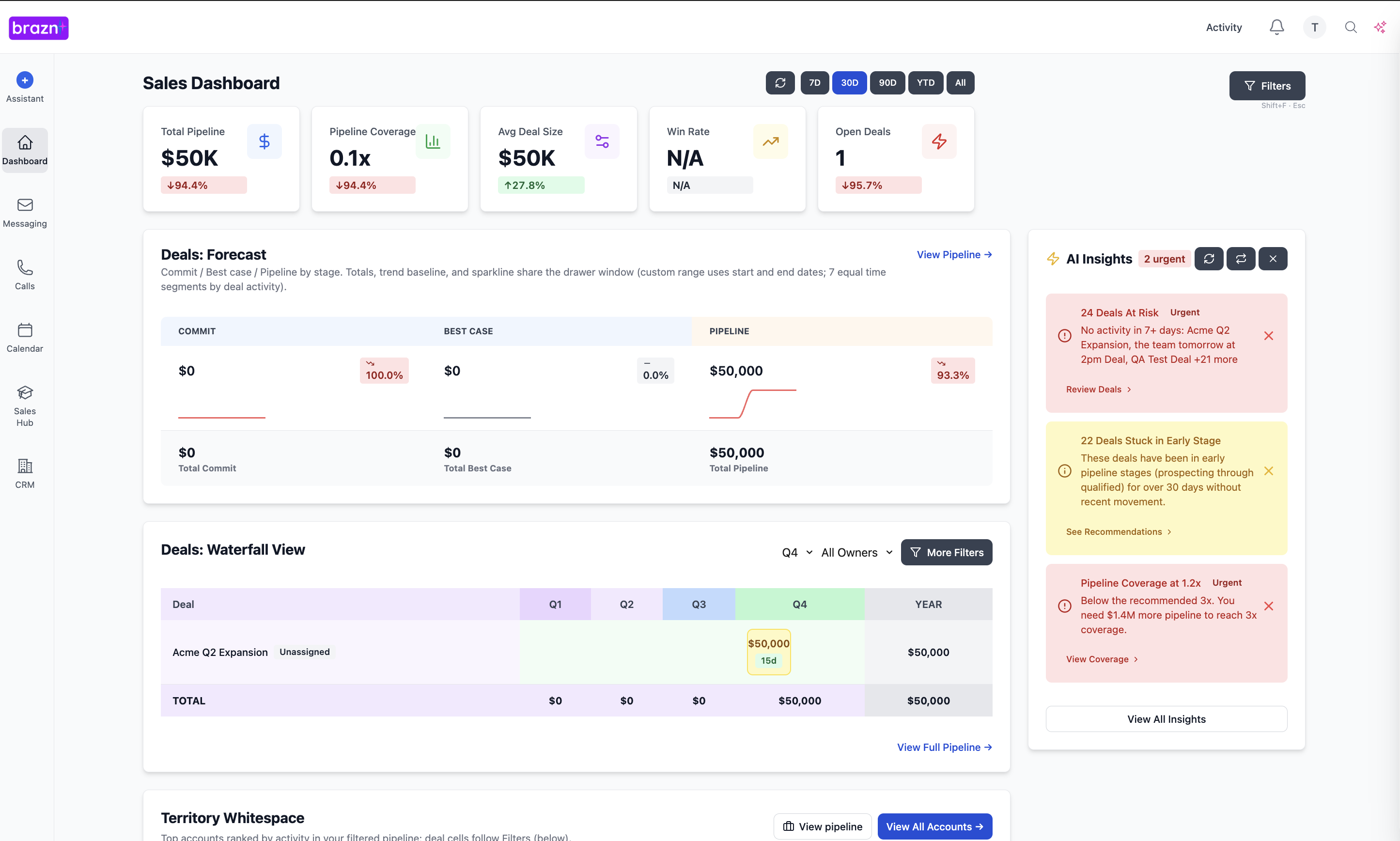
Use AI tools (Brazn, Gong, Salesloft) as skill development infrastructure, not just execution platforms — reviewing their own call recordings, analysing their own qualification patterns, and improving deliberately.
---
####
Book a demo to see how Brazn AI fits into your sales stack.

About the Author
Alex Margarit, Sales AI Expert, SaaS Sales Leader, BMC, ServiceNow, Docusign — 25+ years in SaaS sales.