The Complete Guide to AI Outbound and Follow-up for SaaS
Outbound is broken for most SaaS sales teams — not because the fundamentals have changed, but because the execution hasn't kept pace with buyer behaviour. Inboxes are saturated. Generic sequences get ignored. Buyers have developed a finely tuned filter for anything that feels templated or automated.
The answer is not to send more. It's to send better — with AI making genuine personalisation possible at the scale that outbound requires.
This is the complete guide to AI outbound and follow-up for SaaS teams. It covers why traditional outbound sales fails, what AI changes, how to build sequences that get replies, and how the best SaaS SDRs and AEs are using agentic AI to fill pipeline without drowning in manual work.
Why Traditional SaaS Outbound Is Failing
The outbound sales playbook that worked in 2019 — build a list, load it into a sequence, send 500 emails a week, hit your activity metrics — produces diminishing returns in 2026. Here's why:
Buyers have seen every template. The "I noticed you recently {trigger event}" opener, the "quick question" subject line, the "15 minutes this week?" close — buyers recognise all of it. The moment an email feels templated, it gets deleted. Inbox volume has increased dramatically. The proliferation of sequencing tools means the average VP of Sales receives dozens of outbound emails per week from vendors running the same playbook. Standing out requires genuine relevance, not just personalisation tokens. Activity metrics reward the wrong behaviour. When reps are measured on emails sent and calls made, they optimise for volume. Volume optimisation produces generic sequences. Generic sequences produce poor reply rates. The metric looks healthy while the pipeline doesn't. Follow-up is inconsistent. Most reps follow up too few times, at the wrong intervals, with the same message slightly reworded. The data consistently shows that the majority of replies come after the third or fourth touch — but most sequences abandon the prospect after one or two. Context gets lost between touches. A rep sends a cold email on Monday, the prospect replies two weeks later, and the rep has lost the thread — scrambling to remember who this person is and why they reached out. Momentum is killed by context gaps.What AI Changes About Outbound
AI doesn't automate outbound — it makes it possible to personalise at scale. Those are fundamentally different things.
Research-Driven First Touches
The highest-performing outbound emails in 2026 open with a specific, demonstrably researched observation about the prospect's business — something that couldn't be in a template because it required knowing something real about them.
AI account research makes this possible for every prospect, not just the top tier. Before Brazn drafts a first-touch email, it has already read the prospect's company website, their recent news, their LinkedIn profile, their job postings, and their public reviews. The first touch references something specific and real — and the prospect notices.
Contextual Sequence Personalisation
AI doesn't just personalise the first touch. It adjusts every subsequent step in the sequence based on what it learns — whether the prospect opened the first email, what their company has done since the last touch, whether there are new trigger events to reference, and how their engagement pattern compares to other prospects at a similar stage.
A sequence managed by Brazn is not a fixed 7-step cadence. It's a dynamic workflow that adapts to the prospect's behaviour and the account's evolving situation.
Automatic Follow-Up Drafting
The most common reason reps underfollow is that writing a new, relevant follow-up takes time they don't have. AI eliminates this constraint. Brazn drafts each follow-up step based on the prior interaction context — what was said, what wasn't replied to, what has changed in the account since the last touch — and presents it for one-click review and send.
Follow-up becomes effortless. Reps review a draft that's already contextualised and personalised, approve it in 30 seconds, and move on. The result is consistent, high-quality follow-up at a cadence that actually reaches buyers.
Meeting-to-Follow-Up Automation
Post-meeting follow-up is one of the highest-leverage touchpoints in the sales process — and one of the most inconsistently executed. The rep who sends a same-day follow-up that summarises the conversation, confirms next steps, and includes a relevant resource creates momentum. The rep who sends a generic "great to meet you" email 48 hours later does not.
Brazn generates the post-meeting follow-up automatically, based on the meeting transcript or call notes. It summarises what was discussed, confirms the agreed next steps, and includes relevant content based on the topics covered. The rep reviews it, personalises if needed, and sends — usually within an hour of the meeting ending.
Building AI-Assisted Outbound Sequences That Work
There are several principles that separate sequences that generate pipeline from sequences that generate unsubscribes.
Principle 1: Lead With a Specific Observation, Not a Generic Hook
The first line of every first touch should demonstrate that you've done the work. Not "I noticed your company is in the SaaS space" — that's not research, it's data. Something like: "Saw that you've tripled your AE headcount in the last six months — that kind of growth usually puts serious pressure on MEDDPICC consistency and CRM hygiene."
That's specific. That's relevant. That's a rep who knows something real about the prospect's situation. AI research makes this possible at scale.
Principle 2: One Idea Per Email
The most effective outbound emails make one point, connect it to one pain, and make one ask. Multi-paragraph emails covering three use cases and two product features get skimmed and archived. A single, specific, well-evidenced message that ends with a clear and easy ask gets replies.
Principle 3: Vary the Channel and the Format
A 7-step sequence that is all email, all the same length, all the same tone will feel like what it is — a sequence. Mix email with LinkedIn, short with long, direct with question-based. AI-assisted sequences vary format and channel based on prospect engagement patterns — what's working, what isn't, and what a specific prospect appears to respond to.
Principle 4: Make the Follow-Up Feel Like a Continuation, Not a Restart
Each follow-up should reference what came before it — not "following up on my last email" (which signals you have nothing new to say) but a genuine next step: new information, a new angle, a relevant trigger event since the last touch. Brazn builds this continuity automatically because it tracks the full interaction history for every prospect.
Principle 5: Know When to Stop
Persistent follow-up is different from harassment. AI monitors prospect engagement signals — opens, clicks, reply intent — and recommends when to pause, when to try a different channel, and when to remove a prospect from active sequence. Not every prospect is a buyer right now. Brazn helps identify the ones who are.
AI Follow-Up Across the Full Sales Cycle
AI-assisted follow-up isn't just for outbound prospecting. It applies across every stage of the deal cycle.
Post-Discovery Follow-Up
After a discovery call, the follow-up email is one of the most important documents in the deal. It confirms what was heard, validates the pain, proposes next steps, and sets the frame for everything that follows. Brazn generates this automatically from the call transcript — structured, specific, and personalised to what was actually discussed.
Post-Demo Follow-Up
After a product demo, the prospect needs two things: a clear summary of what they saw and a clear path forward. Brazn generates a post-demo follow-up that recaps the capabilities demonstrated in the context of the prospect's specific pain, proposes next steps, and includes the relevant resources discussed.
Multi-Stakeholder Follow-Up
As deals involve more stakeholders, follow-up becomes more complex. Different contacts need different messages — the champion needs one that helps them sell internally, the economic buyer needs one that reinforces the business case, the technical evaluator needs one that addresses their specific concerns. Brazn tracks each stakeholder and drafts appropriate follow-up for each one.
Re-Engagement Sequences
Every sales team has a graveyard of deals that went dark — prospects who were engaged, then stopped responding. AI-powered re-engagement sequences use new trigger events (company news, funding, new hires, product launches) to create genuine reasons to restart the conversation. Brazn monitors dormant accounts and surfaces re-engagement opportunities when the timing is right.
The SDR Use Case: Pipeline Generation at Scale
For SDR teams measured on meetings booked and pipeline generated, AI outbound creates a step-change in productivity.
The traditional SDR workflow looks like this: build a list, research accounts manually, write personalised emails (or semi-personalised emails with tokens), load into Salesloft or Outreach, monitor replies, update CRM, repeat. A productive SDR manages 200–300 active prospects with this workflow and books 8–12 meetings per month.
With Brazn, the workflow changes:
Brazn identifies the highest-fit accounts based on ICP criteria and buying signals
Brazn generates research briefs for every target account automatically
Brazn drafts personalised first-touch emails for each prospect based on the research
SDR reviews, approves, and sends — 30–60 seconds per prospect instead of 10–15 minutes
Brazn monitors engagement and drafts follow-up steps as they become due
Meetings booked are logged and research briefs are passed to the AE automatically
The same SDR managing 200–300 prospects manually can manage 600–800 with AI assistance — with better personalisation and more consistent follow-up than before.
The AE Use Case: Follow-Up That Doesn't Fall Through the Cracks
For AEs managing active pipeline, follow-up consistency is the difference between deals that progress and deals that stall. The most common deal slippage pattern is not a competitive loss — it's a deal that went quiet because the rep didn't follow up fast enough, didn't have the right message ready, or simply forgot in the context of managing 30 other opportunities.
Brazn eliminates this failure mode. For every active deal:
Post-meeting follow-up is drafted automatically within minutes of the meeting ending
Follow-up timing is monitored — if a rep hasn't followed up within 24 hours of a meeting, Brazn prompts them
Sequence continuity is maintained — each touch builds on the last, with new context where available
Stakeholder-specific follow-up is managed separately — each buying committee member receives appropriate communication based on their role
The AE who uses Brazn consistently never has a deal go dark because they forgot to follow up. The system is always watching, always drafting, always prompting.
Measuring Outbound Performance with AI
AI-assisted outbound changes what good performance measurement looks like. The traditional metrics — emails sent, calls made, open rate — measure activity, not effectiveness.
Better metrics for AI-assisted outbound:
Reply rate by sequence type — which research angles and hooks are generating the most engagement Meeting booked rate per researched account — conversion from targeted prospect to booked meeting Follow-up to meeting rate — how often does consistent follow-up recover a stalled conversation Time from meeting to follow-up — a leading indicator of deal momentum Re-engagement success rate — what proportion of dark deals are successfully reactivatedBrazn tracks all of these metrics automatically — creating a feedback loop that continuously improves outbound effectiveness.
See AI Outbound in Action
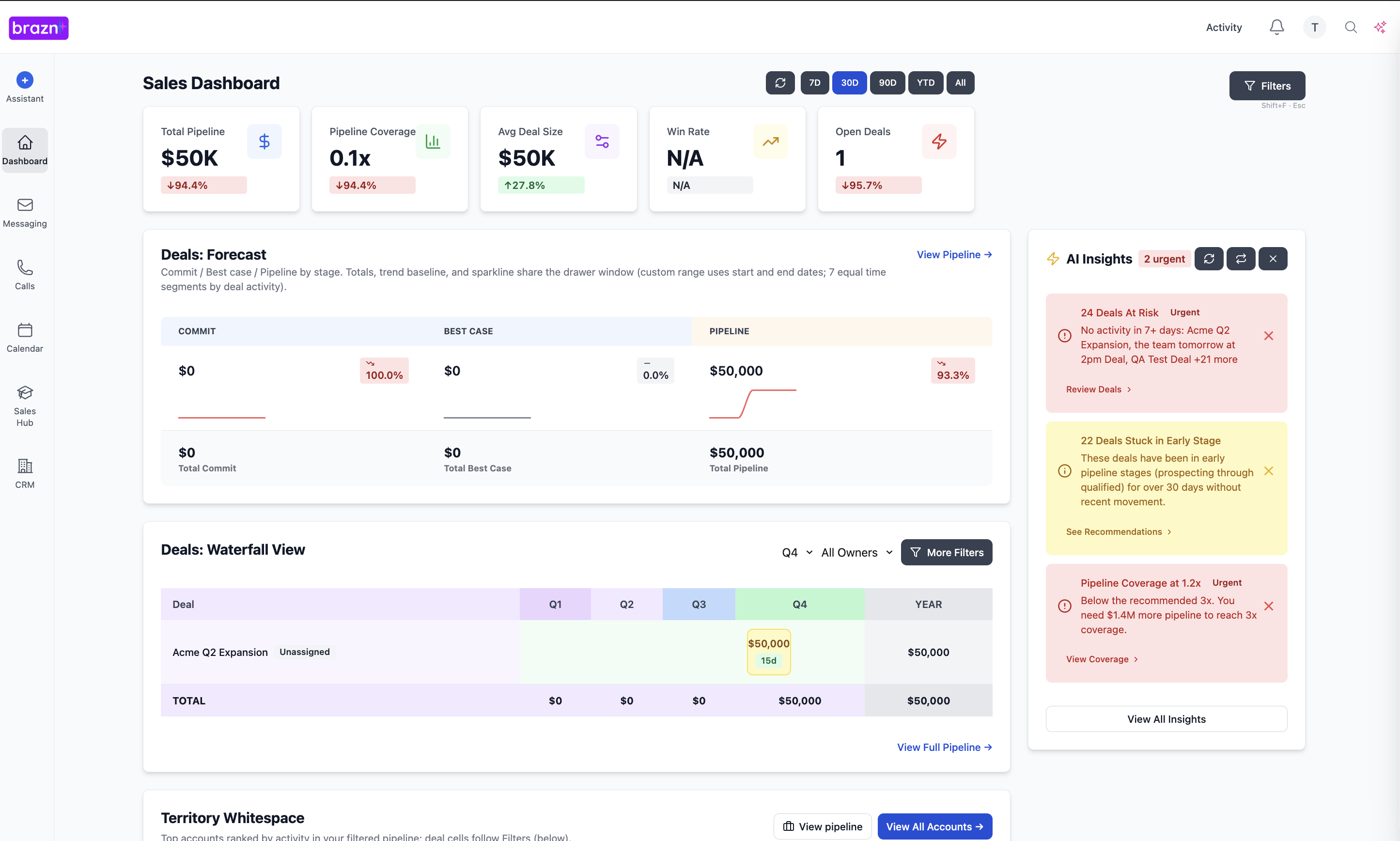
Brazn researches accounts automatically, drafts personalised first touches, manages follow-up sequences, and generates post-meeting summaries — so your team spends their time on outbound sales conversations, not on admin.
---
Book a demo to see how Brazn AI fits into your sales stack.

About the Author
Alex Margarit, Sales AI Expert, SaaS Sales Leader, BMC, ServiceNow, Docusign — 25+ years in SaaS sales.