

Cold Email Templates for SaaS Sales in 2026
Cold email in 2026 is harder than it was five years ago. Inboxes are more crowded. Spam filters are smarter. Buyers are more sensitised to generic outreach. AI-generated sequences at volume have raised the floor of what prospects receive — and lowered the bar they're willing to tolerate.The cold emails that work in 2026 are not clever. They are specific, short, relevant, and honest. They reference something real. They ask for something small. They make it easy to say yes to a conversation without requiring the prospect to commit to anything significant.
This article covers the frameworks and templates that produce the best results for SaaS outbound teams — with real examples and the principles behind each.
The Anatomy of a High-Performing Cold Email
Every effective cold email has five components:
Opening line — specific to this person, not a generic compliment or company description. Relevance bridge — connect the opening to why you're reaching out, without a feature list. Social proof — one specific reference that borrows credibility. Single ask — one small, low-friction request. Easy exit — acknowledge they may not be the right person or it may not be the right time.What a high-performing cold email does not contain: a list of product features, more than one ask, more than four sentences in the body, or any version of "I hope this email finds you well."
Template 1: The Trigger-Based Opening
Best for: Prospects where you have a specific, recent trigger (funding, hiring, launch, leadership change).
textSubject: [Company]'s [trigger] — quick thought
Hi [Name],
Saw [Company] just [trigger — e.g. raised Series B / launched in EMEA / started
hiring SDRs]. Congrats — that usually comes with [specific challenge that follows
that trigger].
We've helped [similar company] [specific outcome] during exactly that kind of
expansion.
Worth a 20-minute conversation? Happy to make the case for why it's relevant or
tell you quickly why it's not.
[Name]
Why it works: The trigger makes the email unmistakably about them. The specific challenge demonstrates understanding of their situation without a feature pitch. The "tell you quickly why it's not" line reduces perceived risk in agreeing to a call.
Template 2: The Pain-First Opening
Best for: Target personas where you know the pain reliably but don't have a specific trigger.
textSubject: [Pain] at [Company type] — common problem?
Hi [Name],
Most VP Sales / SDR leads / [RevOps Directors] at [company stage/type] I talk to
are dealing with [specific pain — e.g. forecast that's consistently 20% optimistic /
SDRs running sequences on unqualified lists].
[Company] looks like it might have the same dynamic — specifically [one observation
from their LinkedIn/website/job postings that supports this].
We helped [similar company] [specific outcome]. Happy to share how if it's relevant.
15 minutes this week?
[Name]
Why it works: The pain-first opening creates identification before any product mention. The specific observation from their company signals research. The social proof is specific, not vague.
Template 3: The Peer Reference
Best for: Situations where you have a relevant customer reference the prospect will recognise.
textSubject: How [Peer Company] handled [challenge]
Hi [Name],
[Peer Company] was dealing with [specific challenge] about [timeframe] ago —
[specific thing that was happening for them that the prospect will relate to].
They [specific outcome they achieved] using [your solution category — not product
name]. [Contact at peer company] would be happy to talk you through it if useful.
Is [challenge] something you're working on at [Company]?
[Name]
Why it works: Social proof from a recognisable peer company is more credible than any claim you can make about your own product. Offering to connect them with the reference adds further credibility and creates a next step that isn't a product demo.
Template 4: The Direct Opener
Best for: Senior prospects (VP+, C-suite) who respond better to directness than to elaborate framing.
textSubject: [Company] + [your solution category]
Hi [Name],
Direct version: we help [role] at [company type] [specific outcome in their language].
We've done it for [Company A], [Company B], and [Company C] — all [relevant
descriptor — e.g. Series B SaaS companies in EMEA] in the last 12 months.
Worth 20 minutes to see if the same applies to [Company]?
[Name]
Why it works: Senior buyers are busy and have seen thousands of elaborate cold emails. Directness is differentiated. The three named references are social proof without a lengthy case study. The ask is small and time-bounded.
Template 5: The Referral Email
Best for: When a mutual connection has recommended you reach out.
textSubject: [Mutual contact] — [Company] intro
Hi [Name],
[Mutual contact] suggested I reach out — they thought [specific reason they gave]
was relevant to what you're working on at [Company].
[One sentence on what you do and why the connection thought it was relevant.]
Happy to share more if it's useful — or if [Mutual] gave me the wrong steer, just
let me know.
[Name]
Why it works: Referral emails get opened. The mutual connection's credibility transfers. The last line acknowledges the possibility of irrelevance — making the prospect feel less trapped and more likely to respond honestly rather than ghost.
Follow-Up Templates
Most replies don't come on the first email. A three-to-five touch sequence with diminishing length and increasing directness outperforms a single well-crafted email.
Follow-up 1 (3 days after initial):textHi [Name],
Wanted to make sure the above didn't get buried — [one-line restatement of the
relevant point].
Still think it's worth 20 minutes. This week?
[Name]
Follow-up 2 (5 days later):textHi [Name],
Last note on this — not going to keep following up if the timing isn't right.
[Specific question that invites a 1-line response even if it's a no — e.g. "Is
[challenge] even on the radar for [Company] this half?"]
[Name]
Break-up email (final touch):textHi [Name],
Going to stop reaching out — clearly not the right time or the right fit.
If anything changes on [specific topic], happy to reconnect.
[Name]
Why the break-up email works: The explicit withdrawal of pursuit often generates replies from prospects who were interested but hadn't responded. The low-commitment phrasing of the final line keeps the door open without pressure.
What Doesn't Work in 2026
Long emails. If your cold email exceeds 120 words, it's too long. Feature lists. Nobody reads them. Lead with outcome and pain. "I'll be quick" — you're already asking for their time; don't pre-apologise. Multiple asks. One ask per email. Always. Generic personalisation ("I noticed you're in [industry]") — this signals automation, not research. AI-generated first lines that are obviously AI-generated. Prospects notice. It's worse than no personalisation.How Brazn Supports Cold Email Execution
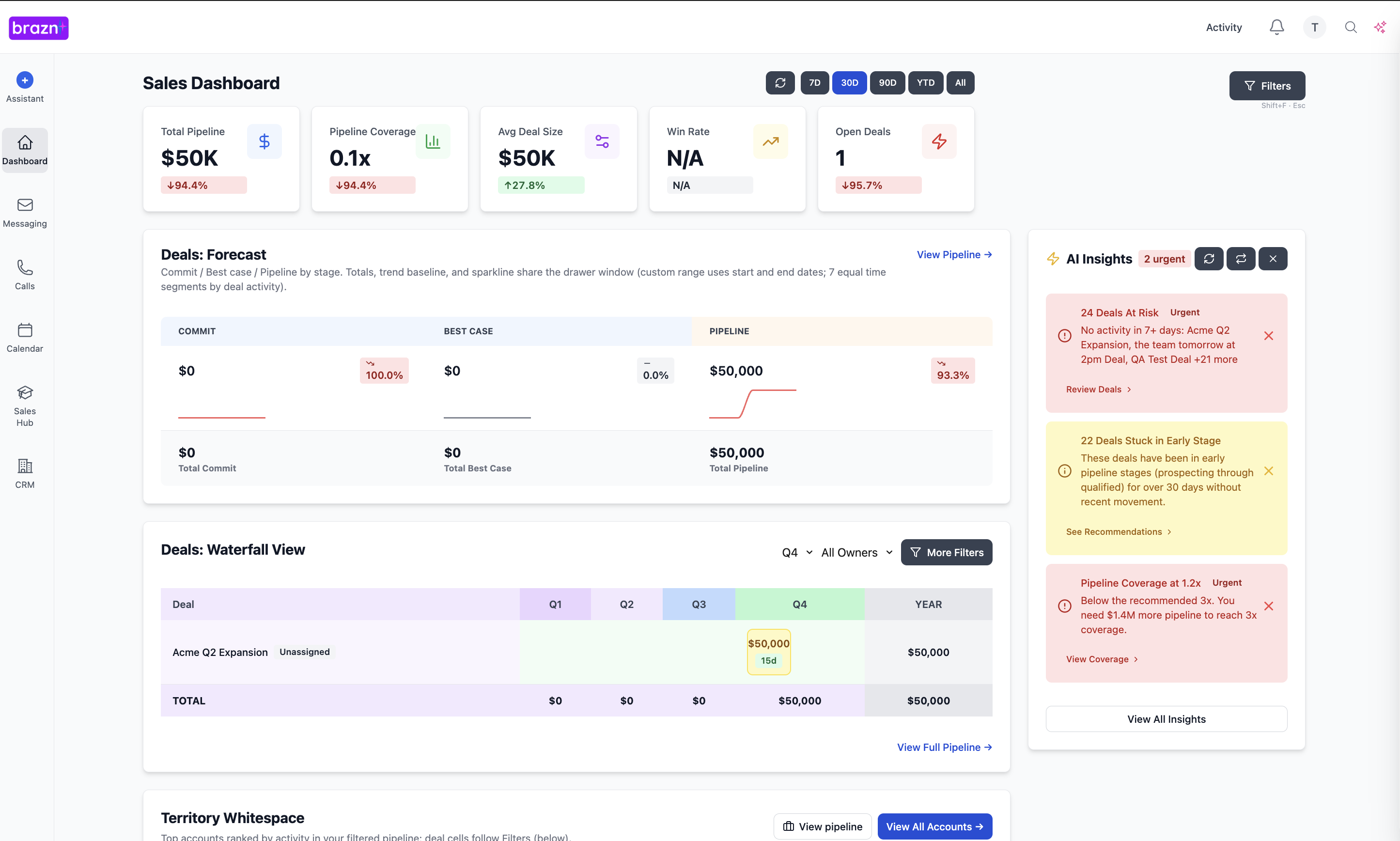
Brazn's pre-call intelligence generates account-specific context — company signals, stakeholder insights, and methodology-relevant observations — that gives SDRs the specific detail their cold emails need without hours of manual research per prospect. Personalisation at scale without sacrificing quality.
---
####
Book a demo to see how Brazn AI fits into your sales stack.

About the Author

Alex Margarit, Sales AI Expert, SaaS Sales Leader, BMC, ServiceNow, Docusign — 25+ years in SaaS sales.