

Why LLMs and Copilots Alone Won’t Save Your Pipeline (and What Will)
The revenue technology market is currently flooded with Large Language Models (LLMs) and 'co-pilots' promising to revolutionize sales. The pitch is alluring: just give your reps an AI assistant to write their emails and summarize their calls, and watch your pipeline explode.
However, many teams are discovering that simply giving a rep a better writing tool doesn't fix fundamental pipeline problems. If your messaging is flawed, your targeting is off, or your sales process is broken, an LLM will just help you execute a bad strategy faster.
This article explains why LLMs and co-pilots are necessary but insufficient for solving pipeline generation challenges. We will explore the critical missing piece—intelligent workflow orchestration—and how to build a system that actually drives revenue.
What We'll Cover
In this article, we will cover:
- The limitations of standalone LLMs in sales
- Why faster execution of a bad strategy fails
- The concept of Intelligent Workflow Orchestration
- Connecting AI to your underlying data strategy
- Building a comprehensive pipeline engine
Understanding the Approach
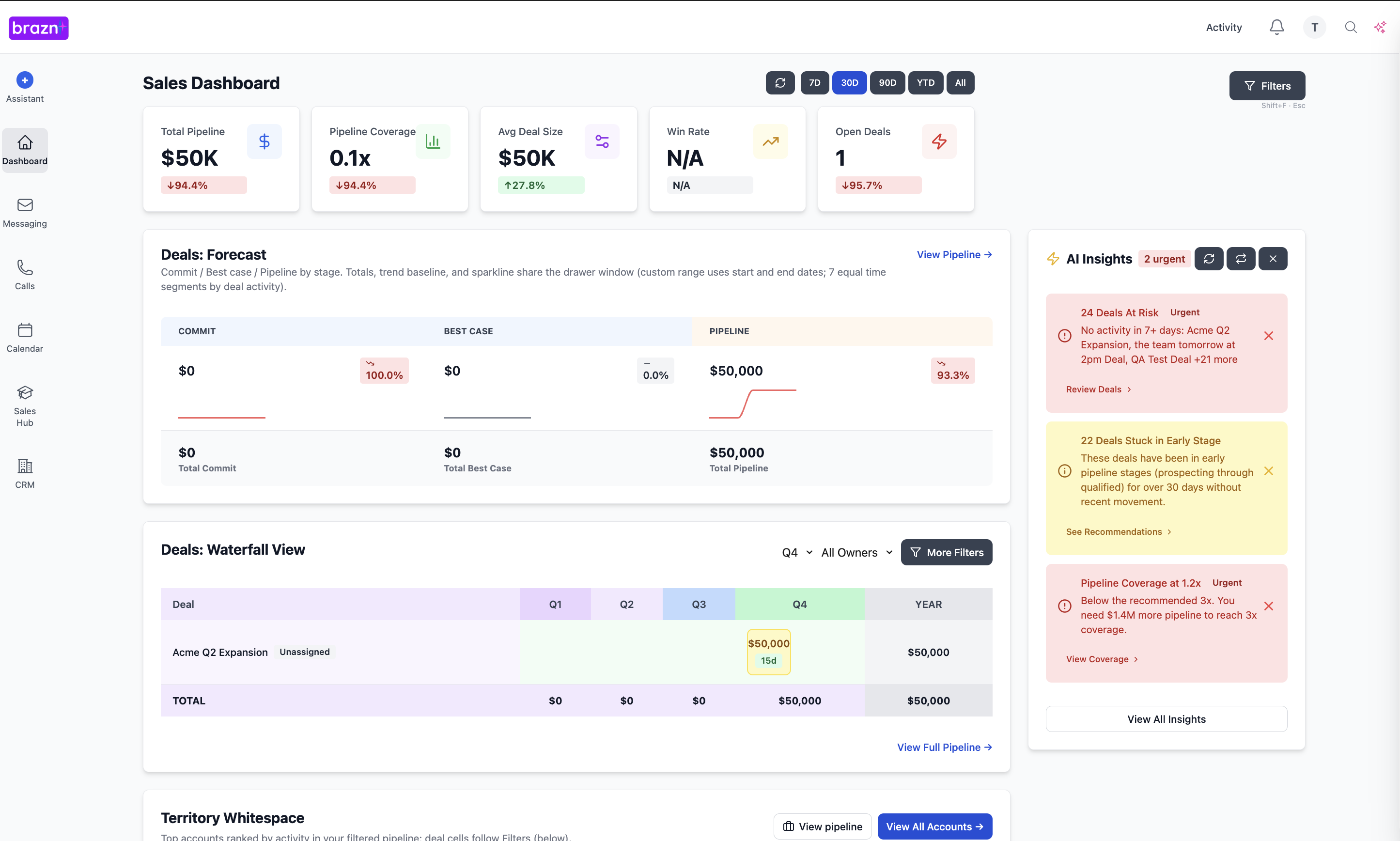
A co-pilot is a point solution; it helps a human complete a specific task (like drafting an email). Intelligent workflow orchestration is a systemic solution; it uses AI to connect multiple tools, data sources, and tasks into an automated, end-to-end process that generates pipeline independently.
Example: A co-pilot helps a rep write a slightly better cold email in 2 minutes instead of 10. Intelligent orchestration monitors intent data across the web, identifies when a target account is researching a competitor, automatically triggers a sequence of highly relevant content across email and LinkedIn, and only loops the human rep in when the prospect replies, effectively generating pipeline while the rep sleeps.
Why This Matters
Moving beyond basic co-pilots allows revenue teams to achieve true scale and predictability, rather than just marginal efficiency gains.
- Before: Reps use AI to write generic emails faster, leading to a spike in activity but no increase in qualified meetings. After: Orchestrated workflows ensure every piece of outreach is highly targeted and timed perfectly, driving high conversion rates.
- Before: The company's AI strategy is fragmented, with different reps using different tools inconsistently. After: The company operates a unified, automated pipeline engine that executes best practices systematically.
- Before: Leadership is frustrated by the lack of ROI from their AI investments. After: Leadership sees a clear, measurable impact on pipeline volume and velocity.
The Complete Guide
H3 Tactic 1: Integrate Intent Data Before Content Generation
Objective: Ensure AI is writing to the right people at the right time.
Actionable Advice: Do not let your LLM write an email until it has analyzed the prospect's recent intent signals. Integrate tools like 6sense or G2 with your AI platform so the outreach is always triggered by a specific, verifiable buying behavior.
Best Practices: If there is no intent signal, the AI should prioritize the account for a low-touch nurture sequence, not an aggressive outbound push.
H3 Tactic 2: Automate the Multi-Step Workflow
Objective: Remove the human bottleneck from the early stages of the funnel.
Actionable Advice: Build workflows where the AI handles the entire sequence: finding the contact, drafting the email, sending the follow-up, and analyzing the reply. The human rep should only intervene when a complex response or a meeting request is generated.
Best Practices: Set strict guardrails. The AI should not be allowed to negotiate pricing or send contracts without human approval.
H3 Tactic 3: Continuous Feedback Loops
Objective: Ensure your AI engine gets smarter over time.
Actionable Advice: A standalone LLM doesn't learn from your closed-won data. You must build a system where the outcomes of the AI's actions (e.g., which emails booked meetings, which ones bounced) are fed back into the model to continuously refine its logic and targeting.
Best Practices: RevOps should review this feedback data weekly to ensure the AI isn't optimizing for vanity metrics (like open rates) over actual revenue.
How to Implement This
RevOps must graduate from simply buying software licenses to architecting complex, integrated systems. They are the builders of the intelligent workflow. Sales Enablement must shift their focus from teaching reps 'how to manage the output of the automated engine.' Sales Leadership must stop measuring reps on raw activity (which the AI is now doing) and start measuring them on conversion rates and deal strategy.Next Steps
An LLM is a powerful engine, but without a steering wheel and a map, it will just drive you into a wall faster.
Audit your current AI tools. Are they just helping your reps type faster, or are they actually orchestrating your pipeline generation strategy? If it's the former, you have a massive opportunity for optimization. Ready to build a true pipeline engine? Discover how Brazn orchestrates intelligent workflows across your entire GTM stack.
Book a demo to see how Brazn AI fits into your sales stack.

About the Author

Alex Margarit, Sales AI Expert, SaaS Sales Leader, BMC, ServiceNow, Docusign — 25+ years in SaaS sales.