

What Trailblazing Founders Get Right About Sales Success
Many founders are brilliant product visionaries but reluctant salespeople. They build incredible software, assuming the product will sell itself. When it doesn't, they hastily hire a VP of Sales, hand over a messy CRM, and expect miracles. This "throw it over the fence" approach is the leading cause of early-stage GTM failure.
The most successful, trailblazing founders understand that in the early days, they are the best salespeople the company has. They don't just sell; they use the sales process as an extension of product development. This article explores the counter-intuitive mindsets and specific habits that separate founders who struggle to gain traction from those who build unstoppable revenue engines.
What We'll Cover
In this article, we will cover:
- Why "founder-led sales" is about learning, not just revenue
- The danger of hiring a VP of Sales too early
- How top founders conduct discovery calls differently than reps
- The importance of building the "V1" sales playbook yourself
- Transitioning from founder-led to scalable sales
Understanding the Approach
For a trailblazing founder, sales isn't a transactional activity; it's an iterative feedback loop. Every discovery call is a customer interview. Every lost deal is a data point on product-market fit. In the GTM context, founder-led sales is about finding the repeatable "formula"—the specific pain point, the exact buyer persona, and the winning message—before attempting to scale it with hired reps.
Example: A typical rep hears an objection ("Your integration is too slow") and tries to overcome it with a discount. A trailblazing founder hears the same objection, pauses the pitch, asks five probing questions to understand the technical bottleneck, and then immediately messages the engineering team to adjust the product roadmap.
Why This Matters
Embracing founder-led sales is critical for establishing true product-market fit and building a foundation that a future sales team can actually execute on.
- Before: Founders hire expensive sales leaders who fail because the product messaging isn't validated. After: Founders validate the messaging themselves, ensuring their first sales hires have a proven playbook to follow.
- Before: The product team builds features in a vacuum, disconnected from buyer reality. After: The founder feeds real-time sales objections directly into the product roadmap, ensuring they build what people will actually buy.
- Before: Early deals are lost because buyers don't trust a new startup. After: The founder leverages their passion and vision to close early evangelist customers who buy into the mission.
The Complete Guide
H3 Principle 1: Sell the Problem, Not the Product
Objective: Validate that the pain you're solving is acute enough to warrant a purchase.
Actionable Advice: On your next 5 prospect calls, don't show a demo for the first 20 minutes. Force yourself to ask deep, probing questions about how they currently handle the problem and what it costs them. If they can't articulate the cost of the problem, they won't buy your solution.
Best Practices: Use the "5 Whys" technique to get past surface-level complaints and uncover the root business impact.
H3 Principle 2: Write Your Own Playbook First
Objective: Document the repeatable steps required to close a deal before hiring someone else to do it.
Actionable Advice: Every time you win a deal, write down exactly how it happened. What was the subject line of the first email? What were the three main objections? What was the specific ROI argument that won the CFO over? Compile this into a simple Google Doc. This is your V1 playbook.
Best Practices: Don't overcomplicate it. A messy, accurate Google Doc is infinitely more valuable than a theoretical, professionally designed PDF.
H3 Principle 3: Be Ruthless About Disqualification
Objective: Protect your time by only talking to your Ideal Customer Profile (ICP).
Actionable Advice: Early-stage founders often suffer from "happy ears," chasing any prospect who shows interest. Define 3 strict criteria a prospect must meet to get a second call (e.g., specific company size, specific legacy software installed). If they don't meet it, politely disqualify them.
Best Practices: Disqualifying bad-fit prospects early gives you more time to focus on the ones who will actually convert and become successful case studies.
H3 Principle 4: Leverage "Founder Privilege"
Objective: Get meetings that a standard SDR could never get.
Actionable Advice: Use your title to your advantage. A cold email from a "Sales Rep" gets deleted. A cold email from the "CEO/Founder" asking for 15 minutes of feedback on a new industry thesis often gets a response. Frame your outreach as peer-to-peer networking, not a sales pitch.
Best Practices: Never bait-and-switch. If you ask for feedback, genuinely ask for feedback. The sales opportunity will naturally arise if the pain is real.
How to Implement This
Founders must operationalize their own learning. Set up a simple CRM (even if it's just Hubspot Free or a structured spreadsheet) and force yourself to log every interaction. Create a weekly "GTM Sync" with your product and marketing co-founders where you review the notes from your sales calls, specifically focusing on the objections you couldn't overcome. This ensures the entire company is aligned with the realities of the market.
Next Steps
You can't outsource the discovery of product-market fit. The most successful founders embrace the discomfort of sales because they know it's the fastest way to learn what the market actually values.
If you're a founder preparing to make your first sales hire, stop. Look at your CRM. Have you personally closed 10 deals? Do you have a documented V1 playbook? If not, you aren't ready to hire. Get back on the phones this week and close the next deal yourself.
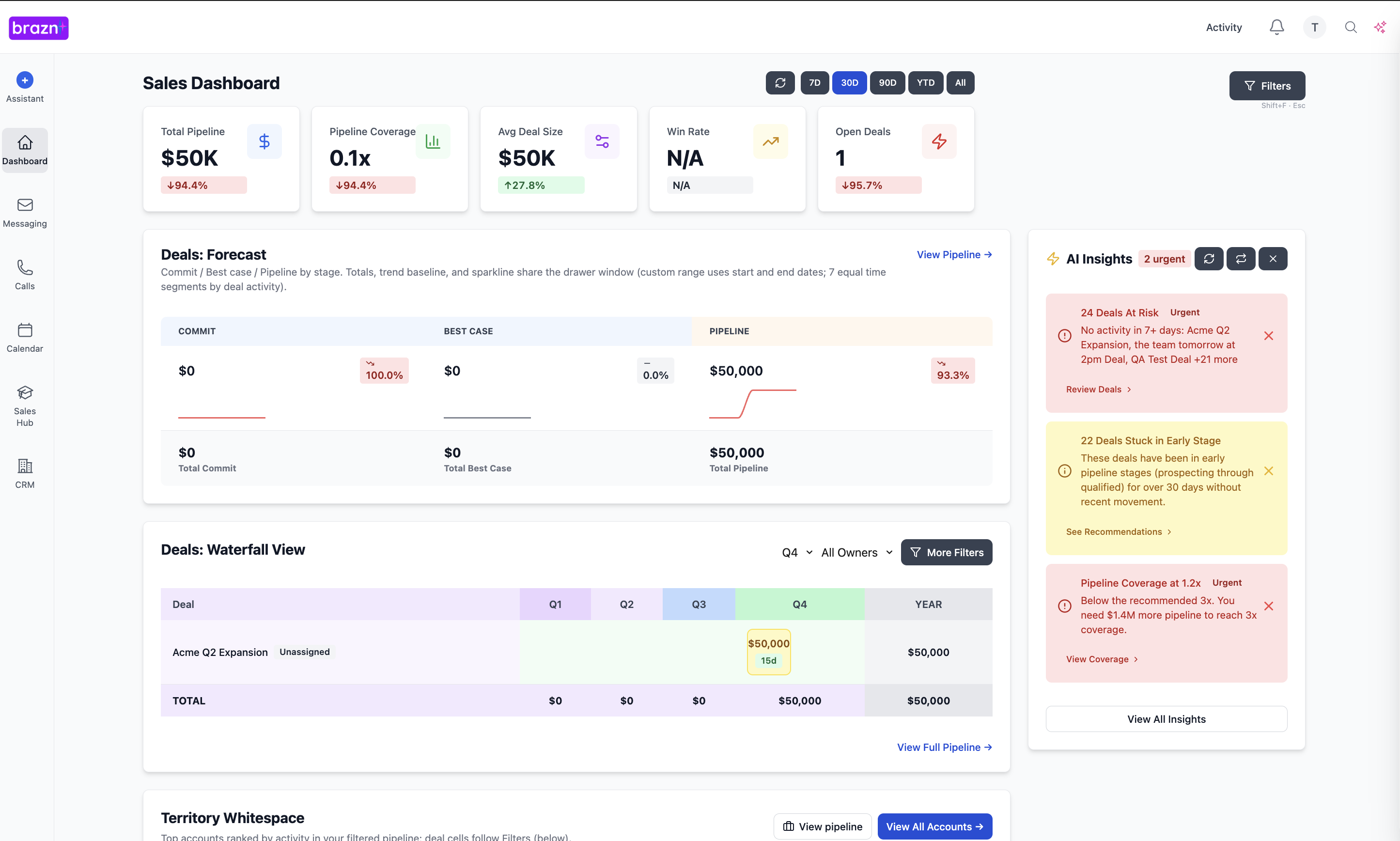
Book a demo to see how Brazn AI fits into your sales stack.

About the Author
Alex Margarit, Sales AI Expert, SaaS Sales Leader, BMC, ServiceNow, Docusign — 25+ years in SaaS sales.