

What Does a B2B SaaS Lead Cost in 2026? Benchmarks by Segment
The B2B SaaS landscape has fundamentally shifted. The era of cheap capital and 'growth at all costs' is over, replaced by a mandate for efficient, profitable growth. As a result, the cost of acquiring a lead—and more importantly, a qualified opportunity—has come under intense scrutiny.
Many revenue leaders are operating on outdated assumptions about what a lead should cost, leading to misallocated budgets and missed targets. The benchmarks have changed dramatically over the last few years.
This article provides an updated, data-driven look at the true cost of a B2B SaaS lead in 2026, broken down by market segment, and explains why the metrics you track need to evolve.
What We'll Cover
In this article, we will cover:
- Why historical lead cost benchmarks are no longer valid
- 2026 Cost Per Lead (CPL) benchmarks by SaaS segment (SMB, Mid-Market, Enterprise)
- Why Cost Per Qualified Opportunity (CPQO) is the new gold standard
- Strategies for reducing acquisition costs in a tight market
Understanding the Approach
In 2026, Cost Per Lead (CPL) is heavily influenced by the saturation of digital channels and the rise of AI-generated content, which has made it harder to capture genuine buyer attention. While a 'lead' (an email address) might still be relatively cheap to acquire through a gated ebook, the Cost Per Qualified Opportunity (CPQO)—a prospect with a verified pain point and budget—has risen significantly. RevOps teams must shift their focus from the top of the funnel to the middle, optimizing for conversion rather than just volume.
Why This Matters
Understanding current benchmarks is critical for setting realistic marketing budgets and aligning expectations between the board, the CRO, and the CMO.
- Before: Marketing is given a budget based on outdated CPL assumptions and fails to generate enough pipeline. After: Budgets are set based on accurate CPQO benchmarks, ensuring sufficient funding to hit revenue targets.
- Before: Teams optimize campaigns for the lowest CPL, resulting in a flood of low-quality leads that waste sales time. After: Teams optimize for CPQO, accepting a higher initial cost for leads that actually convert to revenue.
- Before: Sales and Marketing argue over lead quality. After: Both teams are aligned around a shared CPQO metric, focusing on efficiency and revenue impact.
The Complete Guide
H3 1. The 2026 Benchmarks (Illustrative)
Objective: Set realistic expectations for acquisition costs.
Actionable Advice: Understand that costs vary wildly by segment. In 2026, expect a raw MQL in the SMB space to cost $50-$150, Mid-Market $150-$400, and Enterprise $500+. However, the CPQO will be significantly higher: $500-$1,500 for SMB, $2,000-$5,000 for Mid-Market, and $10,000+ for Enterprise.
Best Practices: Use these benchmarks as a starting point, but always benchmark against your own historical data and specific industry niche.
H3 2. Shift Focus from CPL to CPQO
Objective: Measure the metrics that actually impact revenue.
Actionable Advice: Stop reporting on raw CPL at the executive level. It encourages the wrong behaviors. Instead, calculate your Cost Per Qualified Opportunity by dividing your total marketing and SDR spend by the number of validated opportunities generated.
Best Practices: Track CPQO by channel (e.g., Linkedin Ads vs. Organic Search) to identify your most efficient pipeline sources.
H3 3. Invest in 'Dark Social' and Community
Objective: Lower acquisition costs by building organic trust.
Actionable Advice: As paid channels become more expensive, shift budget towards founder-led content, community building, and organic social engagement. These channels are harder to measure but often produce the highest-quality, lowest-cost opportunities.
Best Practices: Implement a 'How did you hear about us?' field on your inbound forms to capture attribution from these hard-to-track channels.
How to Implement This
RevOps must own the transition from CPL to CPQO reporting, building the dashboards that track the full funnel efficiency. The CMO must use this data to ruthlessly reallocate budget away from high-volume/low-converting channels toward high-efficiency sources. The CRO must ensure that the sales team is executing flawlessly on the expensive opportunities that marketing generates, as a low win rate will destroy the economics of even the best marketing campaigns.
Next Steps
The days of cheap, abundant leads are over. In 2026, revenue teams must operate with surgical precision, focusing on the quality and cost of qualified opportunities rather than the sheer volume of leads.
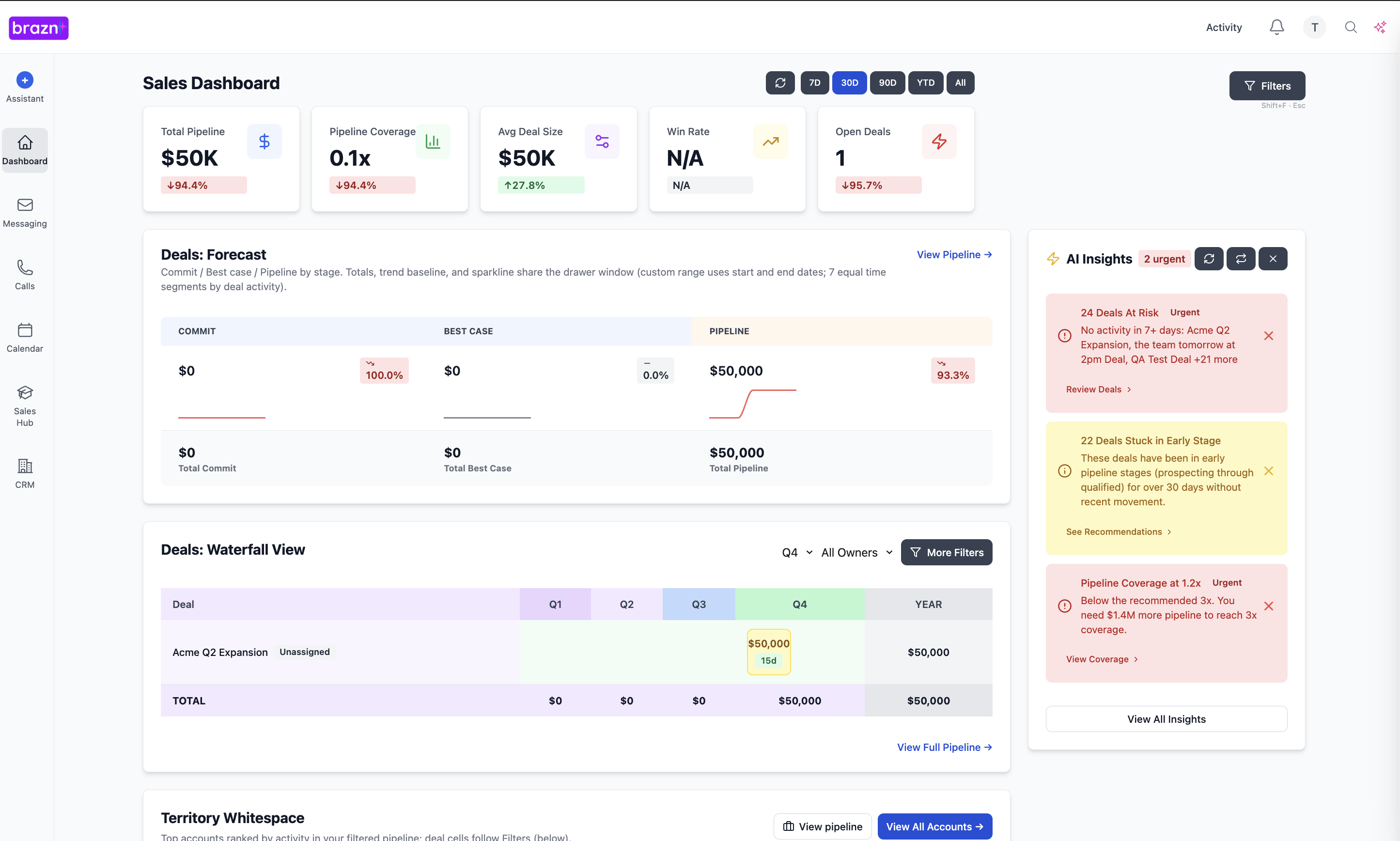
Calculate your true Cost Per Qualified Opportunity for the last quarter. If the number surprises you, it's time to rethink your acquisition strategy. Ready to optimize your pipeline generation? See how Brazn's analytics can help you identify your most efficient revenue channels.
Book a demo to see how Brazn AI fits into your sales stack.

About the Author
Alex Margarit, Sales AI Expert, SaaS Sales Leader, BMC, ServiceNow, Docusign — 25+ years in SaaS sales.