
The True Cost of Letting Reps Build Their Own Workflows
It's a common scenario: a high-performing rep finds a new tool or creates a complex spreadsheet to manage their pipeline, and soon, the rest of the team adopts it. While this bottom-up innovation seems great, it often leads to a fragmented, chaotic GTM motion. Data gets siloed, processes become inconsistent, and RevOps loses visibility into what's actually happening.
This ad-hoc approach to workflow creation is silently draining your revenue engine's efficiency. The solution is centralizing and standardizing your workflows. In this article, we'll uncover the hidden costs of "shadow RevOps" and provide a framework for building scalable, team-wide processes.
What We'll Cover
In this article, we will cover:
- The hidden dangers of "shadow RevOps" and ad-hoc workflows
- The financial and operational costs of fragmented processes
- 4 steps to standardize and centralize your sales workflows
- How to balance standardization with rep autonomy
- Transitioning to a unified revenue operating system
Understanding the Approach
"Shadow RevOps" occurs when customer-facing teams build and manage their own tools and processes outside of the official tech stack and RevOps oversight. In B2B SaaS, this often looks like reps using personal Zapier accounts, unapproved point solutions, or complex, disconnected Google Sheets to manage their day-to-day tasks.
Example: An AE creates a personal spreadsheet to track their "commit" deals because they don't trust the CRM's forecasting module. This means the sales leader is making decisions based on incomplete CRM data, while the accurate data is hidden on the AE's local drive.
Why This Matters
Standardizing workflows is crucial for maintaining data integrity, accurate forecasting, and a scalable GTM motion. When everyone plays by the same rules, the entire engine runs smoother.
- Before: RevOps spends hours chasing down data from various spreadsheets and disconnected tools to build a weekly forecast. After: Data flows seamlessly into a centralized system, providing real-time, accurate visibility.
- Before: New reps struggle to ramp up because every AE has a different way of doing things. After: Standardized playbooks make onboarding faster and more effective.
- Before: The company pays for overlapping software subscriptions as different teams buy their own point solutions. After: A consolidated tech stack reduces costs and improves data hygiene.
The Complete Guide
H3 Step 1: Conduct a Workflow Audit
Objective: Identify all the unofficial tools and processes currently being used by the team.
Actionable Advice: Send out a survey or conduct brief interviews with reps to understand how they actually spend their day and what tools they use to get things done.
Best Practices: Frame this as a fact-finding mission to make their lives easier, not a witch hunt to take away their tools.
H3 Step 2: Identify the "Why"
Objective: Understand the underlying problems that reps are trying to solve with their ad-hoc workflows.
Actionable Advice: Analyze the audit results. Are reps using external tools because the CRM is too slow? Because they need better email templates?
Best Practices: Address the root cause of the problem, rather than just banning the unauthorized tool.
H3 Step 3: Build Standardized Playbooks
Objective: Create official, best-practice workflows that replace the ad-hoc processes.
Actionable Advice: Work with top performers to codify their successful strategies into standardized playbooks within your official tech stack (e.g., Outreach sequences, CRM validation rules).
Best Practices: Ensure the new playbooks are actually better and more efficient than the reps' old methods.
H3 Step 4: Enforce and Iterate
Objective: Ensure adoption of the new workflows and continuously improve them.
Actionable Advice: Use CRM reporting to monitor adherence to the new processes. Regularly solicit feedback from the team to identify areas for improvement.
Best Practices: Celebrate wins and highlight reps who are successfully using the new standardized workflows.
How to Implement This
RevOps must lead the charge in standardizing workflows, starting with the audit and process design. Sales Leadership is responsible for enforcing adoption and ensuring that reps understand the "why" behind the changes. Enablement plays a crucial role in training the team on the new, official playbooks and ensuring they have the skills to execute them effectively.
Next Steps
Letting reps build their own workflows might seem like a way to encourage innovation, but it ultimately leads to chaos and inefficiency. By centralizing your processes, you can regain control of your data and build a scalable revenue engine.
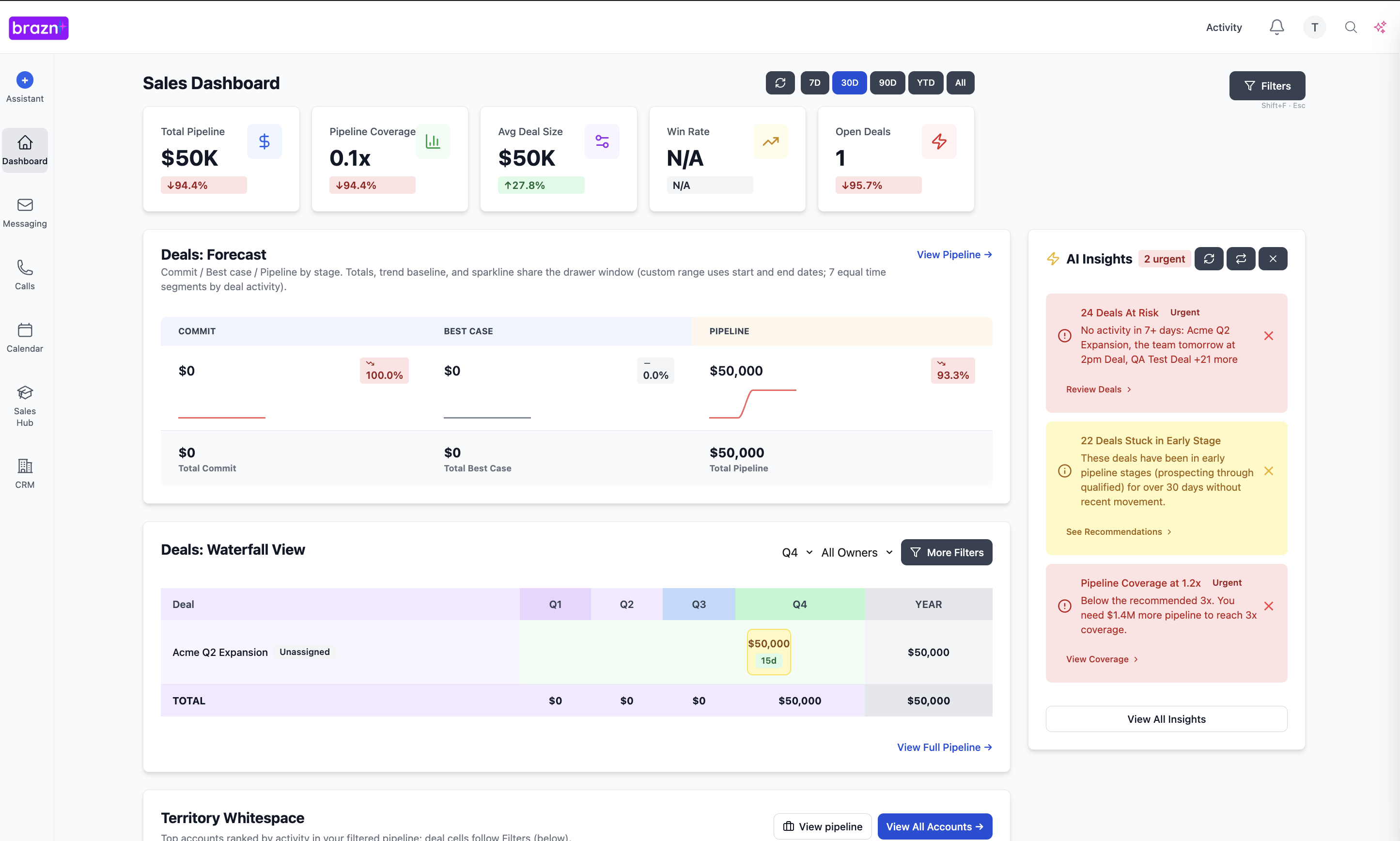
Start by conducting a quick workflow audit this week. Ask your team what tools they use outside of the CRM. The answers might surprise you. Ready to standardize your GTM motion? Discover how Brazn can help you build and enforce automated, best-practice playbooks across your entire team.
Book a demo to see how Brazn AI fits into your sales stack.

About the Author

Alex Margarit, Sales AI Expert, SaaS Sales Leader, BMC, ServiceNow, Docusign — 25+ years in SaaS sales.