
The Startup CRO’s Guide to Building an AI-First GTM Motion
For startup CROs, the pressure to scale revenue quickly is immense. In the past, scaling meant aggressively hiring armies of SDRs and AEs, hoping the revenue would outpace the burn rate. Today, that playbook is obsolete. Investors are demanding efficient growth, and startups can no longer afford to brute-force their way to their first $10M in ARR.
The problem? many startup CROs treat AI as a 'bolt-on'—a feature they add to an existing, legacy GTM process. They buy an AI email drafting tool but keep the same bloated sales stages. This approach yields marginal gains at best.
This guide outlines how to build an 'AI-First' GTM motion from the ground up. We will explore how to design processes where AI is the core engine, allowing startups to achieve the output of a 50-person sales team with a fraction of the headcount.
What We'll Cover
In this article, we will cover:
- The difference between 'AI-Assisted' and 'AI-First' GTM motions
- Why the traditional startup sales playbook is dead
- 3 foundational pillars of an AI-First revenue engine
- Designing lean sales roles augmented by autonomous agents
- The critical role of data architecture in an AI-First startup
Understanding the Approach
An 'AI-First GTM Motion' is a revenue strategy where artificial intelligence is designed into the core workflows from day one, rather than being added as an afterthought. It means asking, 'How can AI execute this task autonomously?' before asking, 'Who do I need to hire to do this?' In the context of a startup, it's about maximizing leverage.
Example: A traditional startup hires three SDRs to manually research accounts and send cold emails. An AI-First startup deploys an autonomous AI agent to handle all top-of-funnel research, personalization, and initial outreach, hiring only one highly skilled 'SDR Manager' to oversee and optimize the agent's performance.
Why This Matters
Building an AI-First motion is the only viable path for startups to achieve the efficiency metrics required by modern venture capital.
- Before: Startups burn through cash hiring large sales teams before achieving true product-market fit. After: Startups scale revenue efficiently with a lean team, extending their runway and improving valuation multiples.
- Before: Reps spend their days on data entry and manual research, leading to low productivity. After: Reps spend 100% of their time on high-value buyer interactions, acting as strategic consultants.
- Before: The GTM motion is rigid and difficult to adapt as the market changes. After: The AI-First motion is highly agile, allowing the CRO to instantly test and deploy new messaging or targeting strategies at scale.
The Complete Guide
H3 Pillar 1: The Autonomous Top-of-Funnel
Objective: Generate highly qualified pipeline without a massive SDR headcount.
Actionable Advice: Deploy an AI agent that automatically monitors intent signals (e.g., job changes, funding rounds) and triggers hyper-personalized outreach sequences. The human only steps in when the prospect replies.
Best Practices: Focus the AI's messaging on specific, researched pain points, not generic feature pitches.
H3 Pillar 2: The 'Co-Piloted' Discovery Process
Objective: Ensure every AE executes discovery with the rigor of a top performer.
Actionable Advice: Mandate the use of real-time conversational AI on all discovery calls. Configure the AI to listen for specific qualification criteria (e.g., MEDDPICC) and prompt the AE with the next best question if a critical area is missed.
Best Practices: Use the AI to automatically populate the CRM fields post-call, eliminating manual data entry.
H3 Pillar 3: Predictive Pipeline Management
Objective: Remove 'hopium' from the startup forecast.
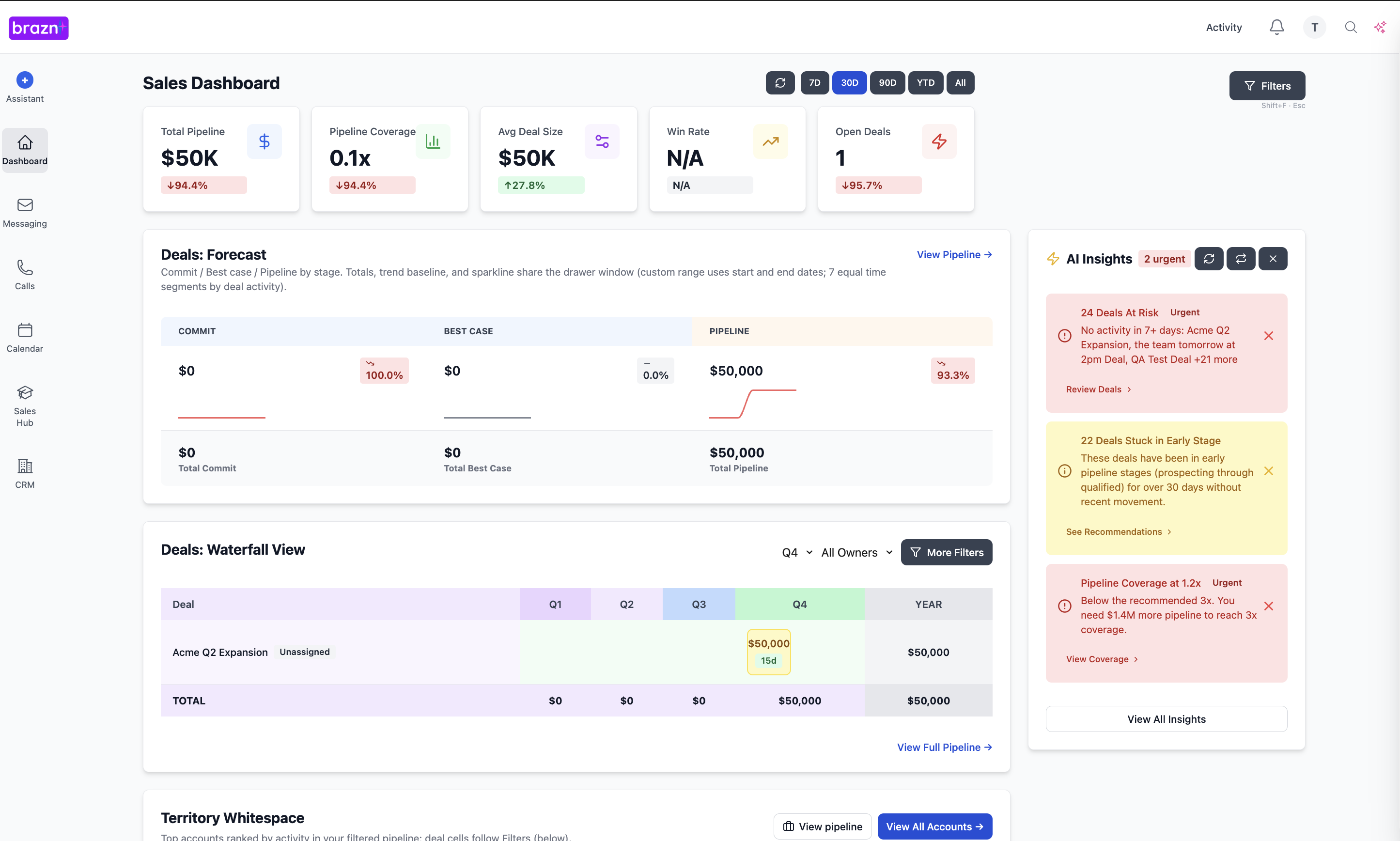
Actionable Advice: Instead of relying on rep intuition to forecast deals, use AI to analyze the actual engagement data (email velocity, stakeholder involvement) to generate an objective 'Deal Health Score.' Only forecast deals with a high score.
Best Practices: Require reps to use AI-generated 'Next Best Actions' to improve the health score of stalled deals.
How to Implement This
To build this, the CRO must partner closely with a technical RevOps leader (or a 'GTM Engineer') who can stitch these AI tools together. Enablement must shift from teaching basic sales skills to teaching reps how to manage and interact with their AI counterparts. The entire culture must celebrate efficiency and automation over headcount growth.
Next Steps
The most successful startups of the next decade won't be the ones with the biggest sales teams; they will be the ones with the smartest, most automated GTM motions. By building an AI-First engine today, you create a sustainable, scalable foundation for long-term growth.
Before you open that next headcount requisition for an SDR, ask yourself: 'Can I automate 80% of this role with AI?' Start by automating your top-of-funnel research process this week. Ready to build your AI-First revenue engine? See how Brazn's platform provides the autonomous agents you need to scale efficiently.
Book a demo to see how Brazn AI fits into your sales stack.

About the Author
Alex Margarit, Sales AI Expert, SaaS Sales Leader, BMC, ServiceNow, Docusign — 25+ years in SaaS sales.