The Marketing Prompt Library Every SaaS Team Should Build
Generative AI has democratized content creation, allowing marketing teams to produce blogs, emails, and social posts at unprecedented speeds. However, this speed often comes at the cost of quality and brand consistency. When every marketer is writing their own ad-hoc prompts, the resulting content can sound generic, robotic, or disconnected from the company's core messaging. The problem isn't the AI; it's the lack of standardized inputs.
To harness the true power of AI while maintaining a strong brand voice, SaaS marketing teams need a centralized 'Prompt Library.' This is a curated collection of highly engineered, tested, and approved AI prompts designed for specific marketing tasks. This article will guide you through building a prompt library that ensures high-quality, consistent output across your entire marketing organization.
What We'll Cover
In this article, we will cover:
- The danger of ad-hoc AI prompting in marketing
- What constitutes a 'highly engineered' prompt
- 5 essential prompts every SaaS marketing team needs
- How to structure and organize your prompt library
- Best practices for maintaining and updating the library
Understanding the Approach
A 'Marketing Prompt Library' is a centralized repository of standardized AI instructions used to generate specific types of marketing content. In a GTM context, it acts as the operational layer between the marketing team's strategy and the AI tool's execution, ensuring that all AI-generated content adheres to brand guidelines, persona definitions, and messaging frameworks.
Example: Instead of a demand gen manager typing 'write an email about our new feature,' they use a library prompt that includes the specific target persona, the feature's value proposition, the desired tone of voice, and the required call-to-action, resulting in a ready-to-send email draft.
Why This Matters
Building a prompt library is the key to scaling content production without sacrificing quality or brand integrity.
- Before: Marketers spend hours tweaking AI prompts to get a usable draft, wasting time and causing frustration. After: Marketers use pre-tested prompts to generate high-quality first drafts in seconds, accelerating campaign execution.
- Before: AI-generated content sounds generic and inconsistent with the company's brand voice. After: Standardized prompts ensure all content adheres to specific tone and style guidelines, maintaining brand consistency.
- Before: Knowledge of how to use AI effectively is siloed with a few 'power users.' After: The prompt library democratizes AI expertise, empowering the entire marketing team to leverage the technology effectively.
The Complete Guide
Prompt 1: The Persona-Specific Blog Outline
Objective: Generate a structured blog outline tailored to a specific buyer persona.
Template: 'Act as an expert B2B SaaS content marketer. Create a detailed blog post outline targeting [Persona Name] who is struggling with [Specific Pain Point]. The goal of the post is to [Objective]. Include an introduction, 3-4 main sections with H2 headings, and a conclusion with a CTA to [Action]. Use a [Tone of Voice] tone.'
Best Practices: Always include the specific pain point and desired objective to ensure the outline is highly relevant.
Prompt 2: The Multi-Channel Campaign Repurposer
Objective: Turn a long-form asset (like a webinar or whitepaper) into multiple short-form promotional assets.
Template: 'Analyze the following transcript/text: Insert Text]. Based on this content, generate: 1) A 3-part email nurture sequence promoting the core concepts. 2) 5 engaging [LinkedIn posts highlighting key quotes or statistics. 3) A short summary for our internal sales newsletter.'
Best Practices: Provide the AI with the full text or transcript, rather than just a summary, for the best results.
Prompt 3: The SEO Meta Description Generator
Objective: Create compelling, keyword-optimized meta descriptions at scale.
Template: 'Write 3 variations of an SEO meta description for a blog post titled [Post Title]. The primary keyword is [Keyword]. The descriptions must be between 150-160 characters, include a clear call to action, and entice the reader to click.'
Best Practices: Always ask for multiple variations so you can choose the best option or A/B test them.
How to Implement This
Marketing Operations or a designated 'AI Lead' within the marketing team should own the creation and maintenance of the Prompt Library. The library can be housed in a shared document (like Notion or Google Docs) or a dedicated AI platform. Enablement involves training the marketing team on how to use the library, how to customize the variables within the prompts, and how to provide feedback on prompt performance to continuously improve the repository.
Next Steps
A prompt library isn't a static document; it's a living asset that should evolve as your strategy and AI capabilities improve. By standardizing your inputs, you can dramatically improve the quality and consistency of your AI-generated marketing content.
Start small: Identify the most repetitive content creation task your team performs (e.g., writing social media posts for webinars) and engineer one perfect prompt for it this week. Ready to scale your AI marketing efforts? See how Brazn can integrate your prompt library directly into your workflow.
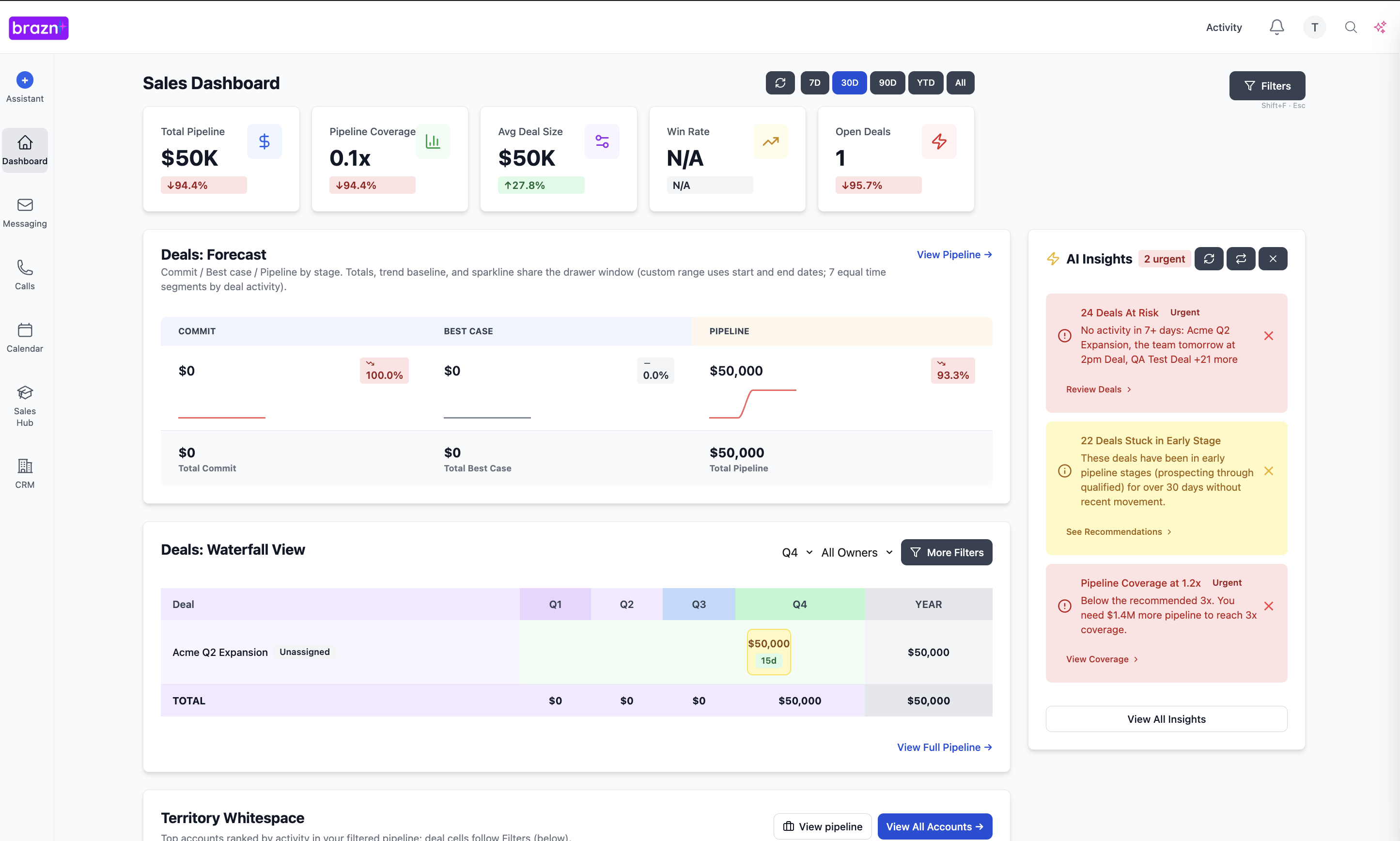
Book a demo to see how Brazn AI fits into your sales stack.

About the Author
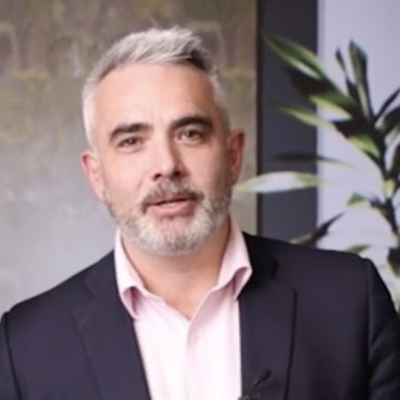
Alex Margarit, Sales AI Expert, SaaS Sales Leader, BMC, ServiceNow, Docusign — 25+ years in SaaS sales.