

The AI Sales Adoption Flywheel: Habits That Compound Over a Quarter
Rolling out a new AI sales tool is easy; getting the sales team to actually use it's incredibly difficult. The problem? most AI rollouts are treated as IT projects. Leadership buys the software, conducts a one-hour training session, and expects immediate ROI. But reps are creatures of habit. When they're under pressure to hit quota, they revert to the manual processes they know, ignoring the new tools that were supposed to make them faster.
To achieve true ROI on AI investments, revenue leaders must focus on behavioral change, not just software deployment. This requires building an 'AI Adoption Flywheel'—a systematic approach to embedding new AI habits into the daily workflow of the sales floor. This article outlines the strategies to drive sustained adoption and turn your reps into AI power users over a single quarter.
What We'll Cover
In this article, we will cover:
- Why traditional software training fails for AI tools
- The psychology of rep adoption and resistance
- The 3 stages of the AI Adoption Flywheel
- How to use 'quick wins' to build momentum
- Metrics to track behavioral change, not just logins
Understanding the Approach
The 'AI Adoption Flywheel' is a change management framework designed to incrementally build trust and usage of AI tools among sales professionals. In a GTM context, it shifts the focus from 'mandating usage' to 'demonstrating value,' creating a self-reinforcing cycle where early success stories drive broader team adoption.
Example: Instead of telling the team 'you must use the AI email drafter,' a manager works with one top performer to use the tool to book a massive meeting. That success story is shared in the weekly stand-up, creating FOMO (Fear Of Missing Out) and encouraging the rest of the team to try the tool.
Why This Matters
Driving sustained AI adoption is the only way to realize the massive productivity gains promised by the technology.
- Before: The company spends thousands on an AI platform that sits unused, becoming expensive shelfware. After: The tool is deeply integrated into the team's workflow, driving measurable increases in pipeline and win rates.
- Before: Reps view AI as a threat to their jobs or a surveillance tool. After: Reps view AI as a vital assistant that helps them make more money with less administrative effort.
- Before: Training is a one-time event that's quickly forgotten. After: Adoption is a continuous process of coaching, sharing best practices, and refining AI prompts based on field results.
The Complete Guide
H3 Stage 1: The 'Quick Win' Pilot (Weeks 1-4)
Objective: Prove the value of the AI tool immediately to a small group.
Actionable Advice: Do not roll out the tool to the entire floor at once. Select 3-5 influential reps (a mix of top performers and vocal skeptics). Identify one specific, highly painful task (e.g., writing post-call CRM notes) and train them to use the AI solely for that task. Measure the time saved.
Best Practices: Focus entirely on 'time saved' in this phase. If the AI doesn't make their life easier on day one, they won't use it on day two.
H3 Stage 2: Storytelling and FOMO (Weeks 5-8)
Objective: Leverage peer influence to drive broader interest.
Actionable Advice: Have the pilot reps share their 'Quick Wins' during the weekly all-hands meeting. Have them demonstrate exactly how they used the AI to save time or book a meeting. Do not have leadership present this; it must come from their peers.
Best Practices: Highlight specific, tangible results. 'I used the AI brief and it saved me 20 minutes of prep' is better than 'The AI is really cool.'
H3 Stage 3: Workflow Integration and Mandates (Weeks 9-12)
Objective: Make the AI tool the default way of working.
Actionable Advice: Once the majority of the team has bought in, integrate the AI step into your formal sales process. For example, mandate that all deals moving to the 'Proposal' stage must have an AI-generated risk assessment attached. At this stage, you transition from 'encouraging' to 'requiring.'
Best Practices: Continue to hold weekly 'Prompt Clinics' where reps can share the most effective ways they're using the AI to generate results.
How to Implement This
Sales Leadership must be the primary sponsors of the flywheel, celebrating the wins and holding the team accountable in Stage 3. Enablement runs the pilot programs and facilitates the peer-to-peer sharing sessions. RevOps monitors the backend usage metrics, identifying which features are sticking and which are being ignored, adjusting the training accordingly.
Next Steps
AI tools don't generate ROI; reps using AI tools generate ROI. By focusing on behavioral change and peer influence, you can build a culture that embraces technology rather than resisting it.
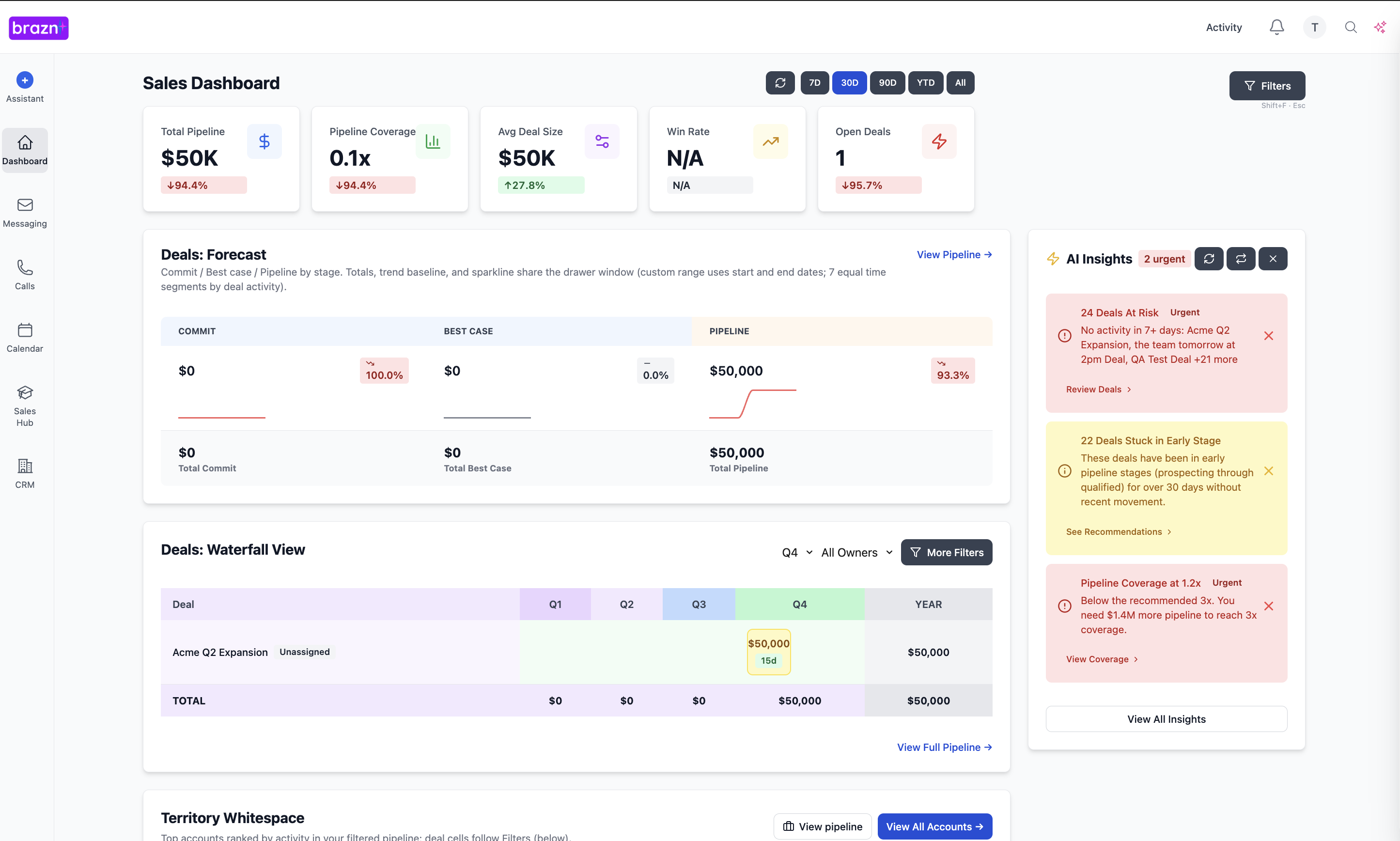
Start small: Identify your most influential AE and ask them to test one specific AI feature for three days. Ask them to share their honest feedback at the next team meeting. Ready to drive team-wide adoption? See how Brazn's intuitive platform is designed for rapid rep uptake.
Book a demo to see how Brazn AI fits into your sales stack.

About the Author

Alex Margarit, Sales AI Expert, SaaS Sales Leader, BMC, ServiceNow, Docusign — 25+ years in SaaS sales.