

SaaS GTM Trends for 2026: What’s Changed in Pipeline, Pricing, and Productivity
The B2B SaaS landscape in 2026 is unrecognizable from the "growth at all costs" era of the early 2020s. The easy money is gone, buyers are exhausted by generic outreach, and the sheer volume of available software has commoditized many categories. In response, Go-to-Market (GTM) motions have undergone a radical transformation, driven largely by the maturation of Agentic AI.
Revenue leaders who are still running the 2022 playbook—hiring armies of SDRs, relying on static pricing tiers, and measuring success by activity volume—are seeing their customer acquisition costs spiral out of control. This article breaks down the three defining GTM trends of 2026 across Pipeline, Pricing, and Productivity, providing a roadmap for modernizing your revenue engine.
What We'll Cover
In this article, we will cover:
- The macro-economic shifts forcing GTM evolution
- Trend 1 (Pipeline): The rise of "Allbound" and Signal-Driven generation
- Trend 2 (Pricing): The shift to AI-metered, outcome-based models
- Trend 3 (Productivity): The transition from "Co-pilots" to Autonomous Agents
- How CROs must adapt their leadership style for 2026
Understanding the Approach
The overarching theme of 2026 is "Autonomous Efficiency." GTM motions are shifting from human-intensive, volume-based strategies to AI-driven, precision-based strategies. This means using AI not just to write emails faster, but to autonomously identify the right buyer, dynamically adjust pricing based on perceived value, and execute complex workflows without human intervention.
Example: In 2022, a company might hire 10 SDRs to generate 100 meetings. In 2026, that same company uses an AI intent engine to autonomously generate 50 highly qualified meetings, closing more revenue with a fraction of the headcount and a significantly lower CAC.
Why This Matters
Adapting to these trends isn't optional; it's a matter of survival. Companies that fail to modernize their GTM motion will be out-competed by leaner, AI-native startups.
- Before: Pipeline is generated through brute-force cold calling and expensive paid ads. After: Pipeline is generated organically through founder-led content and AI-automated intent response.
- Before: Pricing is rigid, forcing buyers to pay for features they don't use. After: Pricing is dynamic and usage-based, aligning the vendor's revenue directly with the customer's realized value.
- Before: Sales productivity is measured by calls made and emails sent. After: Productivity is measured by the AI's ability to automate administrative work and the rep's ability to navigate complex negotiations.
The Complete Guide
H3 Trend 1 (Pipeline): The "Allbound" Signal Engine
What's Changed: The strict divide between Inbound and Outbound is dead. Buyers don't care about your internal departmental silos.
The 2026 Playbook: Implement an "Allbound" strategy where AI continuously monitors a unified stream of signals (website visits, dark social mentions, product usage). When a signal spikes, the AI autonomously triggers the appropriate response—whether that's a marketing nurture email or a direct outreach from an AE—regardless of whether the lead "originated" from marketing or sales.
H3 Trend 2 (Pricing): Outcome-Based and AI-Metered Models
What's Changed: Buyers are scrutinizing SaaS spend and demanding proof of ROI. Flat-rate, per-seat licensing is losing favor to models that tie cost to value.
The 2026 Playbook: Shift towards usage-based or outcome-based pricing. Use AI to meter the exact value the customer is extracting (e.g., "number of automated workflows completed" rather than "number of user logins"). This requires tight integration between your product telemetry, your CRM, and your billing system to ensure accurate, dynamic invoicing.
H3 Trend 3 (Productivity): From Co-pilots to Autonomous Agents
What's Changed: AI assistants that simply draft emails (co-pilots) are now table stakes. The competitive advantage lies in deploying AI agents that can execute multi-step workflows autonomously.
The 2026 Playbook: Stop asking "how can AI help my reps work faster?" and start asking "what workflows can AI handle entirely?" Deploy autonomous agents to handle initial lead qualification, calendar scheduling, and basic customer support, reserving your human team exclusively for complex problem-solving and high-level relationship building.
How to Implement This
To navigate these trends, the CRO and the Revops leader must operate in lockstep. Revops is no longer just a Salesforce administrator; they're the architects of the autonomous revenue engine, responsible for the complex data integrations required for dynamic pricing and signal-driven pipeline. Enablement must completely overhaul their curriculum, focusing less on basic sales skills (which AI now handles) and more on strategic business acumen and AI management.
Next Steps
The GTM playbook has been rewritten. By embracing signal-driven pipeline, outcome-based pricing, and autonomous AI agents, you can build a highly efficient revenue engine capable of thriving in the competitive landscape of 2026.
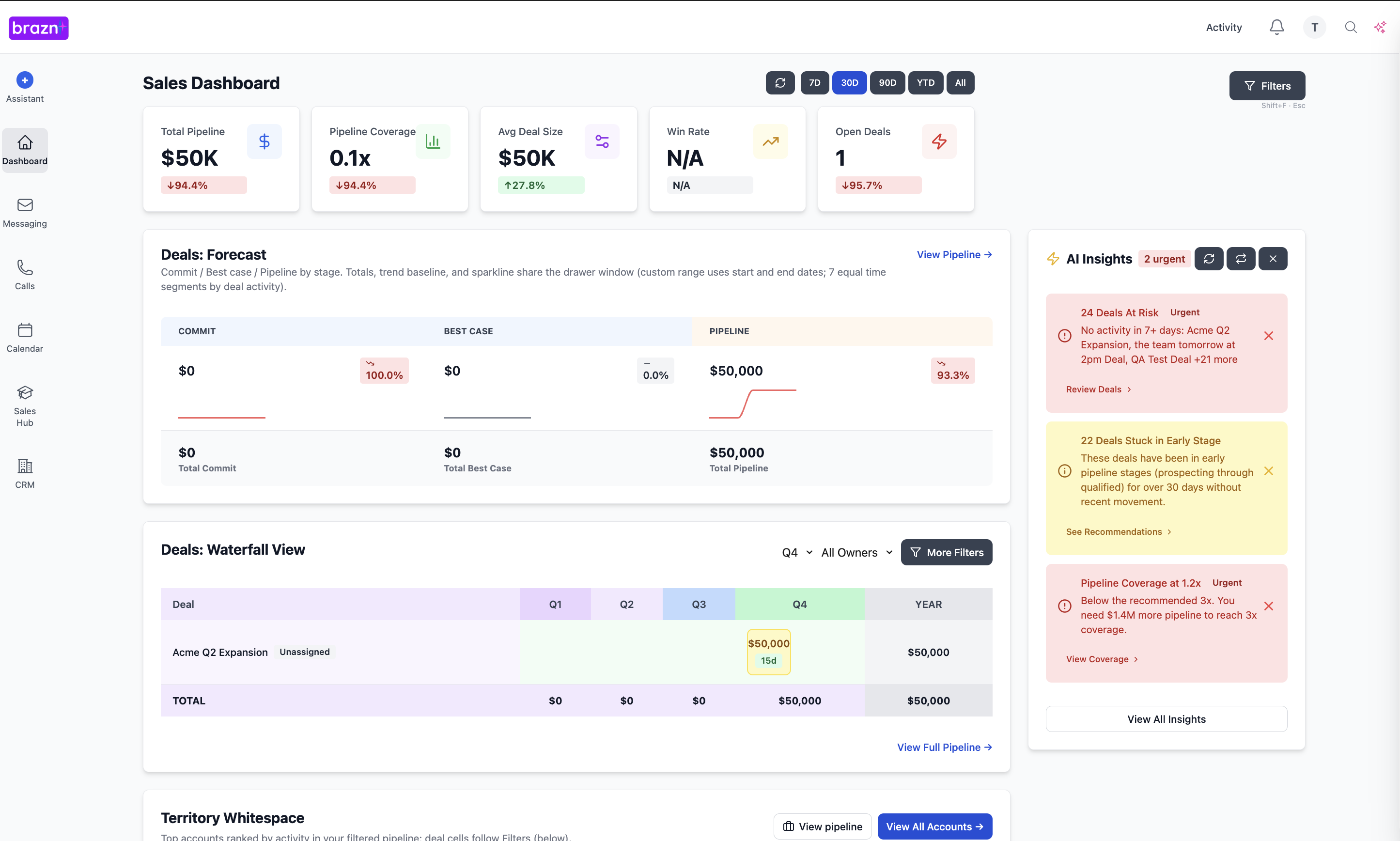
Evaluate your current pricing model. Is it based on arbitrary "seats," or is it tied directly to the value your customer receives? Initiate a conversation with your product team this week about testing a usage-based pricing tier. Ready to modernize your entire GTM motion? See how Brazn powers the revenue engines of 2026.
Book a demo to see how Brazn AI fits into your sales stack.

About the Author

Alex Margarit, Sales AI Expert, SaaS Sales Leader, BMC, ServiceNow, Docusign — 25+ years in SaaS sales.