

Reclaiming the AE Workweek: A Time Audit Framework
The title "Account Executive" implies a role focused on high-level strategy, relationship building, and closing complex deals. However, the reality of the modern AE workday is often vastly different. Reps are drowning in administrative tasks: manually updating CRM fields, searching for collateral, drafting routine follow-up emails, and building target lists. Industry studies consistently show that AEs spend less than 30% of their week actually selling.
This misallocation of time is the single biggest drag on revenue growth. You can't scale a sales organization if your most expensive assets are performing administrative grunt work. This article provides a "Time Audit Framework" for RevOps leaders to identify the specific tasks draining AE productivity and deploy AI to automate them, reclaiming hours for actual revenue generation.
What We'll Cover
In this article, we will cover:
- The hidden cost of administrative bloat in the AE role
- The 3-Step AE Time Audit Framework
- Category 1: Automating Pre-Call Research
- Category 2: Automating Post-Call Administration
- Category 3: Automating Routine Follow-Ups
- How to ensure reclaimed time is spent on selling
Understanding the Approach
An AE Time Audit is a systematic process of tracking, categorizing, and analyzing exactly how sales reps spend their working hours over a typical two-week period. The goal is to identify repetitive, non-revenue-generating tasks that can be eliminated, simplified, or entirely automated by AI.
Example: A Revops team conducts a time audit and discovers that their enterprise AEs spend an average of 4 hours a week manually typing meeting notes into Salesforce and updating opportunity stages. RevOps calculates the cost of this time ($$$) and deploys an AI meeting assistant that automatically transcribes calls, extracts MEDDPICC data, and updates the CRM, instantly giving every AE 4 hours back.
Why This Matters
Reclaiming AE time is the fastest way to increase pipeline capacity and win rates without hiring additional headcount.
- Before: AEs manage 15 active opportunities because administrative tasks consume the rest of their capacity. After: AEs comfortably manage 25 active opportunities because AI handles the operational heavy lifting.
- Before: CRM data is constantly outdated because reps prioritize selling over data entry. After: CRM data is pristine and real-time because it's captured automatically by AI systems.
- Before: AEs experience high burnout and frustration due to the "busywork" required by management. After: AEs report higher job satisfaction as they spend their time doing what they were hired to do: interact with buyers.
The Complete Guide
Step 1: The Time Tracking Exercise
Objective: Get an accurate, objective baseline of how time is currently spent.
Actionable Advice: Do not rely on surveys; reps will underestimate admin time and overestimate selling time. Have 3-5 top-performing AEs use a simple time-tracking tool (like Toggl) or a detailed spreadsheet for two weeks. They must categorize every 15-minute block into specific buckets (e.g., Live Calls, Pre-Call Research, CRM Updates, Internal Meetings, Email Drafting).
Best Practices: Assure the reps that this isn't a performance evaluation, but an operational audit to help them make more money.
Step 2: The "Automate, Delegate, or Eliminate" Analysis
Objective: Determine the fate of every non-selling activity.
Actionable Advice: Review the audit data with RevOps. For every administrative task taking more than 2 hours a week, apply the framework: Can we Automate this with AI? (e.g., call logging). Can we Delegate this to a lower-cost resource? (e.g., complex contract formatting). Can we Eliminate this entirely? (e.g., a redundant weekly reporting meeting).
Best Practices: Prioritize automation. Delegation often just shifts the bottleneck to another department.
Step 3: Deploying the AI Solutions
Objective: Implement the specific tools needed to reclaim the identified time.
Actionable Advice: Based on the audit, roll out targeted AI solutions. If "Pre-Call Research" is the biggest drain, deploy AI-generated Account Briefs. If "Email Drafting" is the issue, deploy an AI writing assistant within the sales engagement platform. If "CRM Updates" are the culprit, deploy an AI conversational intelligence tool that auto-logs data.
Best Practices: Roll out one major automation at a time to ensure high adoption, rather than overwhelming the team with 5 new tools at once.
How to Implement This
RevOps must own the execution of the Time Audit and the subsequent deployment of AI tools. However, reclaiming the time is only half the battle. Sales Leadership must ensure that the newly freed hours are actually redirected toward revenue-generating activities, not just more internal meetings or longer lunches. Enablement should track the increase in "Live Call Time" or "Pipeline Generated" following the rollout of the automations to prove the ROI.
Next Steps
Your AEs aren't data entry clerks. By conducting a rigorous time audit and ruthlessly automating administrative tasks with AI, you can unlock massive hidden capacity within your existing team.
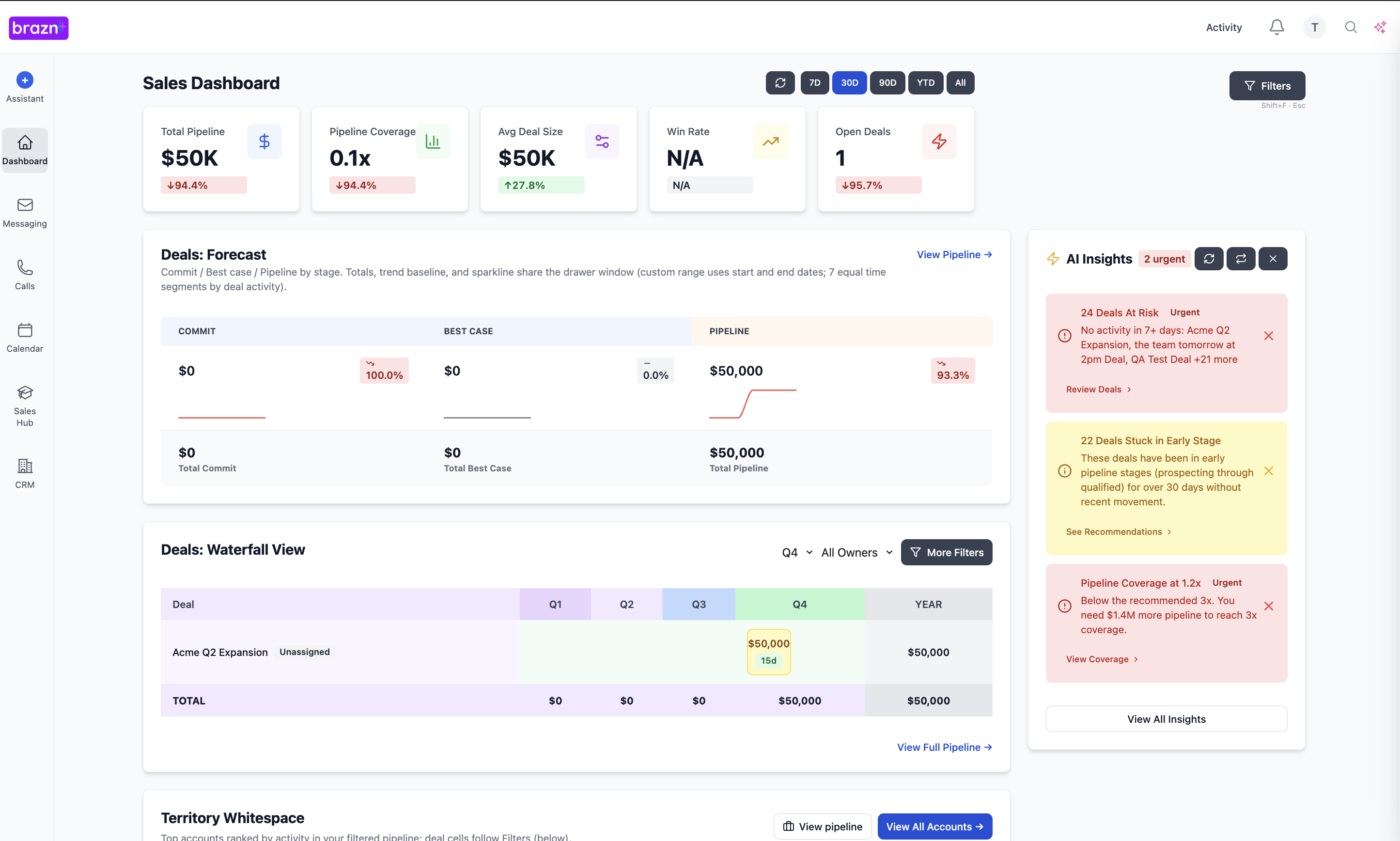
Ask your top AE to roughly estimate how many hours they spent updating the CRM this week. Whatever the number is, commit to finding an AI tool to cut it in half by next quarter. Ready to reclaim your team's time? See how Brazn automates the busywork so your AEs can focus on closing.
Book a demo to see how Brazn AI fits into your sales stack.

About the Author

Alex Margarit, Sales AI Expert, SaaS Sales Leader, BMC, ServiceNow, Docusign — 25+ years in SaaS sales.