
Prospecting Without Burnout: How AI Reshapes the SDR Workday
The role of the Sales Development Representative (SDR) is widely considered the most grueling job in B2B tech. The daily grind of making 100 cold calls, sending 200 generic emails, and facing constant rejection leads to massive burnout, with average SDR tenure hovering around 14 months. This high turnover is a massive hidden cost for revenue organizations, destroying continuity and pipeline momentum.
The root cause of this burnout isn't the reps; it's the outdated, volume-centric process they're forced to execute. They are treated like human spam cannons. The solution is to leverage AI to fundamentally reshape the SDR workday, shifting their focus from mindless volume to strategic, high-value engagement. This article explores how to build an AI-augmented SDR motion that drives pipeline without destroying your team.
What We'll Cover
In this article, we will cover:
- Why the "100 calls a day" SDR model is broken and unsustainable
- How AI shifts the SDR role from "Prospector" to "Signal Responder"
- 3 AI workflows that eliminate SDR grunt work
- Redesigning the SDR daily schedule for maximum impact
- How to measure SDR success in an AI-native org
Understanding the Approach
An AI-augmented SDR motion uses automation to handle the tedious, low-conversion tasks of prospecting—list building, basic research, and initial cold outreach. This frees the human SDR to focus entirely on "Signal Response"—engaging with prospects who have already shown intent, handling complex objections, and building relationships.
Example: Instead of an SDR spending 3 hours building a list of 500 contacts and loading them into a generic sequence, an AI agent continuously monitors intent data and automatically sends highly personalized, "Day 1" emails. The SDR only steps in when a prospect replies or clicks a link, allowing them to spend their time crafting a thoughtful, strategic response rather than sending cold blasts.
Why This Matters
Reshaping the SDR workday with AI is essential for improving retention, increasing conversion rates, and lowering customer acquisition costs.
- Before: SDRs spend 70% of their day on administrative tasks and list building, leading to low morale and high turnover. After: SDRs spend 80% of their day in active, strategic conversations with buyers, increasing job satisfaction and output.
- Before: Outreach is generic and low-converting because SDRs don't have time to personalize at scale. After: Initial outreach is hyper-personalized by AI, and follow-ups are deeply contextualized by the human SDR.
- Before: SDR performance is measured by sheer activity volume (calls made, emails sent). After: Performance is measured by the quality of engagement and the conversion of signals into qualified pipeline.
The Complete Guide
H3 Workflow 1: Automated Account Research and Prioritization
Objective: Eliminate the time SDRs spend figuring out who to contact.
Actionable Advice: Implement an AI tool that scores target accounts based on real-time intent signals (e.g., website visits, hiring data) and automatically routes the highest-scoring accounts to the SDR's daily dashboard, complete with a generated summary of why they're surging.
Best Practices: Do not give SDRs static lists. Their daily queue should be dynamic, populated entirely by the AI based on real-time data.
H3 Workflow 2: The "Ghostwriter" for Initial Outreach
Objective: Ensure high-quality, personalized first touches without the manual effort.
Actionable Advice: Use an AI writing assistant integrated into your sales engagement platform. When the AI routes a high-intent account to the SDR, it should also provide a pre-drafted, personalized email based on the specific intent signal. The SDR simply reviews, tweaks, and sends.
Best Practices: Train SDRs to add a "human touch" (e.g., a relevant observation about the prospect's recent Linkedin post) to the AI draft, rather than just hitting send blindly.
H3 Workflow 3: Automated CRM Hygiene
Objective: Remove the administrative burden of logging activities in the CRM.
Actionable Advice: Deploy AI meeting assistants and email syncing tools that automatically log every interaction, update contact records, and extract key qualification data into the CRM without the SDR having to type a single note.
Best Practices: Position this automation to the SDRs as a benefit that protects their time, not as a management surveillance tool.
How to Implement This
RevOps must build the "Signal Engine" that powers this new workflow, integrating intent data, AI writing tools, and the CRM. Enablement must completely overhaul SDR onboarding. Instead of teaching reps how to make 100 cold calls, they must teach them how to interpret AI-generated account briefs, how to write strategic replies to engaged prospects, and how to manage complex, multi-channel conversations.
Next Steps
You can't build a sustainable pipeline by burning out your frontline team. By using AI to automate the drudgery of prospecting, you elevate the SDR role from a human spam cannon to a strategic revenue generator.
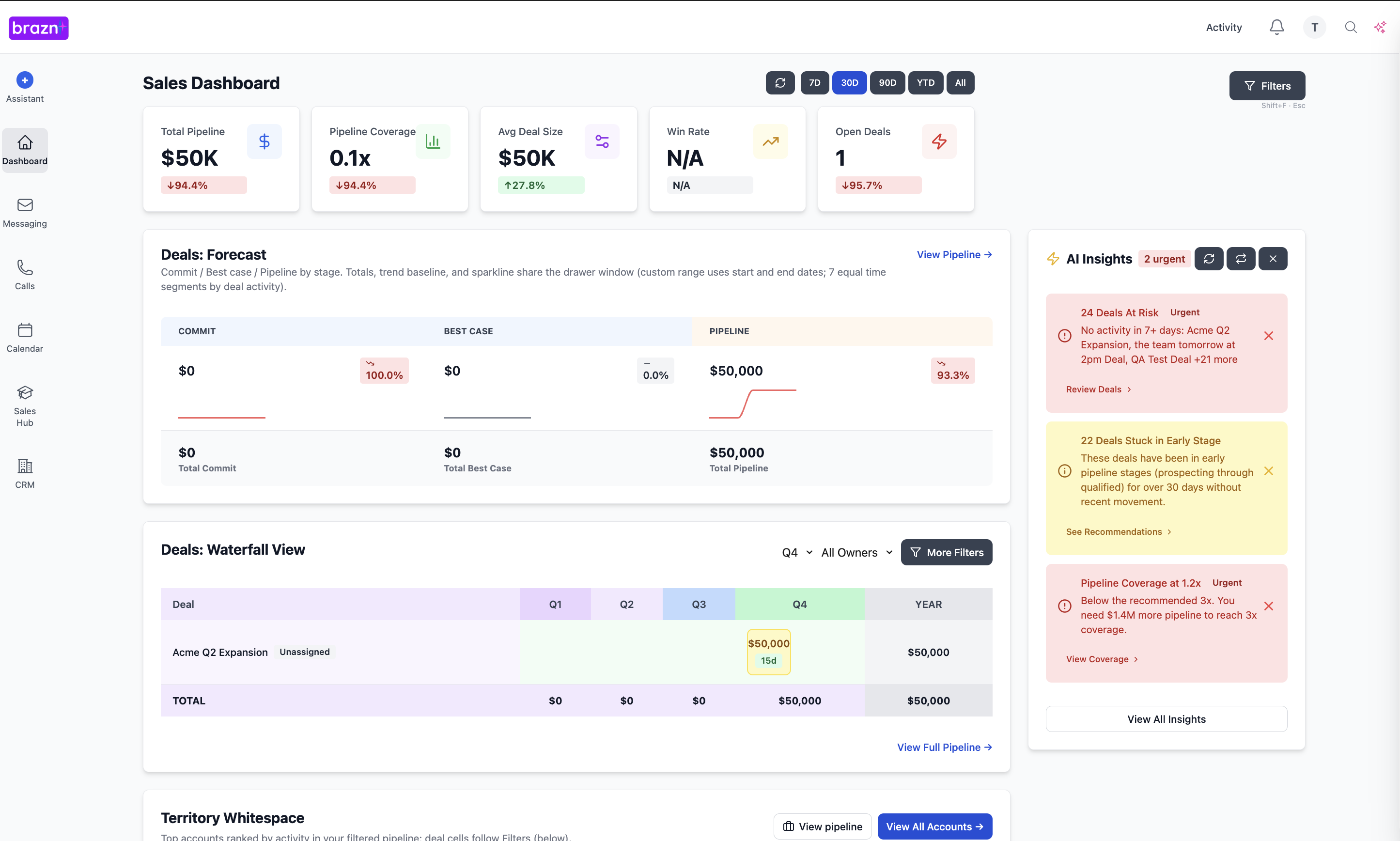
Audit your SDRs' time this week. How many hours are they spending building lists or writing generic emails? Implement one AI workflow (like automated account summaries) to give them back at least two hours a week. Ready to transform your SDR team? See how Brazn automates the grunt work so your reps can focus on selling.
Book a demo to see how Brazn AI fits into your sales stack.
About the Author
Alex Margarit, Sales AI Expert, SaaS Sales Leader, BMC, ServiceNow, Docusign — 25+ years in SaaS sales.