


Probabilistic Forecasting: A Better Conversation With Finance
The monthly forecast review between Sales and Finance is often a masterclass in miscommunication. Sales leaders present a single, committed number based on intuition and pressure, while Finance leaders view that number with deep skepticism, knowing it rarely materializes exactly as predicted. This adversarial dynamic stems from a fundamental flaw: treating a forecast as a guarantee rather than a probability.
To bridge this gap and build true alignment, revenue organizations must transition from single-point forecasting to probabilistic forecasting. But this transition is useless if the Finance team doesn't understand how to interpret the new data. This article provides a guide for CROs and RevOps leaders on how to educate their Finance counterparts on the nuances of probabilistic forecasting, transforming a tense negotiation into a strategic collaboration.
What We'll Cover
In this article, we will cover:
- Why single-point forecasting fails both Sales and Finance
- Defining probabilistic forecasting in a SaaS context
- Step 1: Explaining the "Confidence Band"
- Step 2: Shifting the focus from the "Commit" to the "Most Likely" scenario
- Step 3: Using risk signals to justify the probabilities
- How to structure a collaborative, data-driven forecast review
Understanding the Approach
Probabilistic forecasting moves away from declaring a single revenue number (e.g., "We will close $1M this quarter") and instead presents a range of possible outcomes with associated probabilities (e.g., "We have an 80% chance of closing $800k, a 50% chance of closing $1M, and a 20% chance of closing $1.2M"). In a RevOps context, this relies on AI analyzing historical win rates, deal velocity, and real-time engagement signals to generate these probabilities.
Example: Instead of a rep simply marking a deal as "Commit" because the quarter is ending, the AI evaluates the deal's characteristics (e.g., lack of executive sponsor, stalled legal review) and assigns it a 40% probability of closing, providing Finance with a more realistic view of the pipeline.
Why This Matters
Teaching Finance to embrace probabilistic forecasting is essential for building trust, improving resource allocation, and reducing end-of-quarter panic.
- Before: Finance discounts the sales forecast by a flat percentage, leading to inaccurate budgeting and missed expectations. After: Finance uses the confidence bands to model different financial scenarios, leading to more resilient planning.
- Before: Forecast reviews are interrogations, with Finance demanding to know why a specific deal slipped. After: Forecast reviews are strategic discussions about how to mitigate risk and increase the probability of the "Best Case" scenario.
- Before: Sales leaders feel pressured to artificially inflate the forecast to appease the board. After: Sales leaders present a transparent, data-backed view of the pipeline, earning the trust of the executive team.
The Complete Guide
H3 Step 1: Explaining the "Confidence Band"
Objective: Help Finance understand that revenue is a range, not a point.
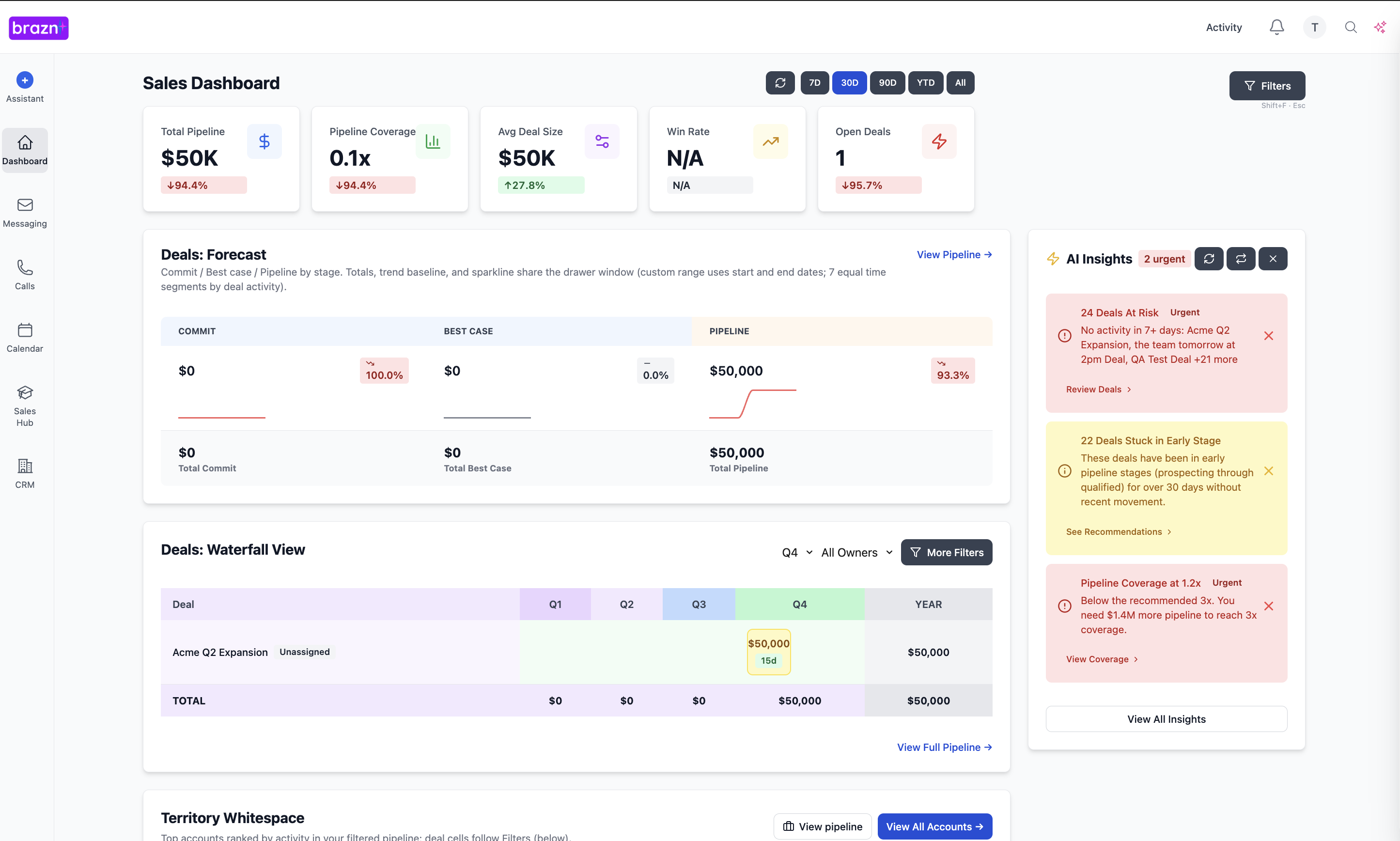
Actionable Advice: Present your forecast visually as a bell curve or a range (e.g., $800k - $1.2M) rather than a single spreadsheet cell. Explain that the wider the band, the higher the uncertainty in the current pipeline.
Best Practices: Define specific thresholds for your bands (e.g., "Worst Case" is 90% probability, "Most Likely" is 50%, "Best Case" is 10%).
H3 Step 2: Shifting Focus from "Commit" to "Most Likely"
Objective: Move the conversation away from high-pressure guarantees to realistic expectations.
Actionable Advice: Explicitly state that the "Most Likely" number is the operational target based on historical data and current AI models. The "Commit" is the absolute floor.
Best Practices: Track your historical accuracy against the "Most Likely" number to build Finance's confidence in the model over time.
H3 Step 3: Using Risk Signals to Justify Probabilities
Objective: Prove that the probabilities are based on data, not gut feeling.
Actionable Advice: When discussing specific large deals, don't just rely on the rep's narrative. Show Finance the underlying AI risk signals (e.g., "The AI downgraded this deal to 30% because email velocity has dropped by 50% in the last two weeks").
Best Practices: Be transparent about the limitations of the AI model; if a deal has unique, unquantifiable factors, discuss them openly.
How to Implement This
RevOps must own the transition to probabilistic forecasting. They are responsible for configuring the AI tools, validating the models, and creating the dashboards that both Sales and Finance will use. The CRO must champion this new approach in executive meetings, consistently using the language of probabilities and ranges. Finance must be willing to adapt their budgeting processes to accommodate the new forecasting methodology, moving away from rigid, single-point plans.
Next Steps
Moving to probabilistic forecasting is a cultural shift as much as a technical one. By proactively educating Finance on how to read and interpret these new models, you can replace friction with collaboration and build a more resilient, predictable business.
Schedule a dedicated session with your FP&A counterpart this week. Walk them through the concept of confidence bands and show them the underlying risk signals that drive your AI forecast. Ready to upgrade your forecasting capabilities? See how Brazn's platform delivers signal-backed, probabilistic insights.
Book a demo to see how Brazn AI fits into your sales stack.

About the Author

Alex Margarit, Sales AI Expert, SaaS Sales Leader, BMC, ServiceNow, Docusign — 25+ years in SaaS sales.